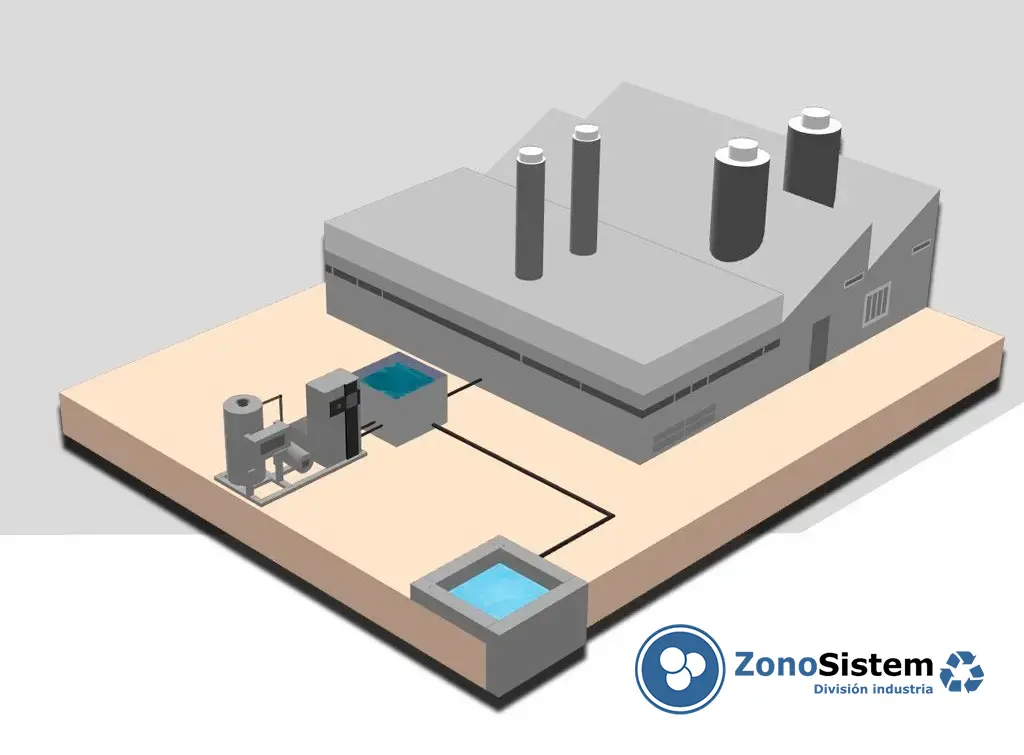
The use of ozone in industrial DWTPs
DWTP – Drinking Water Treatment Plant
Ozone is an ideal solution for treating water from the mains supply or from wells prior to industrial use, as its high oxidising power enables it to remove or transform contaminants such as nitrites (by oxidising them to nitrates), pesticides and organic matter responsible for turbidity, as well as unwanted tastes and odours.
Furthermore, ozone oxidises metals such as iron and manganese, making it easier to remove them subsequently by filtration. It is also particularly effective at breaking down compounds responsible for odour and taste, such as chlorinated or brominated anisoles, which can compromise the quality of the end products.
Furthermore, it helps to reduce by-products resulting from chlorine disinfection, thereby improving the overall quality of the treated water.
Unlike other disinfectants, ozone acts quickly and leaves no persistent chemical residues, as it breaks down into oxygen, ensuring purer, safer water that meets the highest industry standards.
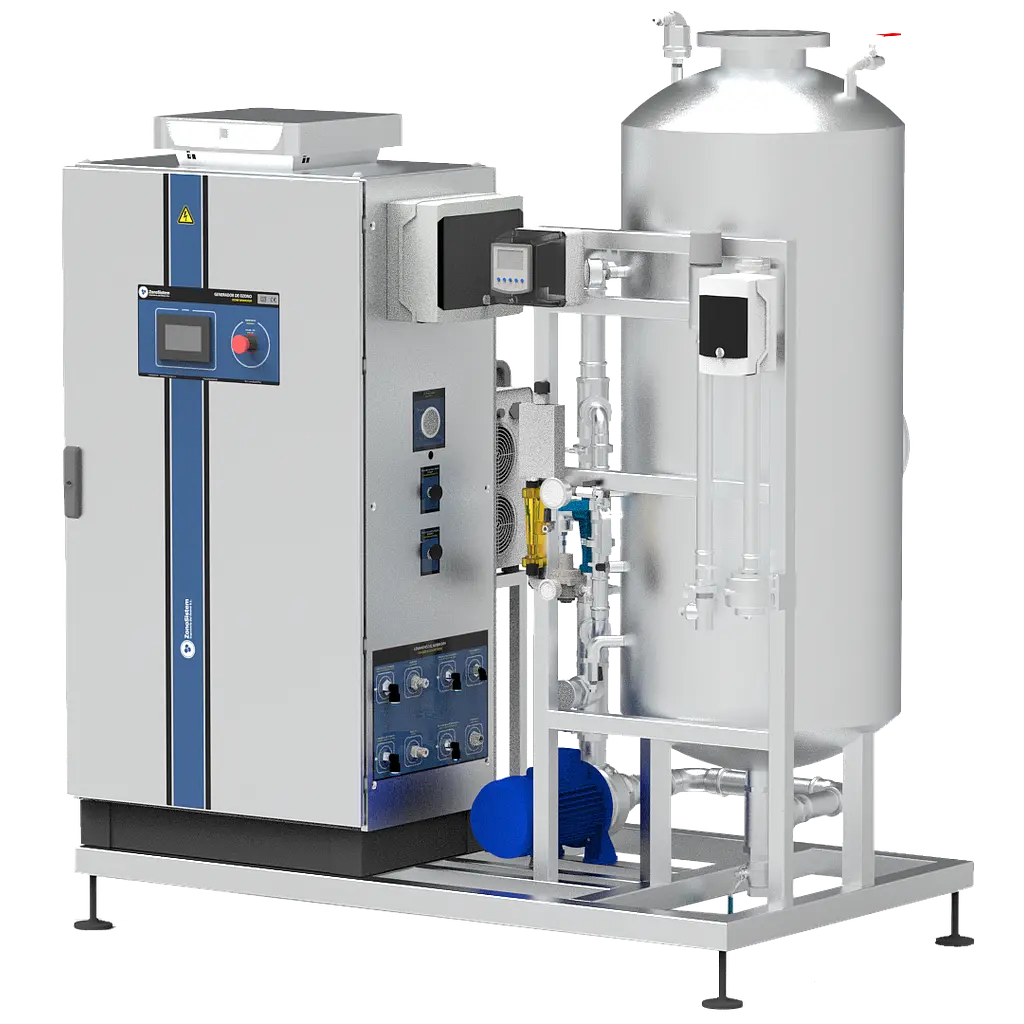
Ozone generators at DWTP Industrial
Ozone for pre-treatment of water prior to industrial use. Optimise your industrial operations and improve water quality.
Ozone helps to reduce the use of chemicals
Ozone is generated on-site; there is no need to store or transport chemicals
Ozone contributes to sustainability and reduces the carbon footprint
The system is automated; it does not require any manual labour to operate it
Why is the use of ozone recommended in a industrial DWTP?
The quality of the feed water is a critical factor in any industrial process. The presence of traditional disinfectants such as chlorine and its by-products, particularly chlorites and chlorates, can cause operational problems, affect sensitive processes and compromise the quality of the final product.
The use of ozone as a pre-treatment technology makes it possible to eliminate these problems at source. Thanks to its high oxidising power, ozone acts effectively on organic matter, reactive inorganic compounds and microorganisms, without generating persistent by-products or unwanted chemical residues.
Unlike chlorine-based treatments, ozone does not produce chlorites or chlorates, thereby avoiding the associated risks in demanding industrial processes such as those in the food, drink, pharmaceutical, electronics and hydrogen production sectors. Furthermore, following its reaction, ozone breaks down into oxygen, helping to improve overall water quality without any environmental impact.
The use of ozone at the source enables:
- To eliminate the need for pre-chlorination, thereby preventing the formation of problematic by-products
- To reduce the organic and microbiological load, thereby protecting subsequent stages of the process
- Preventing fouling and biofouling on membranes, resins and equipment
- Improving the stability and efficiency of the treatment system
- To ensure a consistent water quality free from chemical residues
This technology is positioned as a key solution for industries that require high standards of water quality and are seeking sustainable, safe alternatives that comply with current and future regulations.
Incorporate ozone into your treatment process to ensure that the incoming water is free from contaminants, contains no unwanted by-products and is ready for the most demanding processes.
The quality of the feed water is a critical factor in any industrial process. The presence of traditional disinfectants such as chlorine and its by-products, particularly chlorites and chlorates, can cause operational problems, affect sensitive processes and compromise the quality of the final product.
The use of ozone as a pre-treatment technology makes it possible to eliminate these problems at source. Thanks to its high oxidising power, ozone acts effectively on organic matter, reactive inorganic compounds and microorganisms, without generating persistent by-products or unwanted chemical residues.
Unlike chlorine-based treatments, ozone does not produce chlorites or chlorates, thereby avoiding the associated risks in demanding industrial processes such as those in the food, drink, pharmaceutical, electronics and hydrogen production sectors. Furthermore, following its reaction, ozone breaks down into oxygen, helping to improve overall water quality without any environmental impact.
The use of ozone at the source enables:
- To eliminate the need for pre-chlorination, thereby preventing the formation of problematic by-products
- To reduce the organic and microbiological load, thereby protecting subsequent stages of the process
- Preventing fouling and biofouling on membranes, resins and equipment
- Improving the stability and efficiency of the treatment system
- To ensure a consistent water quality free from chemical residues
This technology is positioned as a key solution for industries that require high standards of water quality and are seeking sustainable, safe alternatives that comply with current and future regulations.
Incorporate ozone into your treatment process to ensure that the incoming water is free from contaminants, contains no unwanted by-products and is ready for the most demanding processes.
Benefits of using ozone in industrial DWTPs
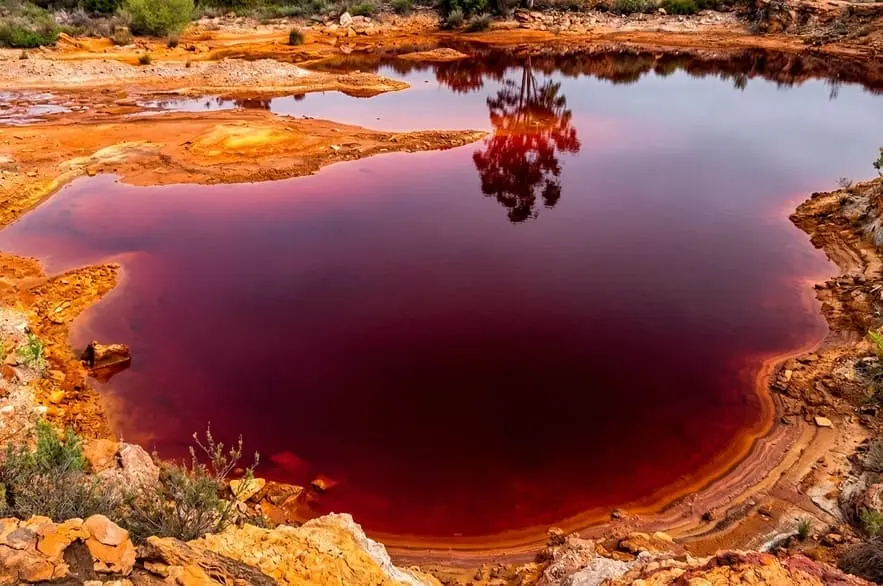
It oxidises heavy metals
Ozone oxidises heavy metals, as well as metals such as iron and manganese, rendering them insoluble and facilitating their settling or retention in filters. This is why it is frequently used in a pre-treatment stage, with ozone being injected at the intake of the DWTP.
Avoid using chlorine in tanks
By avoiding the use of chlorine, we eliminate all the problems associated with chlorination. Furthermore, if the water is for process use, we can work directly with ozonated water, ensuring that the process water lines are correctly identified.
Improves filtering performance
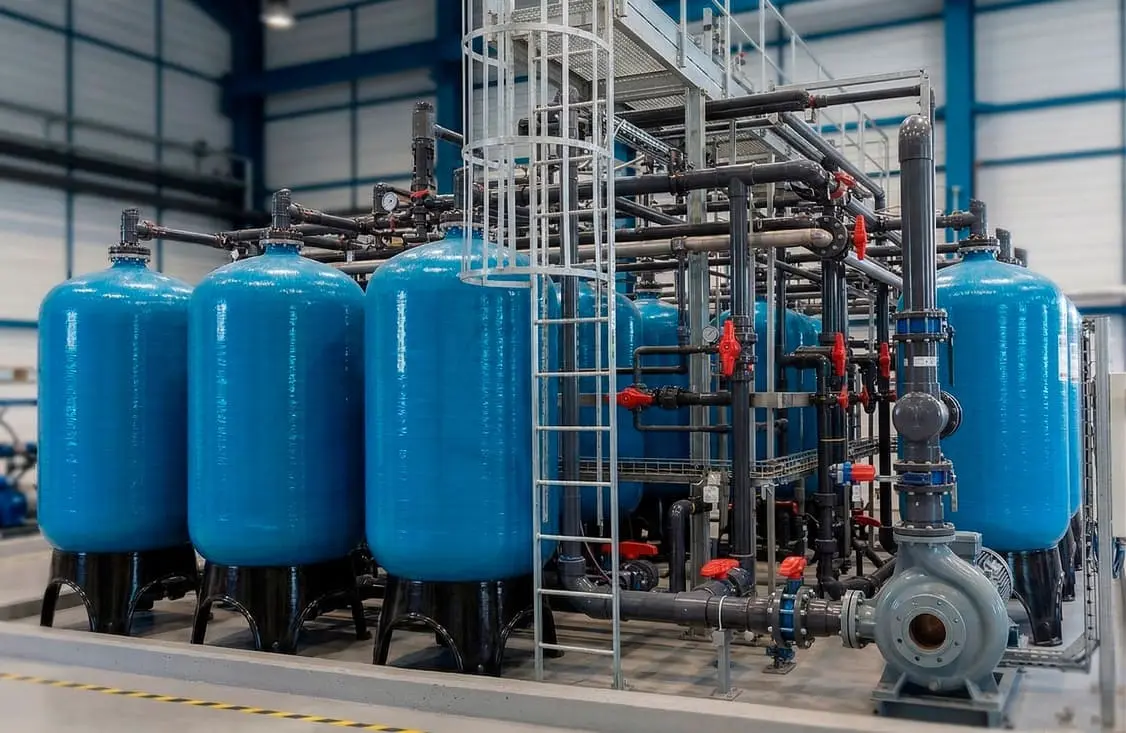
Industries that use well water primarily for their process water must also filter it. If ozone is applied prior to the sand filters, this increases the retention of metals, improves filtration efficiency and prevents high backwash water consumption.
Potente desinfección
At low concentrations and with short contact times, ozone eliminates all types of microorganisms, such as viruses, bacteria, fungi and moulds. If there are any chlorine-resistant bacteria, ozone will be able to eliminate them. It also has a low residual effect.
Improves the smell and taste
Chlorination in the presence of organic matter produces organochlorine compounds which, as well as being harmful, impart an unpleasant taste and odour to the consumer. The most effective method is a combination of ozonation and filtration through activated carbon (O₃+GAC).
Reduces re-chlorination
Once the water has been disinfected and stored in tanks, it is usually re-chlorinated before being fed into the industry’s hot water supply network. The level of chlorination will be significantly lower as there is no need to oxidise organic matter. By-products will also be removed.
Ozone Treatment in industrial DWTPs
We are designers, manufacturers, installers and maintenance providers of high-end ozone generation systems for industrial DWTPs
Contact us
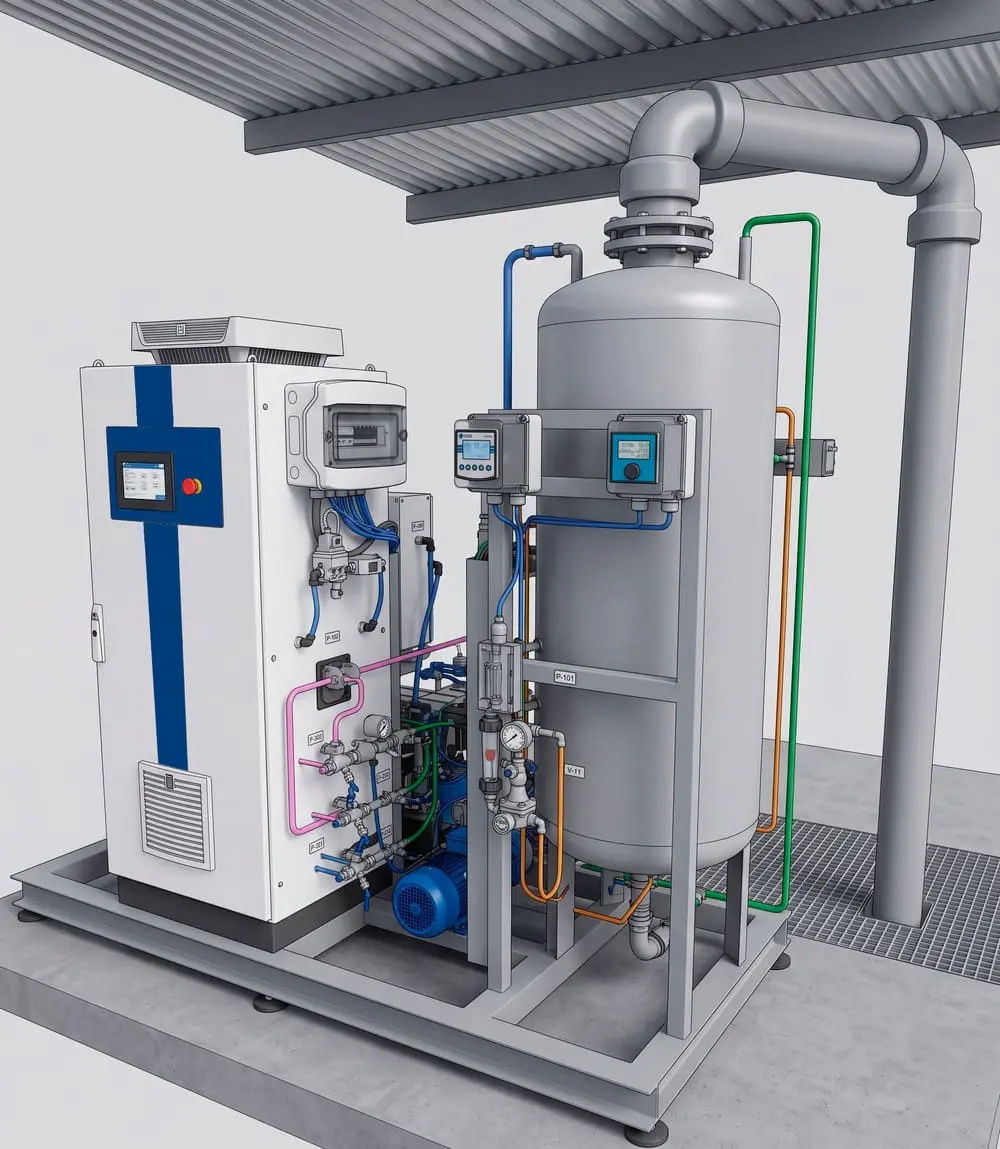
Ozone Treatment in industrial DWTPs
We are designers, manufacturers, installers and maintenance providers of high-end ozone generation systems for industrial DWTPs
Contact us
ZonoSistem case studies in industrial DWTPs
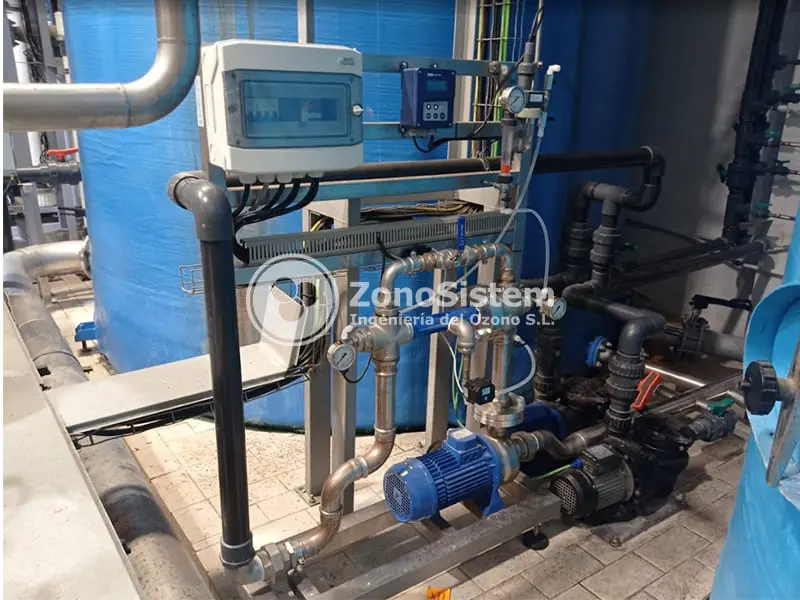
Injection and recirculation system in receiving tanks for the food industry
An advanced ozone injection and recirculation system for receiving tanks in the food industry has been successfully designed and deployed in Spain.
This system ensures continuous, automated disinfection of water and contact surfaces, effectively eliminating the microbiological load without leaving any chemical residues.
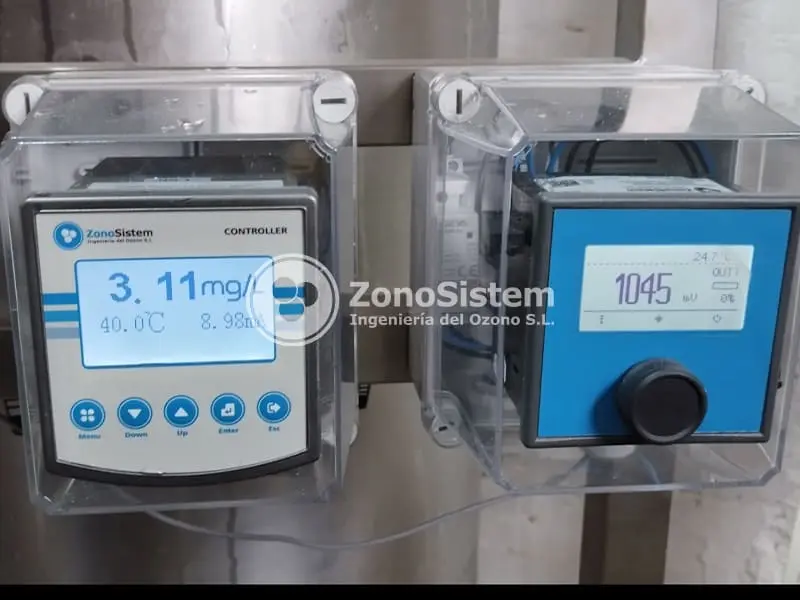
Monitoring of dissolved ozone and redox potential in the pre-treatment stage of industrial DWTPs
An advanced monitoring system for the management of dissolved oxygen and oxidation-reduction potential (ORP) has been implemented in Spain during the pre-treatment stage of an industrial water treatment plant.
The project focuses on the automation of O3 dosing, enabling rigorous control of the oxidation of organic matter and the removal of pollutants through the use of high-precision instrumentation
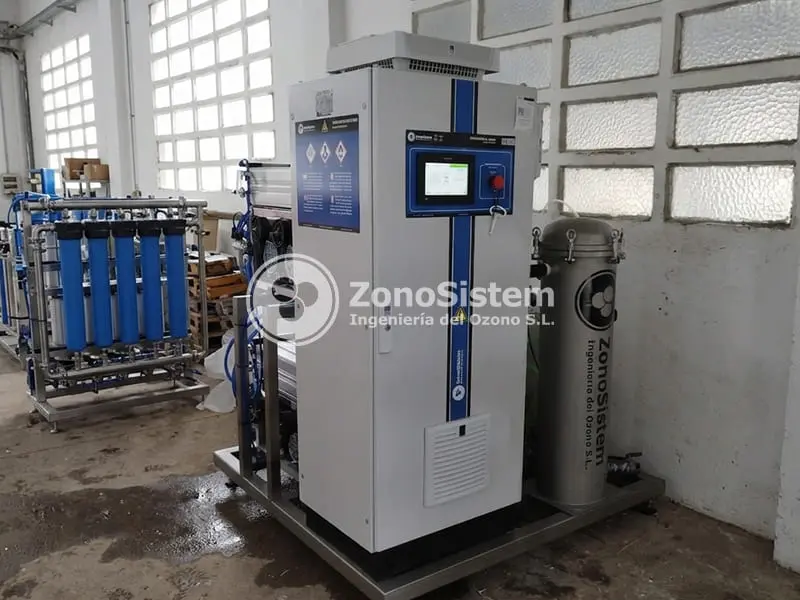
Ozone in the DWTP at a paper mill
The deployment of an advanced ozone oxidation system for the treatment of process water in the paper industry has taken place. The technology used enables the effective removal of colour, COD and persistent organic compounds, facilitating the recirculation of water resources and reducing the discharge of pollutants.
Through the automated dosing of O3, a substantial improvement in industrial water quality is achieved without the generation of chemical sludge or secondary waste.
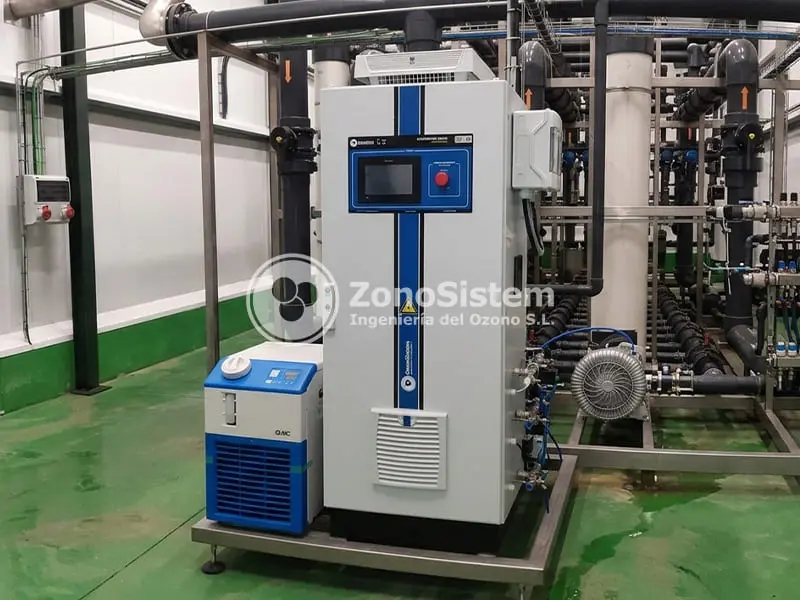
Ozone in a soft drinks DWTP. Spain
This project includes an ozonation system that injects ozone into water from the mains supply, which has previously been softened. The ozone-disinfected water is stored in tanks, ensuring continuous hygiene. It then passes through activated carbon to remove residual ozone, passes through reverse osmosis membranes, and is used as process water. The project includes a GRZO ozone generator and a HIDRO V injection system.
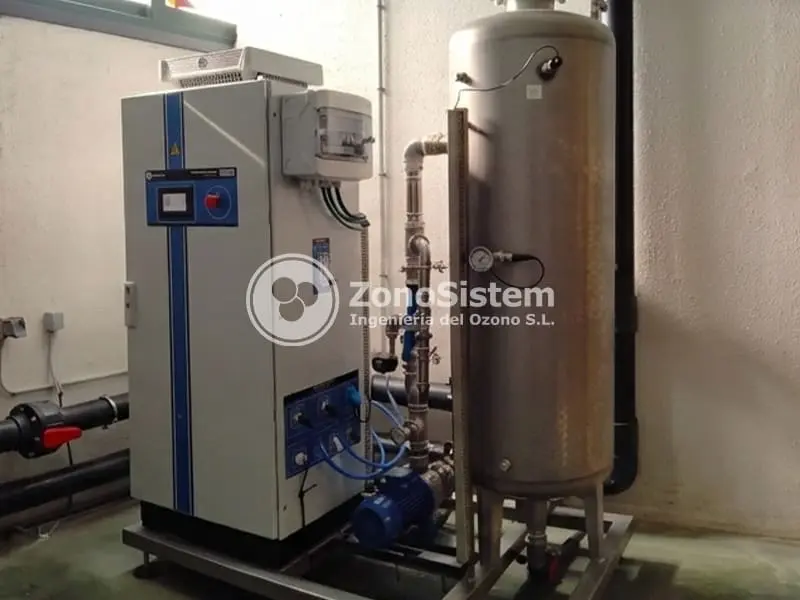
Ozone in a DWTP for the canning industry. Spain
Ozone technology has been integrated into Drinking Water Treatment Plants (DWTPs), optimising the most critical resource in the production process. By using O₃ as an advanced oxidant, we achieve superior disinfection of process water, eliminating viruses, bacteria and organic micro-contaminants without generating the toxic by-products associated with chlorine, such as trihalomethanes.
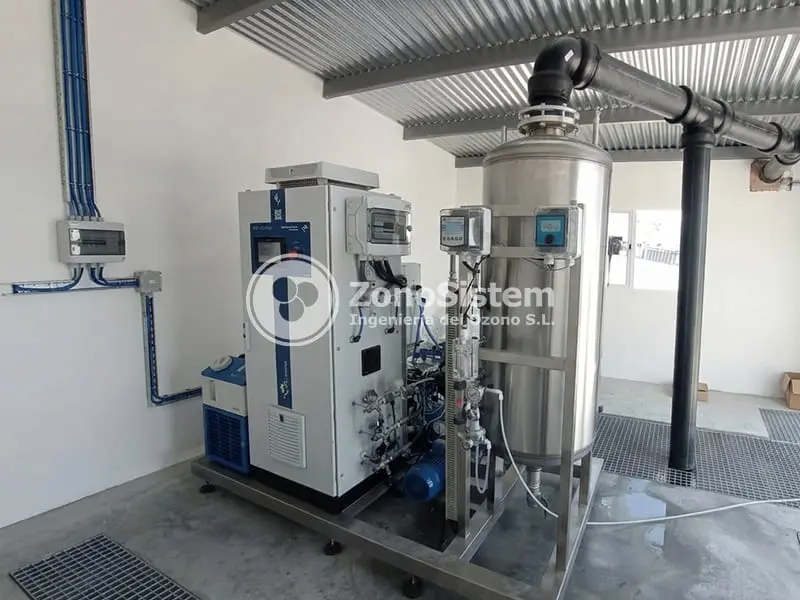
Ozone in a DWTP for the baby food industry. Spain
This technology replaces the use of traditional chemicals, radically eliminating pathogens, biofilms and organic contaminants from the water used to clean channels, surfaces and machinery. As it leaves no chemical residues and does not alter the taste or colour of the final product, ozone ensures total food safety and optimised operating costs, providing a sterile water supply that strictly complies with current health regulations in the meat sector.
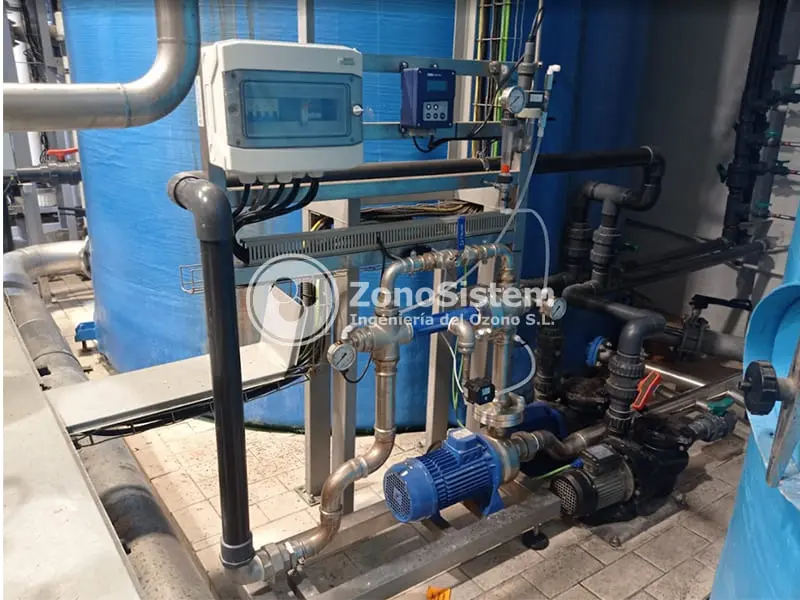
Injection and recirculation system for receiving tanks in the food industry
An advanced ozone injection and recirculation system for receiving tanks in the food industry has been designed and successfully deployed in Spain.
This system ensures continuous, automated disinfection of water and contact surfaces, effectively eliminating the microbiological load without leaving any chemical residues. The treated water prevents problems in the subsequent treatment stages.
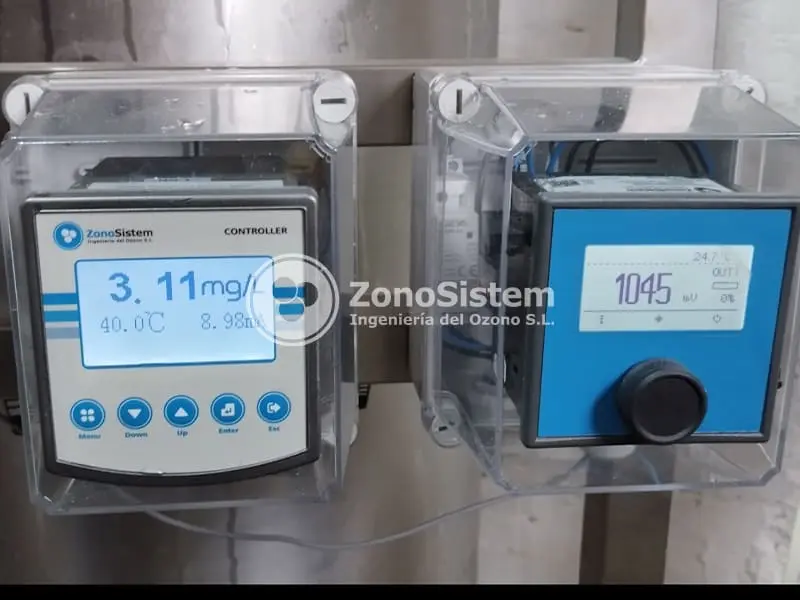
Monitoring of dissolved ozone and redox potential in the pre-treatment stage of a DWTP.
An advanced monitoring system for the management of dissolved ozone and oxidation-reduction potential (ORP) has been implemented in the pre-treatment stage of an industrial water treatment plant.
The project focuses on the automation of O₃ dosing, enabling rigorous control of the oxidation of organic matter and the removal of pollutants through the use of high-precision instrumentation.
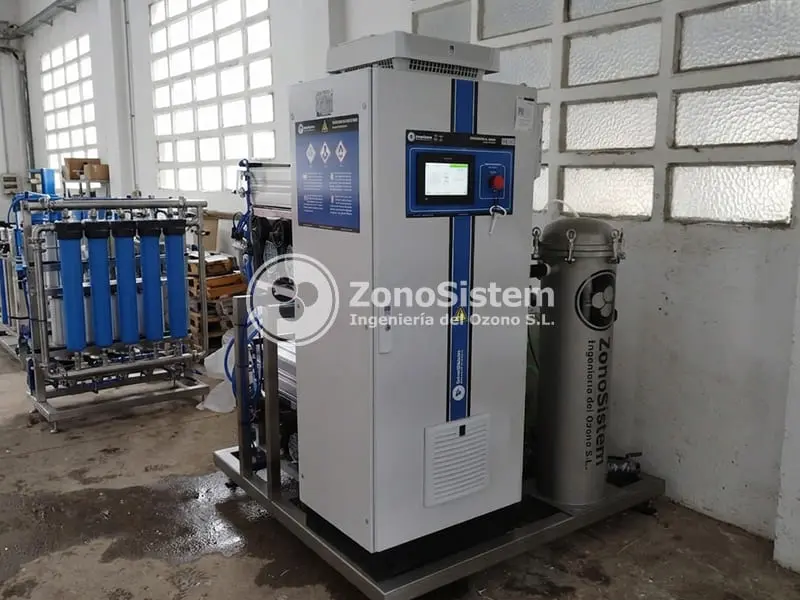
Ozone in the DWTP of a paper mill
The deployment of an ozone disinfection system has taken place for the treatment of process water in the paper industry. The technology used enables the removal of organic matter and dissolved metals, and the addition of chlorine to the process water.
Automated O₃ dosing helps to reduce persistent biofilm contamination at wetted surfaces in industrial settings. The project includes a GRZO series ozone generator and a HIDRO VT in-line injection system.
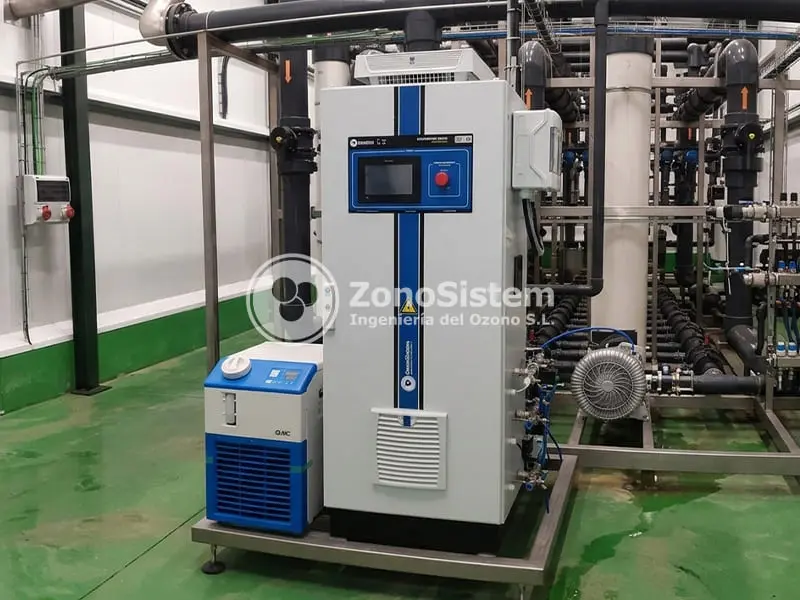
Ozone at a soft drinks DWTP. Spain
This project includes an ozonation system that injects ozone into water from the mains supply, which has previously been softened. The ozone-disinfected water is stored in tanks, ensuring continuous hygiene. It then passes through activated carbon to remove residual ozone, goes through reverse osmosis membranes and is used as process water. The project includes a GRZO ozone generator and a HIDRO V injection system.
Ozone at a DWTP for the food canning industry. Spain
Ozone technology has been integrated into the raw water supply of a fish-processing plant, optimising the most critical resource in the production process: water. By using O₃ as an advanced oxidant, we have succeeded in disinfecting the raw seawater abstracted from the coast, eliminating viruses, bacteria and organic micro-contaminants without producing the toxic by-products associated with chlorine, such as trihalomethanes.
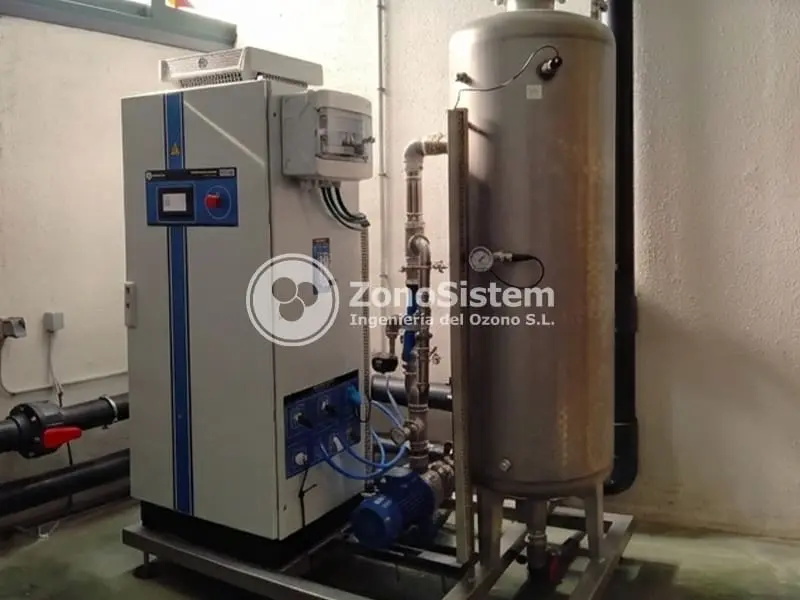
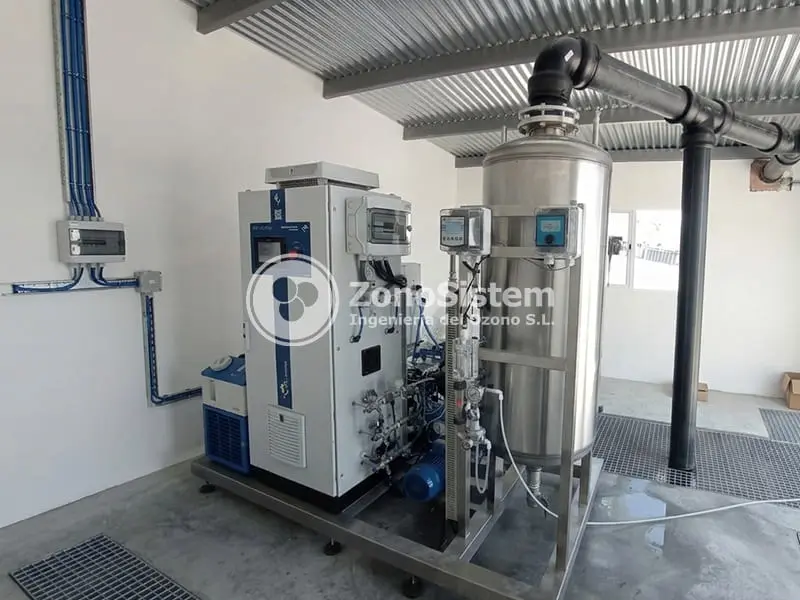
Ozone in a DWTP for the baby food industry. Spain
This technology replaces the use of traditional chemicals, radically eliminating pathogens, biofilms and organic contaminants from the water used to wash fruit, vegetables, surfaces and machinery. As it leaves no chemical residues and does not alter the taste or colour of the final product, ozone ensures complete food safety and optimises operating costs, providing a sterile water supply that strictly complies with current health regulations in the food sector.
Frequently asked questions about the use of ozone in industrial DWTPs
Yes, absolutely. Ozone is a biocidal, disinfectant and oxidising gas which, when applied at the required concentrations and contact times, will improve water quality both during the pre-treatment stage of raw water and during the final treatment stages.
Some industries separate domestic hot water (DHW) from process water at the factory entrance; in other words, the water supplied from the local mains network is used for domestic purposes – such as in bathrooms and taps – whilst a separate line is dechlorinated using activated carbon, ozonised and used directly as process water. In this way, they ensure that chlorinated compounds and their derivatives do not enter their production process.
If ozone is used to pre-treat raw water at a DWTP, it is recommended that the water be filtered afterwards to remove oxidised compounds such as Fe and Mn. As a final stage, the water must be chlorinated before being sent to the factory to ensure a constant residual level at the end points. However, if the production process does not permit the use of chlorine, ozone must be applied to ensure a constant and measurable residual in the process water line.
Ozone dissolved in water may oxidise materials it comes into contact with, just as any other oxidising agent, such as chlorine, can. Pipes that are not compatible must not be used. It is recommended to use pipes made of PE, 304 stainless steel, food-grade PVC, etc.
Do you require a quote?