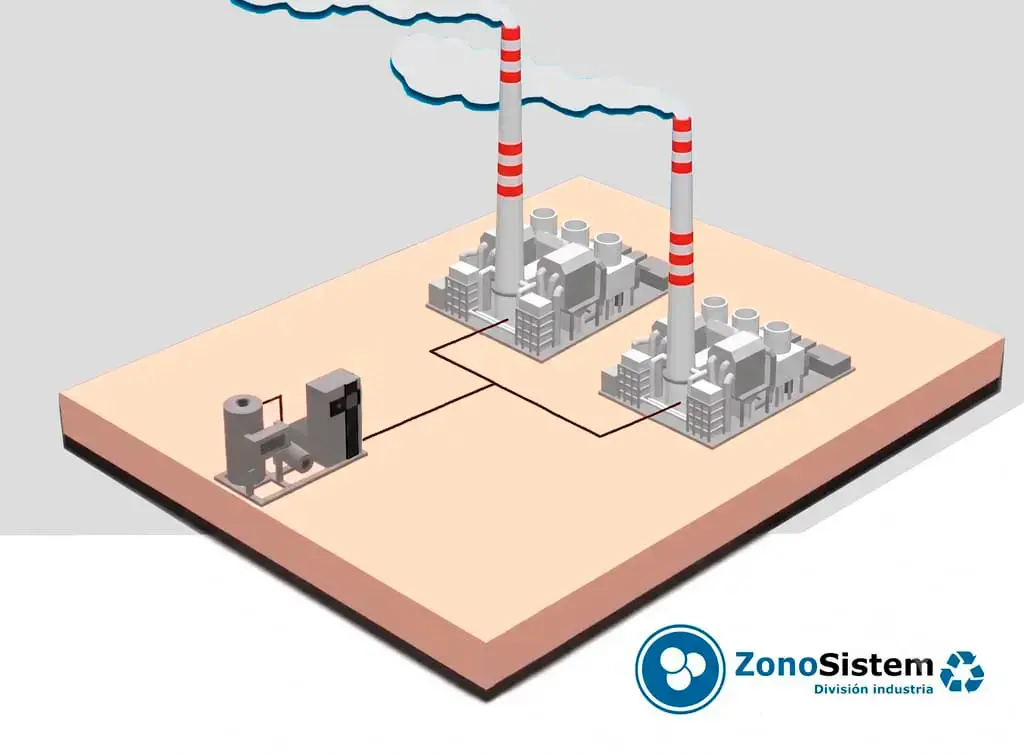
Use of Ozone for NOx Oxidation
In industrial combustion and incineration plants, the control of nitrogen oxide (NOx) emissions is a key factor in complying with environmental regulations and reducing atmospheric impact. In this context, ozone (O₃) stands out as an advanced oxidation technology capable of converting NOx into compounds that are more easily removed, thereby improving the efficiency of abatement systems and enabling stricter emission limits to be met in a stable and controlled manner.
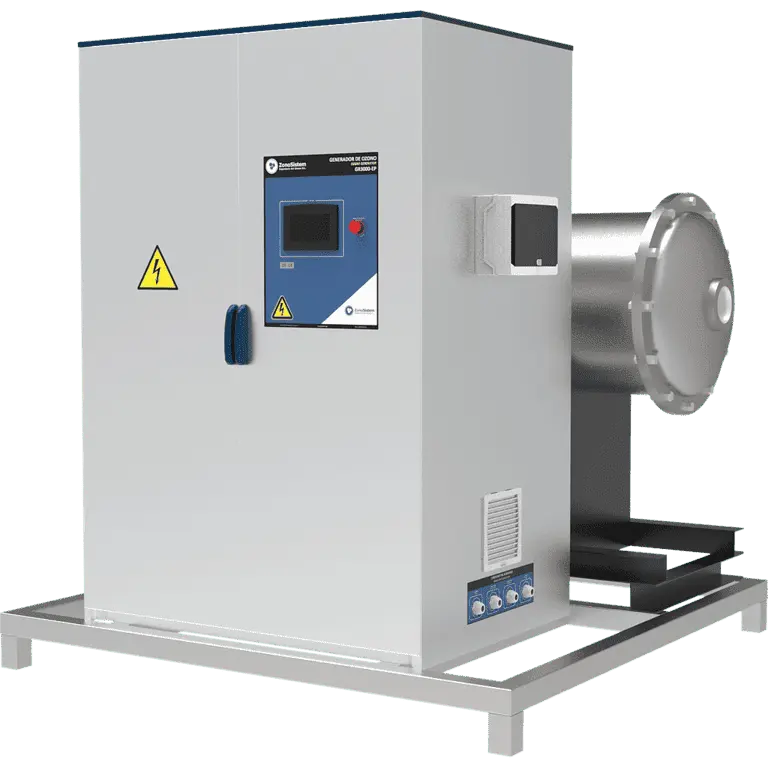
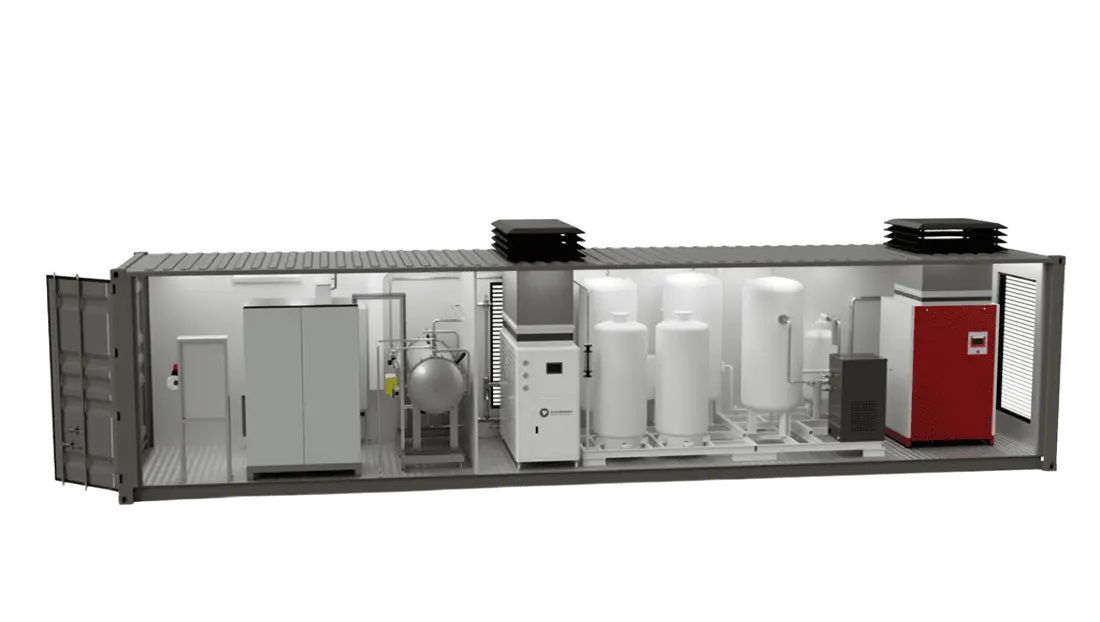
ZonoSistem adds value to these solutions, as it designs and manufactures high-output, high-concentration ozone generators, housed in plug-and-play containers for rapid installation without the need for civil engineering works.
Ozone generators for NOx Oxidation
It removes NOx from emissions using ozonisation technology.
Ozone is capable of oxidising NOX into soluble species so that they can be removed in subsequent DWTPs
Ozone is generated on-site; there is no need to store or transport chemicals
Ozone leaves no residue in the exhaust
The system is automated; it does not require any manual labour to operate it
Why use ozone for NOx oxidation?
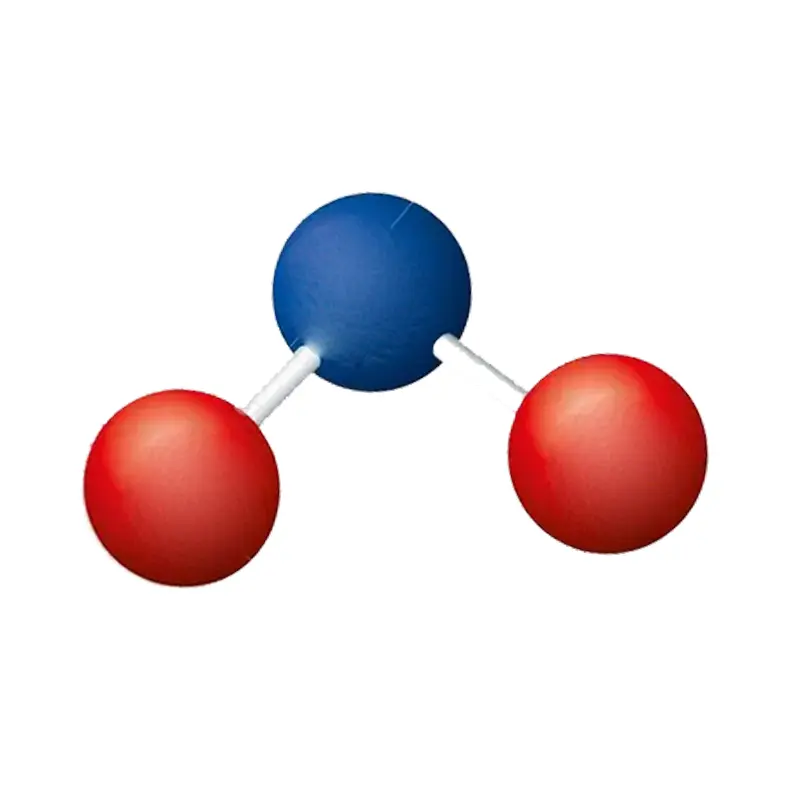
Ozone acts as a highly reactive oxidant, which is particularly effective at converting nitric oxide (NO) – the main component of NOx – into nitrogen dioxide (NO₂) and, under controlled conditions, into more oxidised species such as N₂O₅. This transformation is key, as NO has low solubility in water and is difficult to remove using conventional systems, whilst NO₂ and its derivatives can be efficiently captured in subsequent stages, such as scrubbers or chemical absorption systems.
The controlled injection of ozone into the gas stream makes it possible to increase the proportion of oxidised NOx, thereby facilitating its removal without the need for significant modifications to the existing infrastructure.
This process integrates easily into gas treatment systems, improving overall performance, reducing emissions and optimising reagent consumption during the DWTP stages. Furthermore, the use of ozone prevents the generation of complex secondary waste, contributing to a cleaner and more environmentally efficient solution.
What are the advantages of using ozone for NOx Oxidation?
High efficiency in the oxidation of NOX
It rapidly converts NO (which is difficult to remove) into NO₂ and N₂O₅, which are much easier to treat in subsequent stages.

Reduction in the use of chemical reagents
It optimises downstream processes, reducing the use of caustic soda or other neutralising agents.
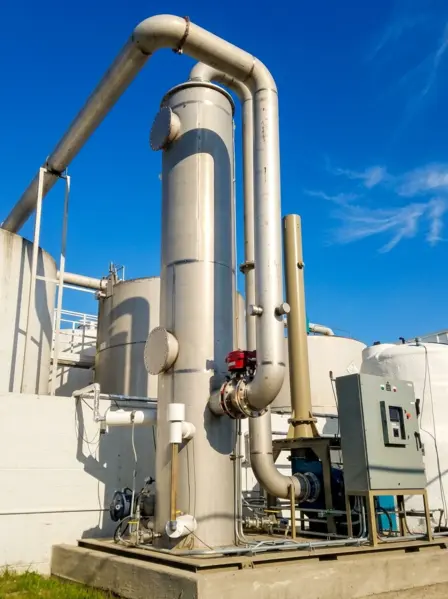
Improves the performance of scrubbers
It increases the solubility of NOx, facilitating their absorption in scrubbers.
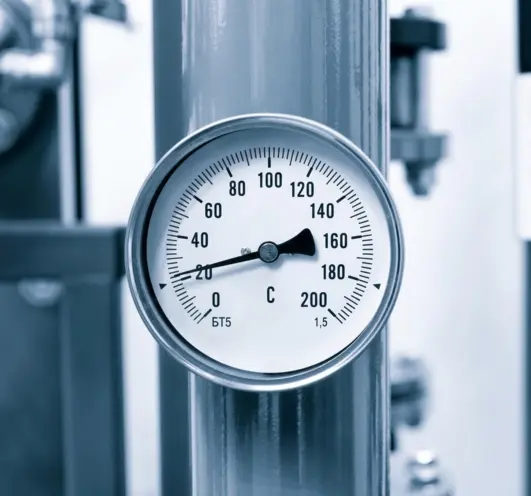
Efficient operation without altering the temperature
It does not require high temperatures like other systems (SCR/SNCR).
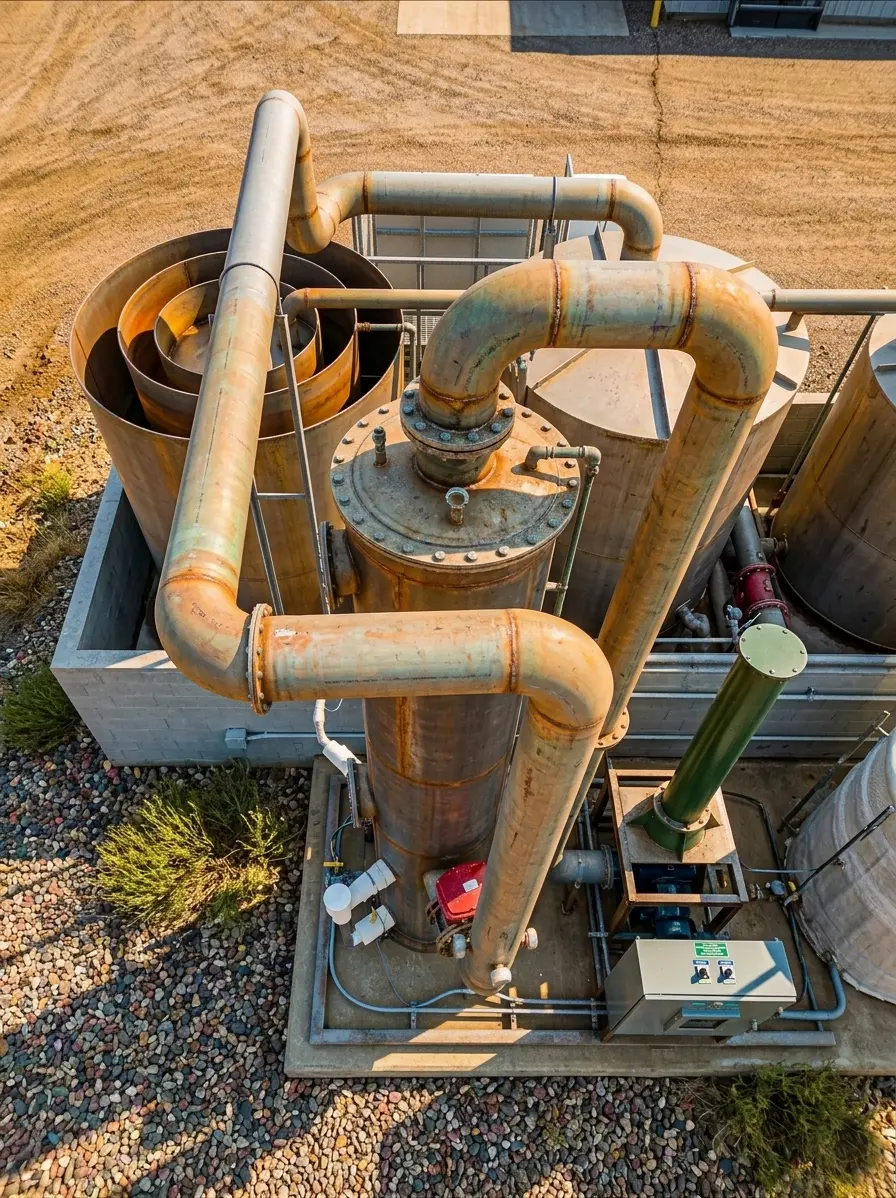
Can be adapted to existing installations
It can be integrated into existing operational systems without major modifications.

Clean technology with no persistent residues
Ozone breaks down into oxygen, thereby preventing the formation of complex by-products.
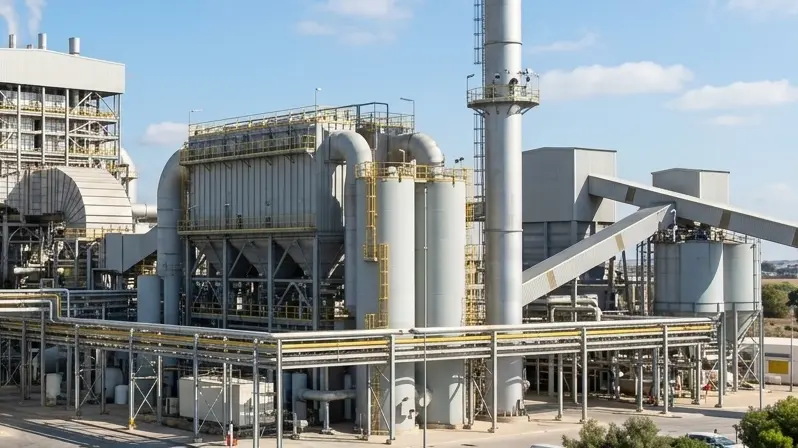
Incinerators (MSW, hazardous waste)
In incineration plants, ozone significantly improves NOx removal by oxidising NO into more soluble species, thereby facilitating its capture in gas scrubbing systems (scrubbers). This solution is particularly effective in facilities with variable loads, where consistent compliance with emissions standards is required without substantially altering the existing infrastructure.
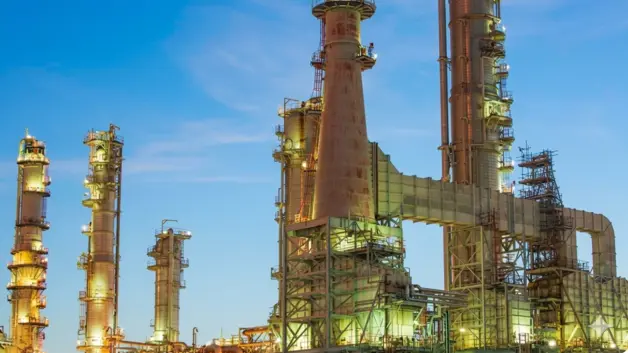
Refineries, petrochemicals
In refineries and petrochemical plants, ozone can be easily integrated into gas treatment systems to optimise NOx removal in complex and variable gas streams. Its ability to operate under a range of operating conditions makes it a flexible alternative to conventional technologies, improving overall efficiency and reducing reagent consumption in subsequent stages.
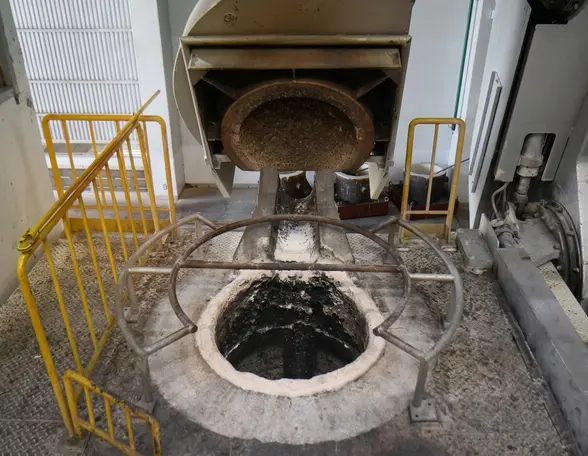
Industrial ovens
In industrial furnaces such as those used in the cement, glass or metal industries, ozone offers an effective solution for NOx control in conditions where other technologies have limitations. Its use allows for adaptation to variations in temperature and load, facilitating regulatory compliance and improving the performance of abatement systems without the need for major modifications to the process.
Bespoke ozone treatment for NOx oxidation.
We design, manufacture, install and maintain comprehensive ozone systems for NOx oxidation. We work in partnership with engineering firms and gas supply companies on the design and installation.
Contact us
Bespoke ozone treatment for NOx oxidation.
We design, manufacture, install and maintain comprehensive ozone systems for NOx oxidation. We work in partnership with engineering firms and gas supply companies on the design and installation.
Contact us
ZonoSistem case studies for NOX Oxidation
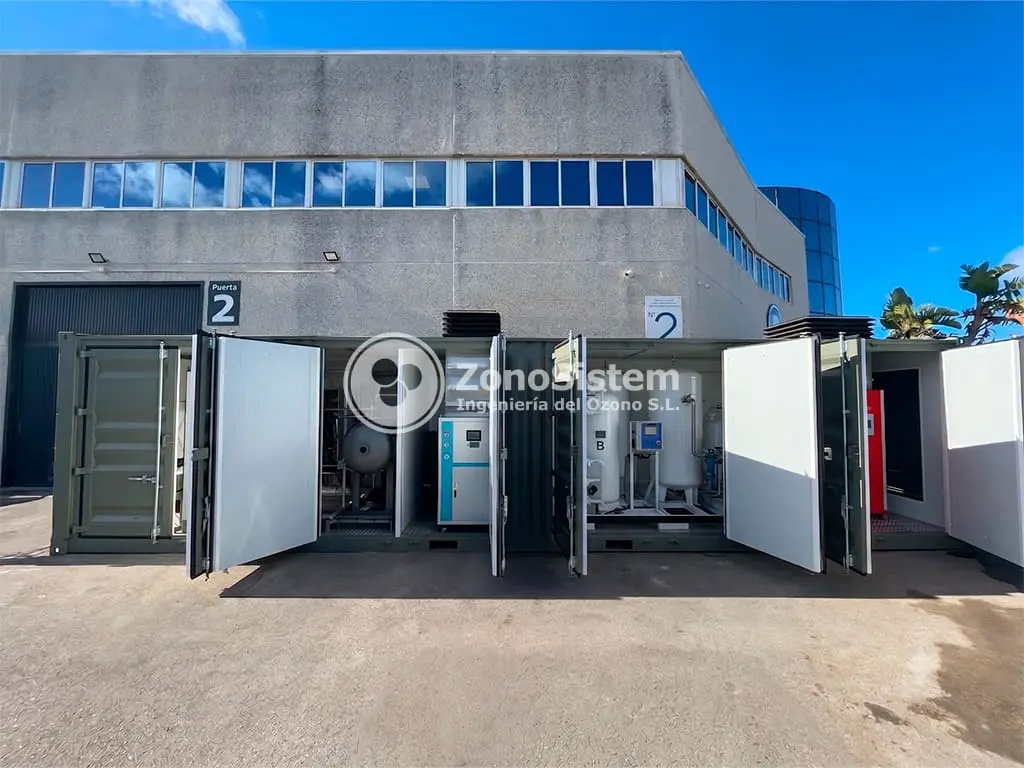
Incineradora en Francia. Eliminación de NOx
El proyecto incluye un sistema PLUG & PLAY fabricado e instalado en un contenedor marítimo de 40 pies. La producción de ozono es de 5Kg/h alimentado con oxígeno procedente de PSA, también incluida en el sistema contenerizado. Sistema totalmente automatizado y funcionamiento con control remoto.
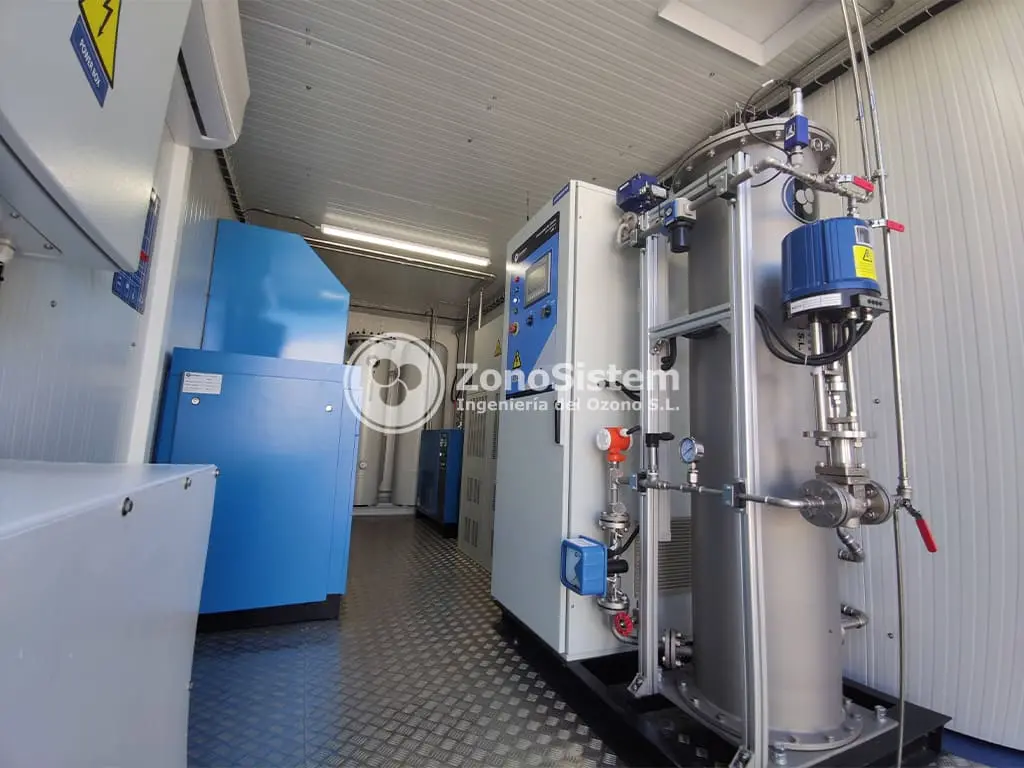
Incinerator in Slovenia.
NOx abatement.
Este proyecto incluye un sistema piloto portátil de 1kg/h de producción de ozono contenerizado, instalado en una planta de valorización energética de residuos de demostrando niveles excepcionales de eliminación de NOx de las emisiones de gases de combustión de la planta.
Waste incinerator in France.
NOx removal
The project includes a PLUG & PLAY system manufactured and installed in a 40-foot shipping container. Ozone production is 5 kg/h, fuelled by oxygen from a PSA unit, which is also included in the containerised system. The system is fully automated and operated remotely.
Incinerator in Slovenia.
NOx abatement.
This project includes a portable, containerised pilot system with an ozone production capacity of 1 kg/h, installed at a waste-to-energy plant, which has demonstrated exceptional levels of NOx removal from the plant’s flue gas emissions.
Frequently Asked Questions on the Use of Ozone in NOx Oxidation
Ozone acts as a very powerful oxidising agent, converting nitric oxide (NO), which is poorly soluble, into nitrogen dioxide (NO₂) and other more oxidised species. These forms are much easier to remove subsequently using gas scrubbers or chemical absorption.
Not necessarily. Ozone can act as an alternative or supplement, particularly in installations where SCR or SNCR are not viable due to cost, space or operating conditions. It is highly effective in existing systems with scrubbers or in processes with variable loads.
Ozone does not require specific temperature conditions; it can be easily integrated into existing facilities and does not produce persistent chemical waste. Furthermore, it helps to improve the efficiency of treatment systems and reduce the consumption of reagents in subsequent stages.