Use of Ozone in Extractor Hoods
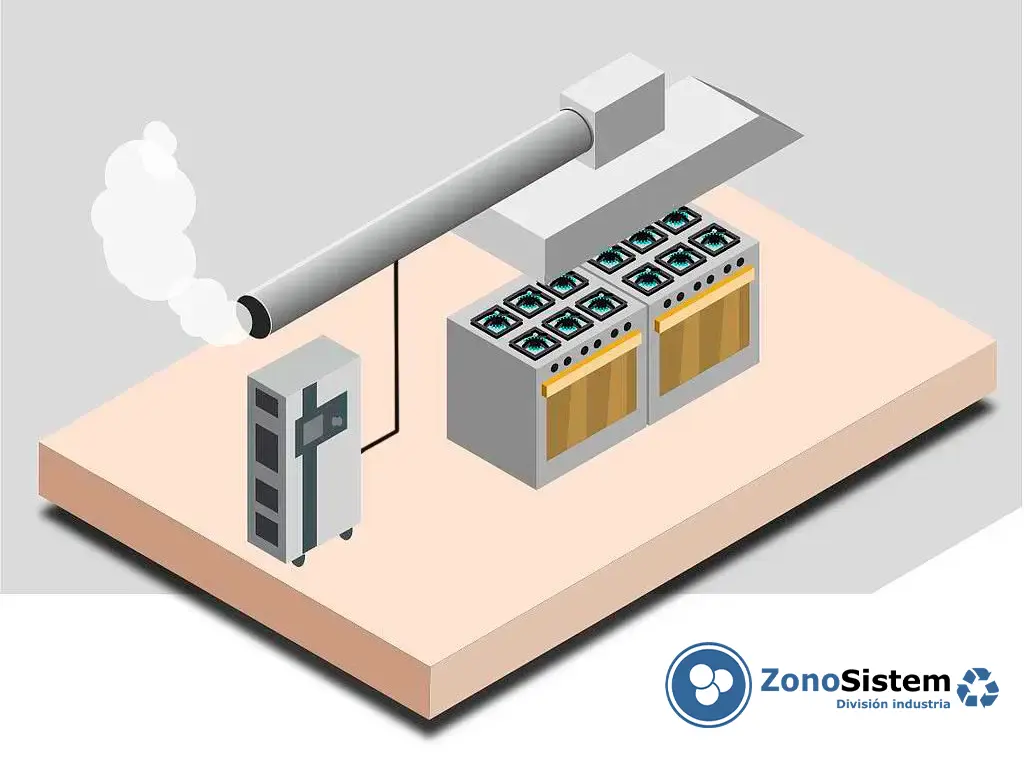
Ozone has become a highly effective solution for eliminating odours from extractor hoods in restaurant and bar kitchens, thanks to its high efficiency and ease of integration. All that is required is to inject ozone gas into the extractor duct. As it passes through, the ozone reacts with volatile organic compounds (VOCs), transforming them into breakdown products that are odourless and also less polluting. Ozone does not simply mask odours; it literally destroys the compounds that cause them.
Furthermore, ozone is generated on-site; there is no need to transport or store it – it is produced on the spot and applied immediately. These characteristics of ozone, combined with its ease of installation and control and low electricity consumption, make it an excellent tool for reducing the environmental impact and potential nuisance that the hospitality industry may cause in its surroundings.
Ozone in catering extractor hoods
Ozone eliminates odours that escape through the extraction pipe and prevents any nuisance in your surroundings
Ozone reduces odours quickly and effectively
Ozone is generated on-site; there is no need to store or transport chemicals
Ozone leaves no residue and is environmentally friendly
The system is automated; it does not require manual labour to operate it
How do you fit a cooker hood?
Installation diagram
We provide an installation manual and instructions for electrical and pneumatic connections
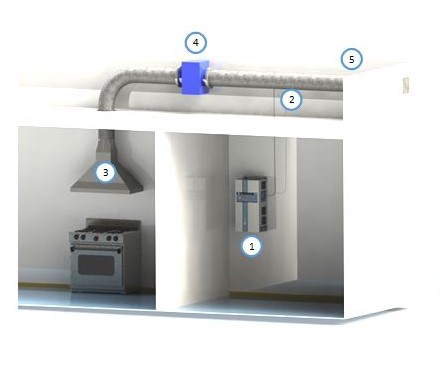
The ozone generator should be placed in a well-ventilated area, outside the kitchen.
The ozone gas produced is injected into the kitchen’s flue.
We will only inject it when the extractor hood is running and extracting air; therefore, we will synchronise the start-up of the ozone generator with that of the extractor hood.
1. Ozone generator
Designed to generate ozone from the ambient air. Do not install inside the kitchen
2. Injector
Accessories for injecting ozone into the duct; the tube is usually pierced at the top.
3. Grease trap
It expels fumes and traps grease and heavier solids
4. Electrostatic filter
An electrostatic filter must be installed prior to ozonisation to ensure that as many particles as possible are retained.
5. Outlet duct
The larger the tube, the more effective the treatment will be.
Professional ozone solutions for your cooker hood
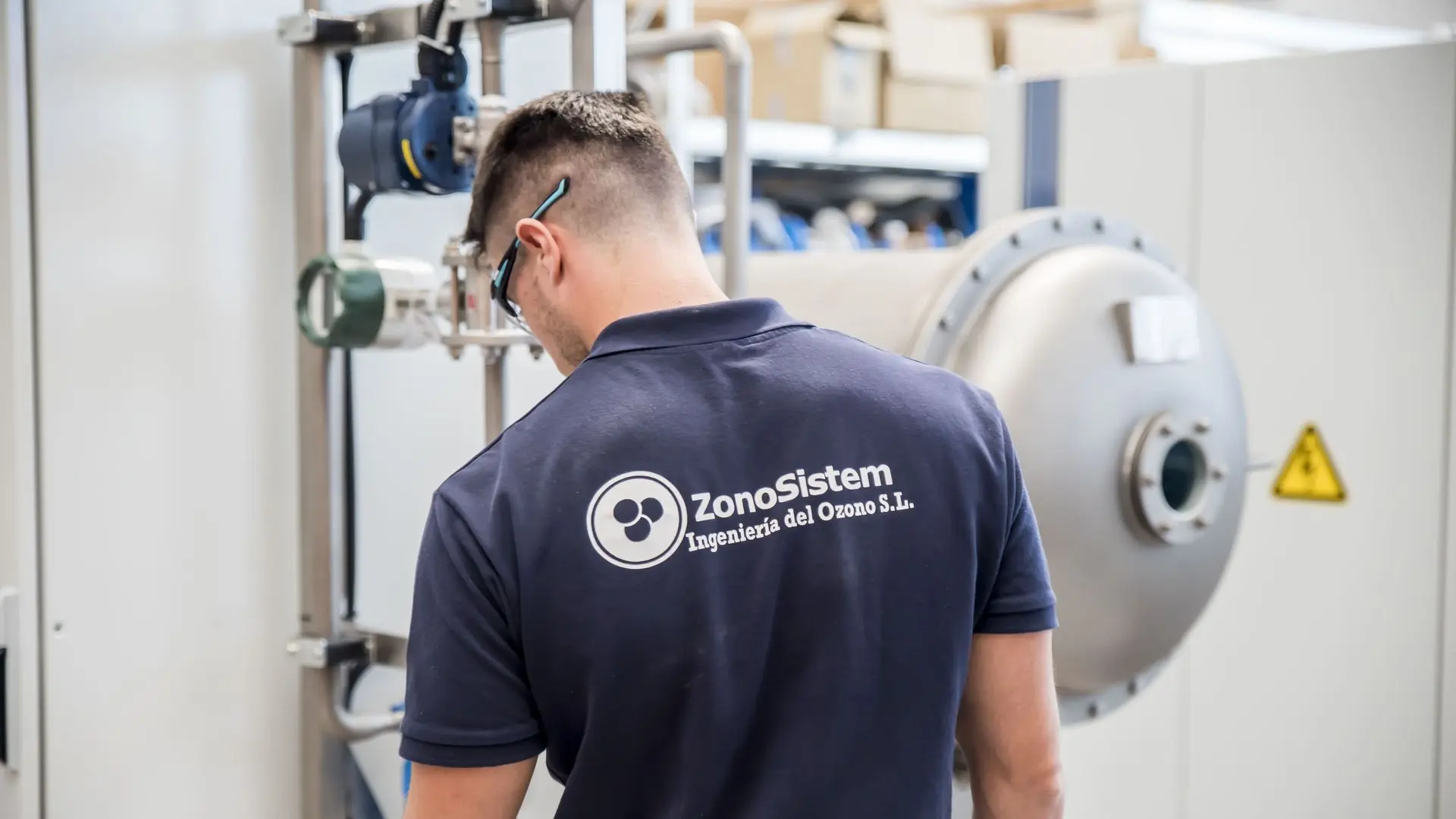
We design, manufacture, install and maintain comprehensive ozone systems for deodorising industrial extractor hoods. The right combination of electrostatic filters and ozone prevents problems with neighbouring properties. ZonoSistem can help you with the calculations and sizing for your projects.
Contact us
Professional ozone solutions for your cooker hood
We design, manufacture, install and maintain comprehensive ozone systems for deodorising industrial extractor hoods. The right combination of electrostatic filters and ozone prevents problems with neighbouring properties. ZonoSistem can help you with the calculations and sizing for your projects.
Contact us
Frequently asked questions about the use of ozone in extractor hoods
Ozone not only eliminates odours, but also works by oxidising suspended grease particles that have not been trapped by the mechanical filters. By breaking down this organic matter, the build-up of sticky grease on the walls of the ducts is drastically reduced. This keeps the extraction system cleaner for longer and minimises the amount of fuel available in the event of a spark, thereby improving fire safety.
No, it is a complementary system that ensures odours are eliminated. The extractor hood must retain its mesh or slatted filters for the mechanical retention of heavy grease. The electrostatic filters help to remove smoke. The ozone generator is installed to treat the air that has already passed through these filters, dealing with the microparticles and volatile organic compounds (odours) that the physical filters cannot trap.
Yes, it is completely safe provided it is installed professionally. The system is designed to inject ozone into the extraction duct, where the air flow carries it outwards whilst it reacts with the pollutants. Furthermore, the equipment must be linked to the extraction fan so that it only generates ozone when there is airflow, preventing any leakage back into the kitchen.