Ozone Treatment in Public Water Supplies
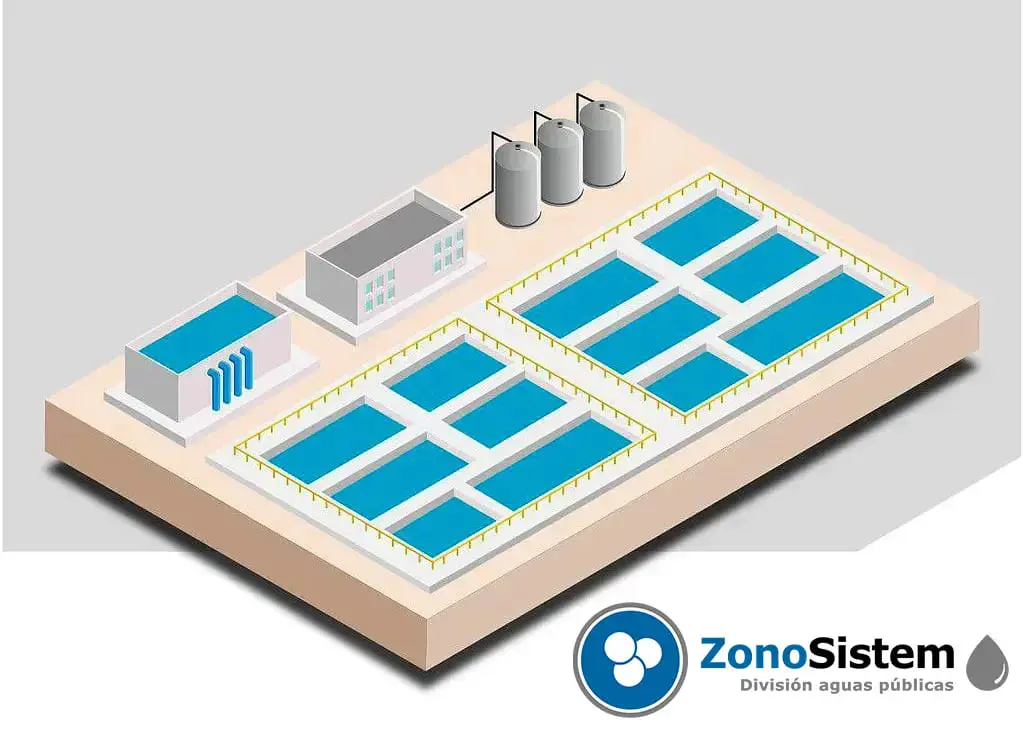
Ozone for DWTP (Drinking Water Treatment Plant)
Most drinking water treatment works incorporate ozone into the purification process. Ozone significantly improves the performance of the works. Pre-treatment with ozone enhances the effects of flocculants and coagulants, oxidises heavy metals, reduces the organic load, and makes decanting more effective. In the INTER phase, ozone improves filter performance, reduces the number of backwashes and extends the service life of the filters, whilst also further reducing COD, BOD, turbidity, colour, odour, suspended solids (SS) and settled solids (SD). Finally, it is used in the POST phase as a disinfectant.
We offer a complete solution: a refrigerated ozone generator, an ozone distribution and delivery system, contact chambers with diffusers, vent valves and an ozone destructor, measurement of gaseous and dissolved ozone, and a main electrical switchboard with a PLC and remote monitoring.
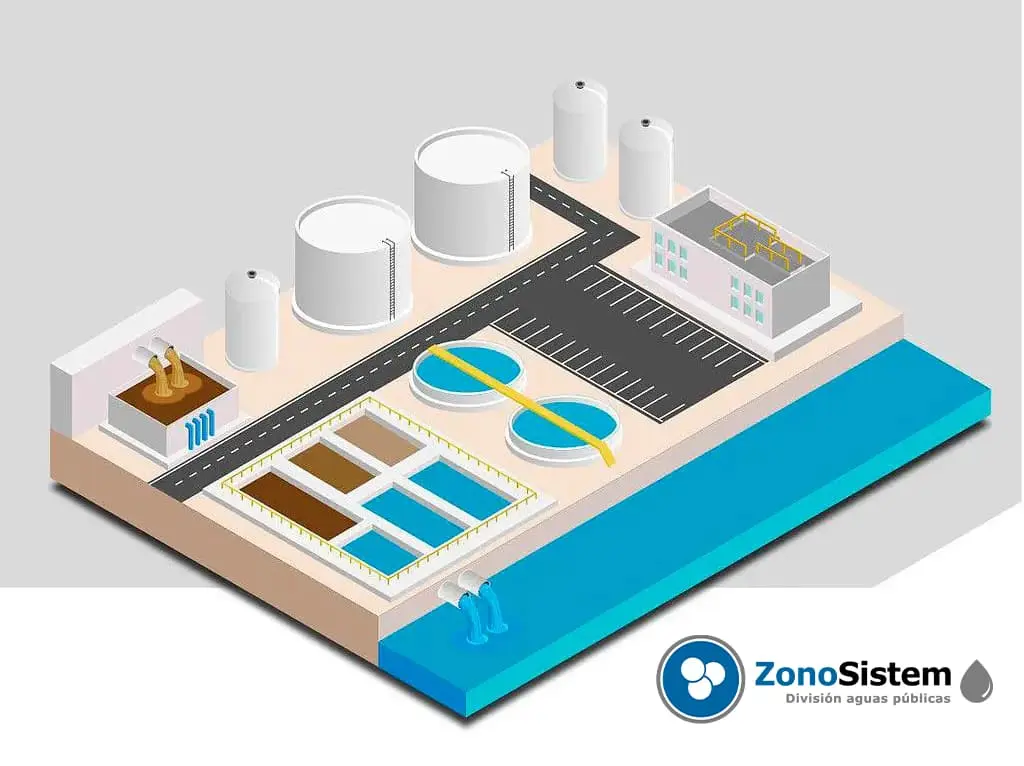
Ozone for WWTPs (Wastewater Treatment Plants)
The use of ozone in urban wastewater treatment works significantly improves discharge parameters at an affordable cost. Ozone effectively reduces COD and BOD, microorganisms, suspended solids (SS), dissolved solids (DS), turbidity, colour and odour.
It is true that large-scale industrial equipment is required, as the flow rates to be treated are usually substantial as well; however, ozone technology has advanced considerably in recent years, and it is now possible to generate large quantities of ozone at a manageable capital and running cost. In most cases, significant savings are achieved compared with chlorine consumption. This has the advantage that there is no need to store or handle chemicals, and that the results – that is, the final water quality – are far superior to those obtained using chlorine.
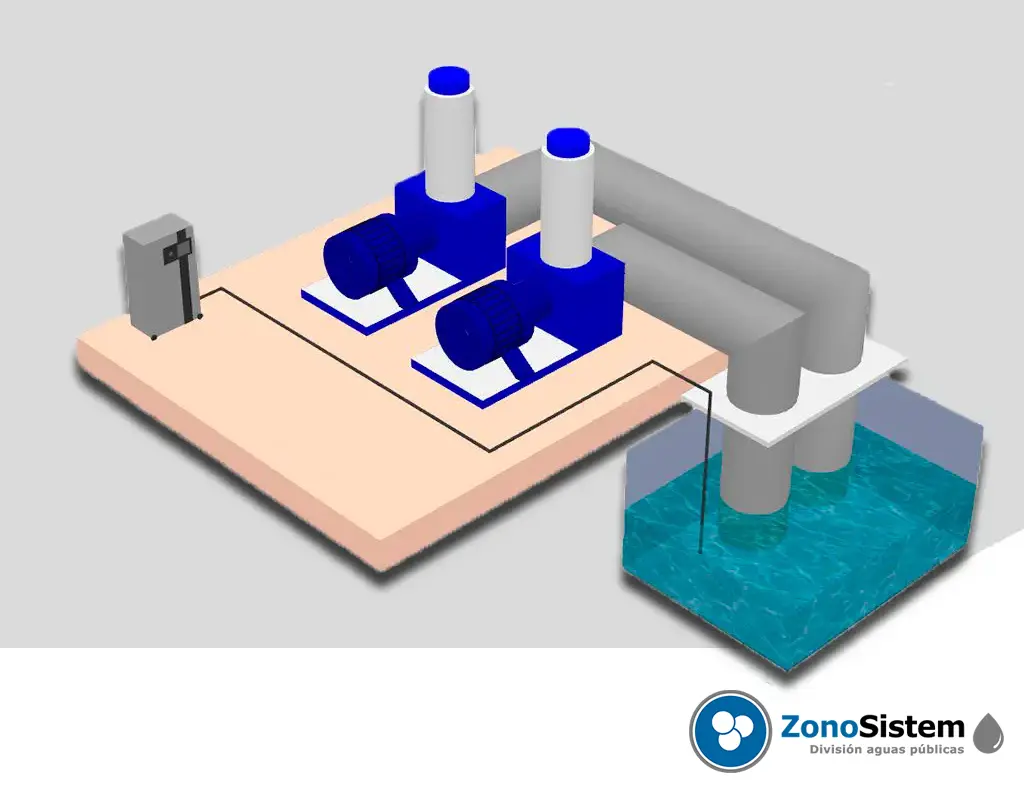
Ozone for Wastewater Pumping Station
Wastewater pumping stations play a key role in water cycle management, and the incorporation of clean technologies such as ozone treatment sets a new standard in sustainability.
Ozone, a powerful oxidising agent, effectively reduces odours, organic matter and emerging pollutants before the water reaches its final destination (WWTP or outfall). This advanced solution improves environmental quality, eliminates the problem of odours caused by hydrogen sulphide (H₂S), reduces the impact on sewerage networks and reinforces the commitment to more efficient and responsible water management.
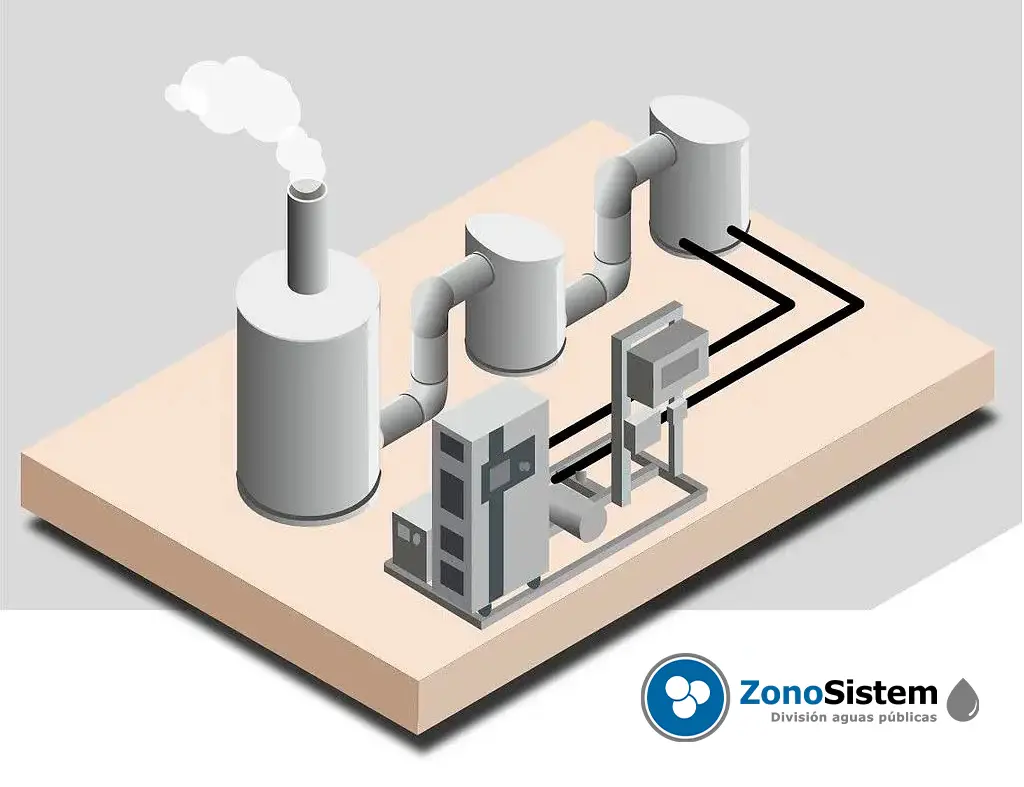
Ozone for deodorisation towers (scrubbers)
Ozone is a gas used in gas scrubbers and deodorisation towers, primarily to eliminate odours and reduce volatile organic compounds. Ozone has a high oxidation potential, and when injected into the scrubbing tower, it mixes with the gases, reacting with all kinds of chemical compounds, reducing them, oxidising them and transforming them into degraded compounds, resulting in most cases in a significant reduction in odour and volatile organic compounds (VOCs).
It is very easy to install and, furthermore, ozone is neither stored nor transported; it is generated on-site from the air we breathe and applied instantly. It operates automatically and requires no manpower. All these advantages make ozone a superb ally for getting the most out of your gas scrubber or deodorisation tower.