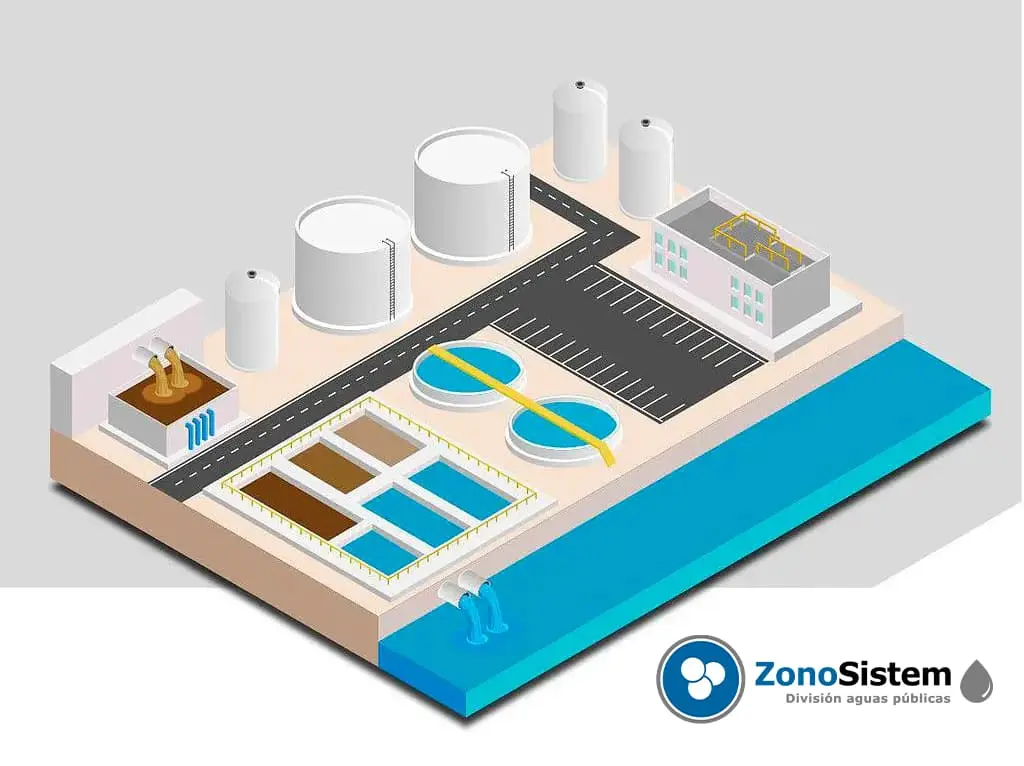
Use of Ozone in Urban WWTP
Ozone is a well-established technology in WWTPs. There are four main stages of application:
Pre-oxidation of the influent prior to biological treatment, to improve the COD/BOD ratio. Recirculated Sludge Treatment, to improve the volumetric sludge index. Tertiary Treatment, for disinfection and reuse. Quaternary Treatment, for the removal of emerging pollutants.
Ozone’s powerful oxidising capacity makes it an excellent tool for use at any of these stages, as it has a direct beneficial effect on COD, BOD, suspended solids, dissolved solids, turbidity, colour, odour, surface contamination and, of course, microbiological parameters. Ozone is a simple and safe technique that achieves even the most demanding results.
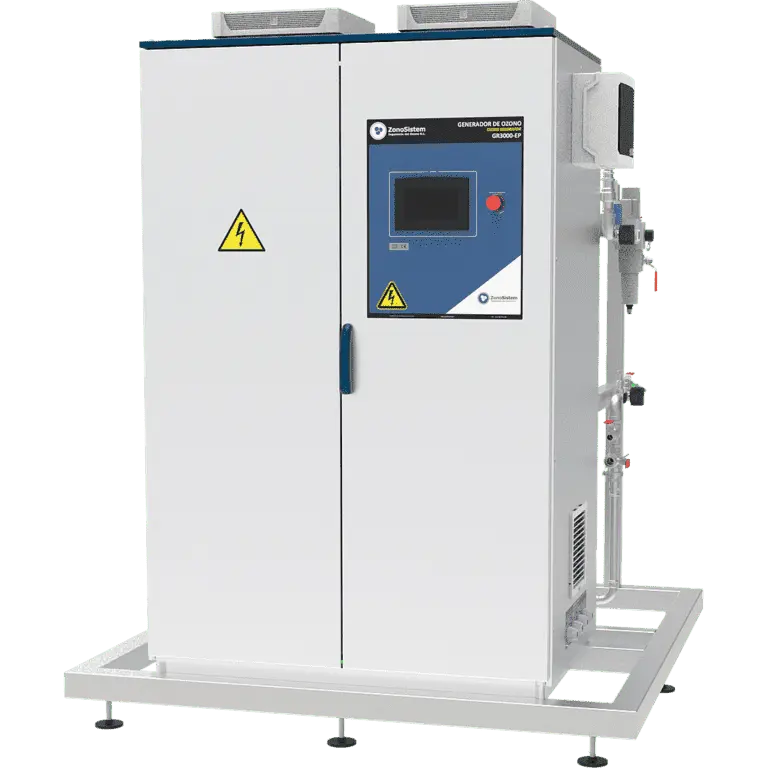
ZonoSistem advises detailed engineering firms on the drafting of project specifications, as well as designing and manufacturing the ozone generators for the actual project.
Ozone generators for WWTPs
Ozone in a Wastewater Treatment Plant. Improves the performance of the WWTP.
Avoid using shop-bought chemicals.
Evita el uso de cloro y químicos envasados
It is produced on-site, so there is no need to store or transport chemicals.
Ozone leaves no residue and reduces the carbon footprint.
Automated system; no manual labour is required to operate it.
Would you like to improve the performance of your urban WWTP?
Optimise the operational efficiency of your WWTP by deploying ozone technology, an advanced and versatile solution capable of being used at every stage of the treatment process: pre-treatment prior to biological treatment, sludge control and reduction, improvement of tertiary treatment and adaptation to quaternary treatment.
In the pre-biological stage, our advanced oxidation technology acts directly on the toxicity of the water, degrading inhibitory compounds before they affect the biomass. This helps to stabilise the biological process and improve biodegradability, thereby preventing operational failures. Furthermore, ozone enables the selective control of filamentous bacteria, eliminating problems with bulking or foaming and drastically improving sludge settleability, thereby ensuring a stable system in the face of load variations.
In the sludge treatment process, ozone causes cell lysis, significantly reducing the production of biological sludge. This translates into direct savings on dewatering, transport and waste management costs, one of the main operating costs of any WWTP.
In tertiary treatment, ozone is a key ally in meeting the standards set out in Royal Decree 1085/2024 on water reuse, acting as a broad-spectrum disinfectant that enables safe reuse in agricultural, industrial or urban applications.
Furthermore, ozone is emerging as a key technology for compliance with the new European Urban Waste Water Directive (TARU), which introduces mandatory quaternary treatment for the removal of emerging micro-contaminants (pharmaceuticals, PFAS, endocrine disruptors). Thanks to its high oxidising power, ozone makes it possible to adapt existing WWTPs to the new regulatory requirements.
Transform your facility into a model of the circular economy, optimising operating costs, reducing waste generation and staying ahead of future regulations with clean, efficient and zero-waste technology generated on-site.
Ozone Treatment Stages at WWTP
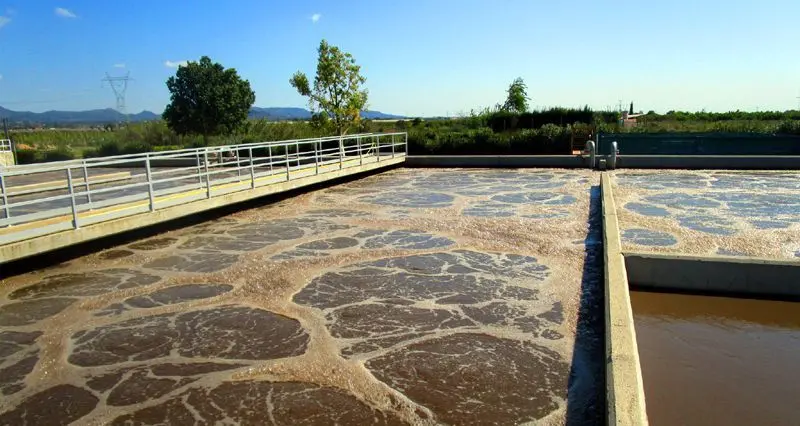
Pre-oxidation of the effluent prior to biological treatment
The application of ozone prior to the biological reactor improves its performance. Ozone oxidises detergents, polyphenols and other compounds that affect the COD/BOD ratio. Furthermore, O₃ increases the dissolved oxygen level. It is particularly suitable for WWTPs, as these receive industrial effluent.

Recirculating sludge treatment
The use of ozone improves the volumetric sludge index, reducing Escherichia coli and filamentous bacteria, suspended solids in the decanted effluent, and volatile matter in the mixed liquor; overall, it reduces sludge volumes and the associated management requirements.
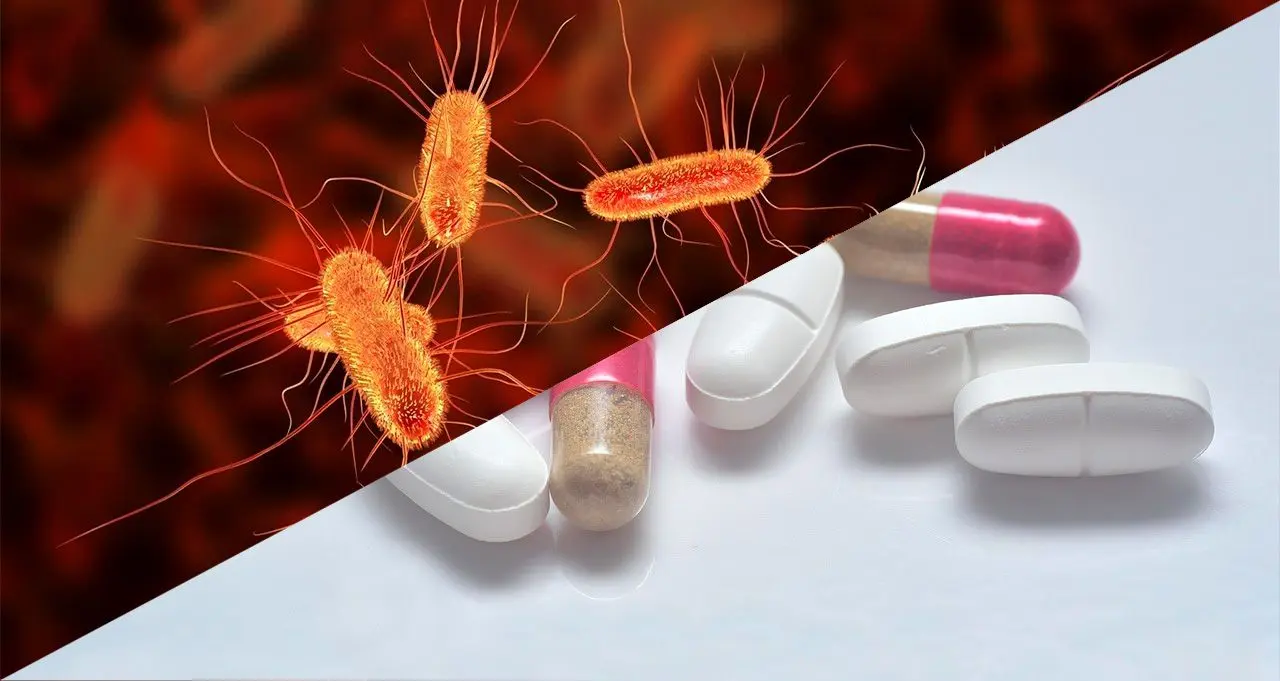
Tertiary and quaternary treatment
The use of ozone in tertiary treatment is aimed at disinfecting and reusing water. In contrast, ozone in quaternary treatment is capable of removing emerging pollutants.
No manual labour, fully automated
The system automatically generates and injects ozone into the tank, without the need for manual labour. It simply needs to be connected to the tank and a power point.
No storage of chemicals
Ozone is generated on-site and applied immediately, so it does not require the storage or handling of chemicals, eliminates the need for transport and reduces the carbon footprint.
Biocide recognised by ECHA
Ozone is included on the European Chemicals Agency’s (ECHA) list of biocides, and ZonoSistem holds all the necessary documentation for its proper authorisation and use
Water pilot testing for WWTP
Before making the investment, we recommend that you carry out a pilot water treatment trial in our testing laboratory. We can calculate the required ozone doses and contact times, and thus assess the feasibility of the treatment.
We also design pilot plants to test the WWTP parameters on site.
Contact us
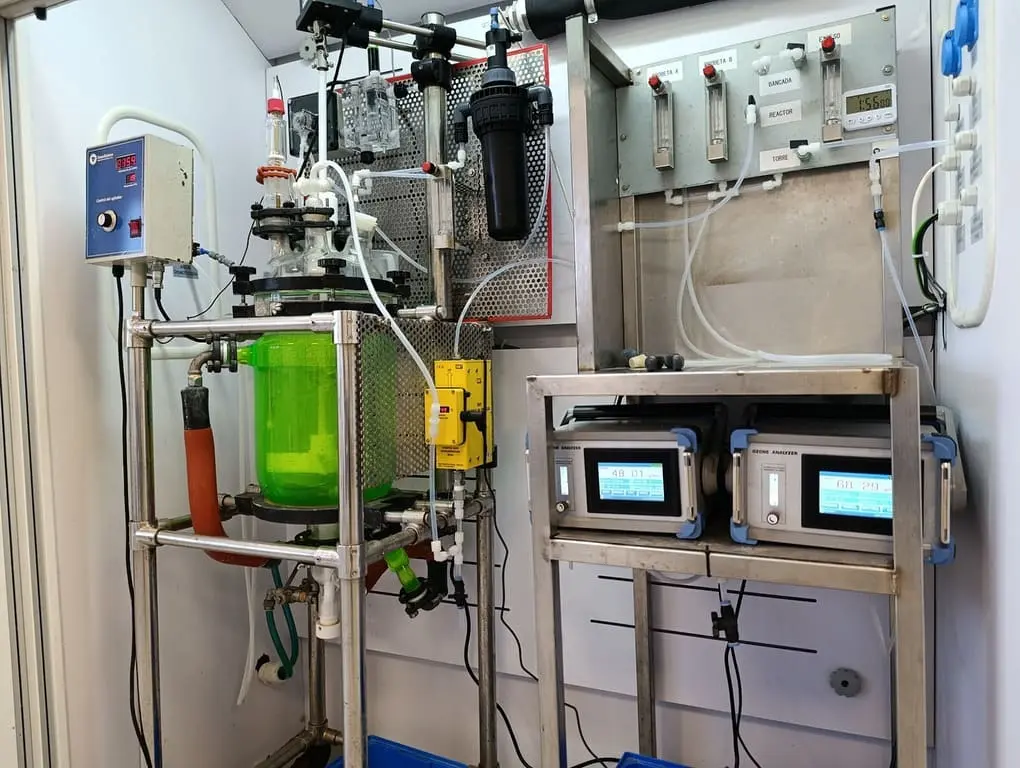
Water pilot testing for WWTP
Before making the investment, we recommend that you carry out a pilot water treatment trial in our testing laboratory. We can calculate the required ozone doses and contact times, and thus assess the feasibility of the treatment.
We also design pilot plants to test the WWTP parameters on site.
Contact us
ZonoSistem case studies at the Urban WWTP
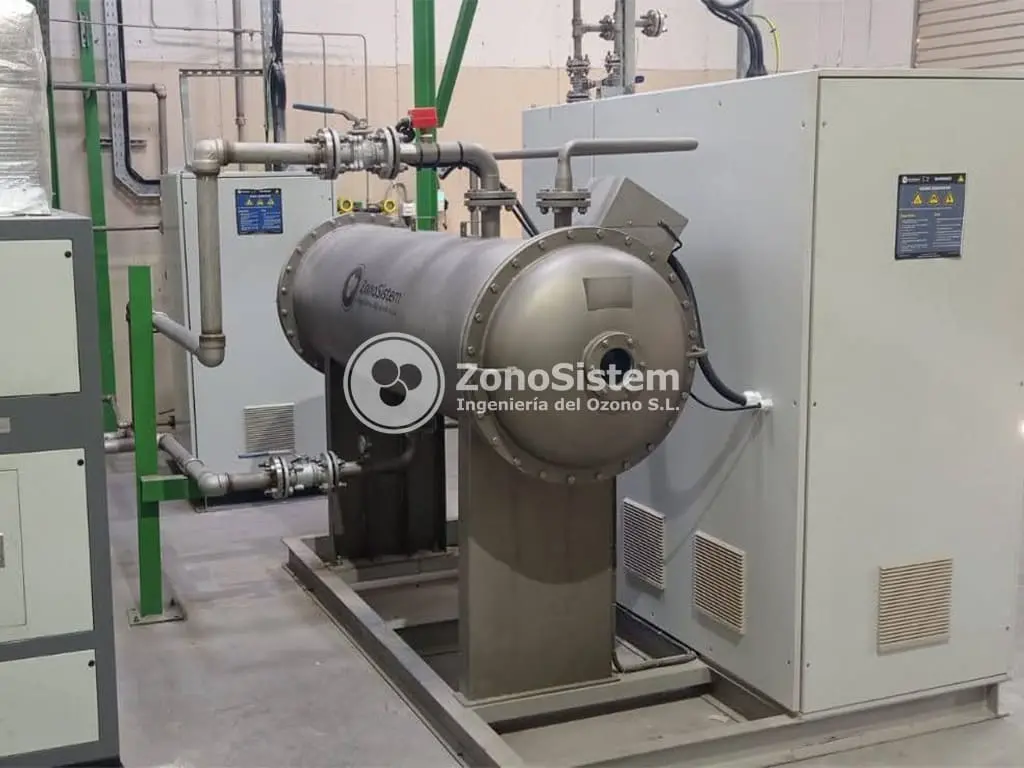
EDAR en Arabia Saudí
As part of this international project, an ozone pre-oxidation system has been deployed to stabilise the biological stage in the face of highly toxic effluent. The intervention has successfully neutralised the filamentous bacteria, optimising settleability and ensuring compliance with the most stringent discharge parameters.
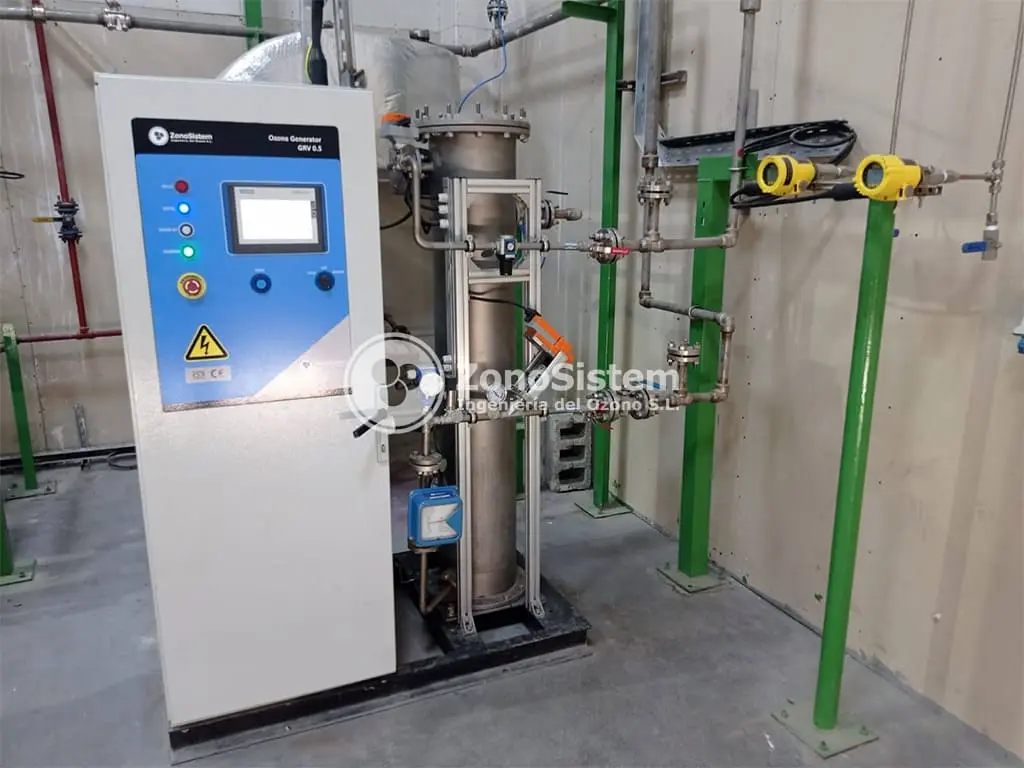
WWTP in Morocco
A tertiary disinfection system using ozone has been deployed at an urban WWTP. The aim is to disinfect the water for reuse on a nearby golf course. The treatment parameters achieve the following: E. coli < 100 cfu/mL, turbidity < 10 NTU, suspended solids < 10 mg/l
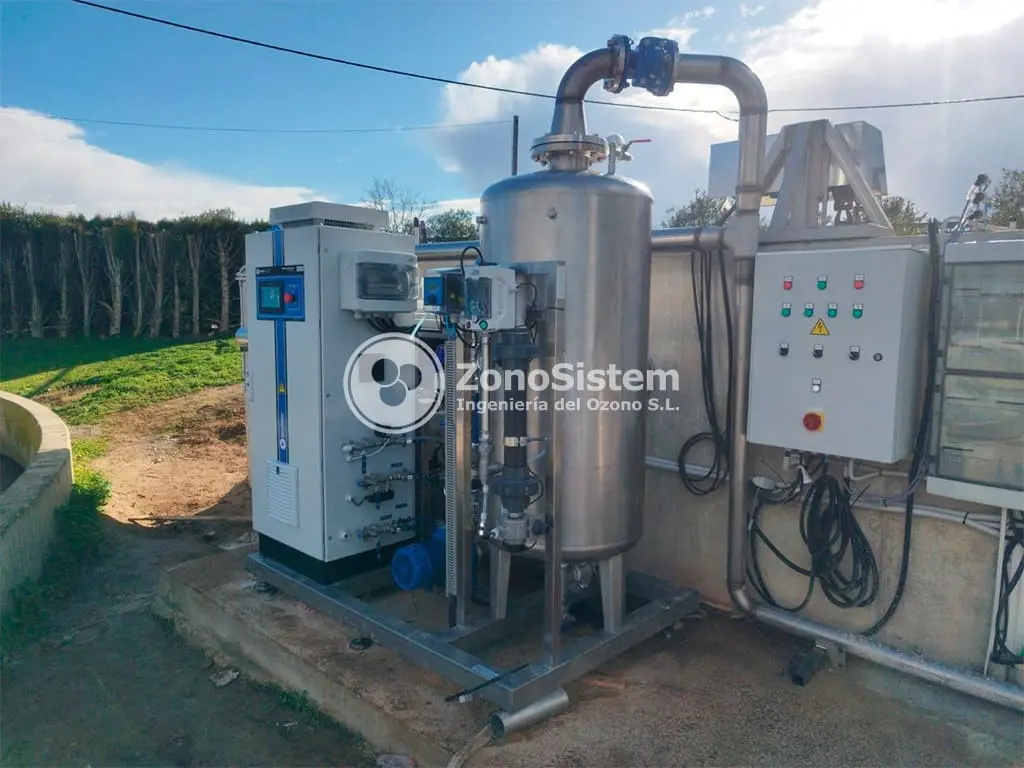
Terciario EDAR en Manacor
An ozonation system has been deployed as part of the tertiary treatment process with the aim of reusing the treated water for street cleaning using tanker lorries. The design parameter value is Quality Class U. B, in accordance with Royal Decree 1085/2024, with an E. coli count of < 100 cfu/mL.
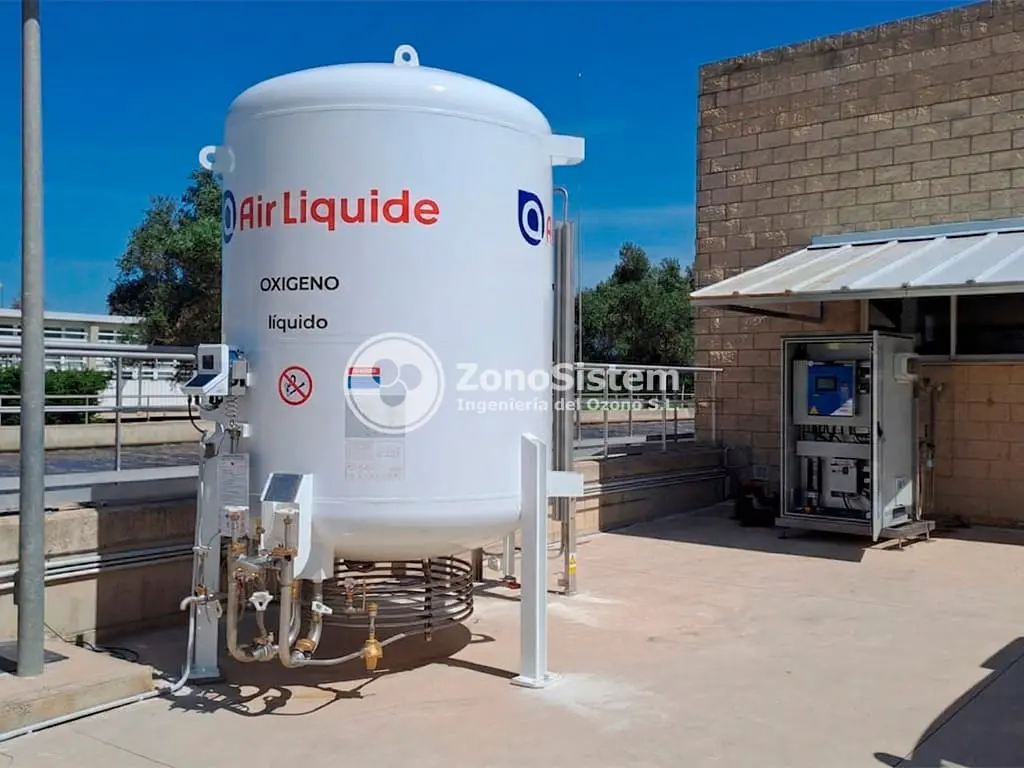
Intermediate sludge treatment. Urban wastewater treatment plant in the Valencian Community
An intermediate ozonation system was implemented to eliminate biological toxicity and control filamentous bacteria. The technology optimised settleability, ensuring compliance with discharge parameters and achieving a drastic reduction in sludge through cell lysis. The ozone generator used is the GR1000, which is fed with LOX oxygen and injected via a venturi into the sludge recirculation line.
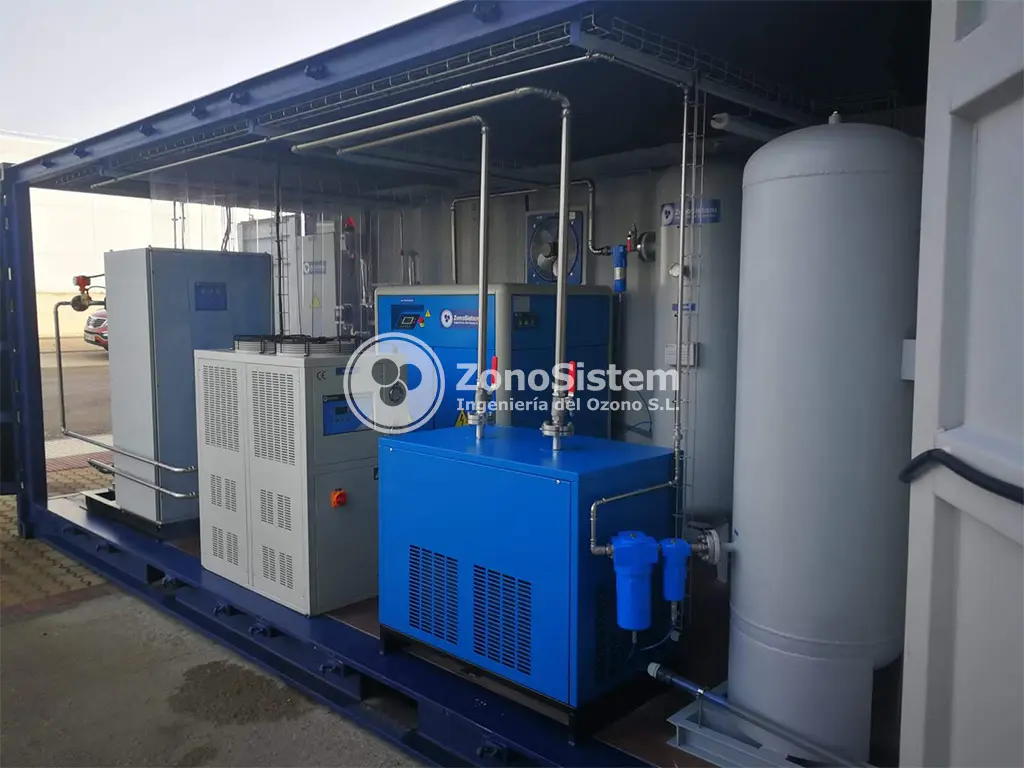
Pre-oxidation at the WWTP in Tenerife
For this project, a transportable plant housed in a shipping container was constructed, with the aim of providing a ‘plug-and-play’ solution for treating urban wastewater following a screening stage. The wastewater is temporarily discharged into the sea whilst the WWTP undergoes expansion works. Ozone helps to reduce E. coli by 30 per cent, COD by 25 per cent, BOD by 30 per cent and turbidity by 80 per cent, whilst minimising the impact of the discharge. To achieve this, a self-contained 1 kg/h system powered by PSA is used.
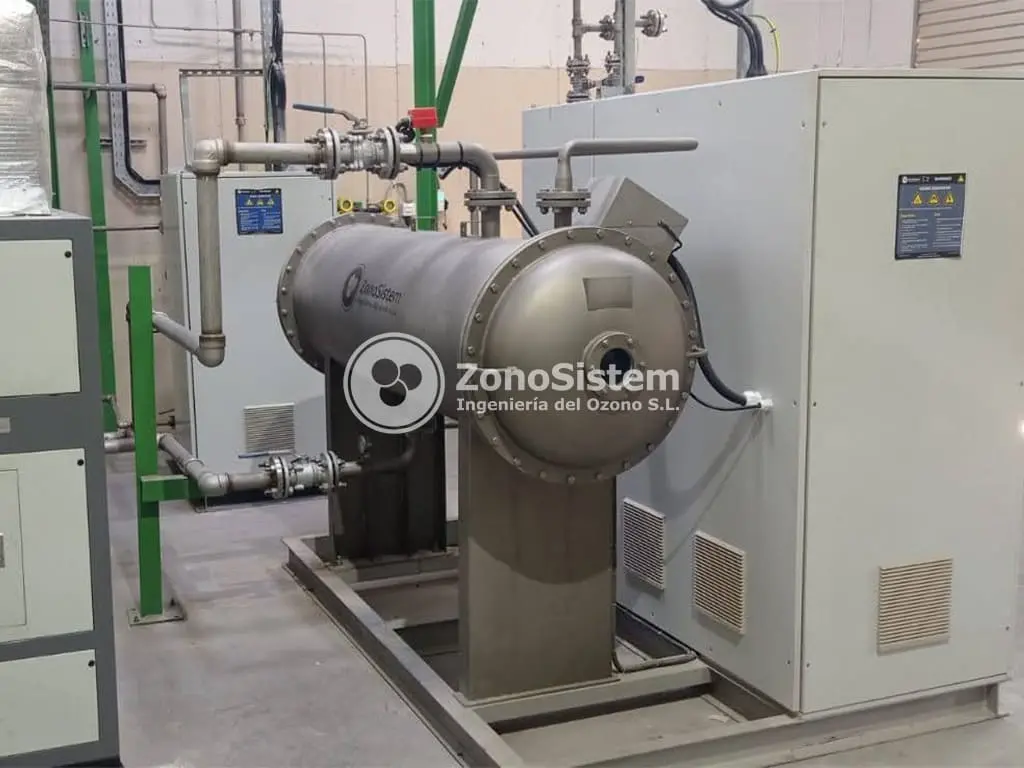
WWTP in Saudi Arabia
As part of this international project, an ozone pre-oxidation system has been deployed to stabilise the biological treatment stage in the face of highly toxic effluent. The intervention has successfully neutralised filamentous bacteria, optimising settleability and ensuring compliance with the most stringent effluent parameters.
WWTP in Morocco
The deployment of a tertiary disinfection system using ozone has taken place at an urban WWTP. The aim is to disinfect the water for reuse at a nearby golf course. The treatment parameters achieve:
E. coli < 100 cfu/mL, Turbidity < 10 NTU, SS < 10 mg/l
Tertiary WWTP in Manacor
The deployment of an ozonation system has taken place in the tertiary treatment stage with the aim of reusing the treated water for street cleaning using tanker lorries. The design parameter value is Quality Class U. B, in accordance with Royal Decree 1085/2024, with an E. coli count of < 100 cfu/mL.
Pre-oxidation at the WWTP in Tenerife
For this project, a transportable plant housed in a shipping container was constructed, with the aim of providing a ‘plug-and-play’ solution for treating urban wastewater following a screening stage. The wastewater is temporarily discharged into the sea whilst the WWTP undergoes expansion works. Ozone helps to reduce E. coli by 30 per cent, COD by 25 per cent, BOD by 30 per cent and turbidity by 80 per cent, whilst minimising the impact of the discharge. A self-contained 1 kg/h system powered by PSA is used for this purpose.
Intermediate sludge treatment. WWTP, Valencian Community
The deployment of an intermediate ozonation system has taken place to eliminate biological toxicity and control filamentous bacteria. The technology has optimised settleability, ensuring compliance with discharge parameters and achieving a drastic reduction in sludge volume through cell lysis. The ozone generator used is the GR1000, fed with LOX oxygen and injected via a venturi into the sludge recirculation line.
Frequently asked questions about the use of ozone in WWTPs
The main advantage is its advanced oxidation capacity, which makes it possible to remove not only organic and microbiological contaminants, but also emerging pollutants (traces of medicines, detergents and pesticides) that conventional biological treatment processes are unable to break down.
In pre-treatment, it helps to improve the effluent parameters of the biological treatment process. In sludge treatment, it reduces sludge volume. In tertiary treatment, it helps to comply with Regulation 1085/2024, and in quaternary treatment, it is the undisputed technology for achieving the parameters set out in the Waste Water Directive TARU 2024/3019.
Unlike chlorine, ozone used in tertiary treatment does not produce toxic by-products (such as chloramines or trihalomethanes) and does not add salts to the water. Furthermore, ozone is generated in situ, eliminating the risks associated with the transport and storage of hazardous chemicals in areas close to urban centres. When it comes to tertiary treatment, chlorine is not a viable oxidant for this process, whereas ozone is.