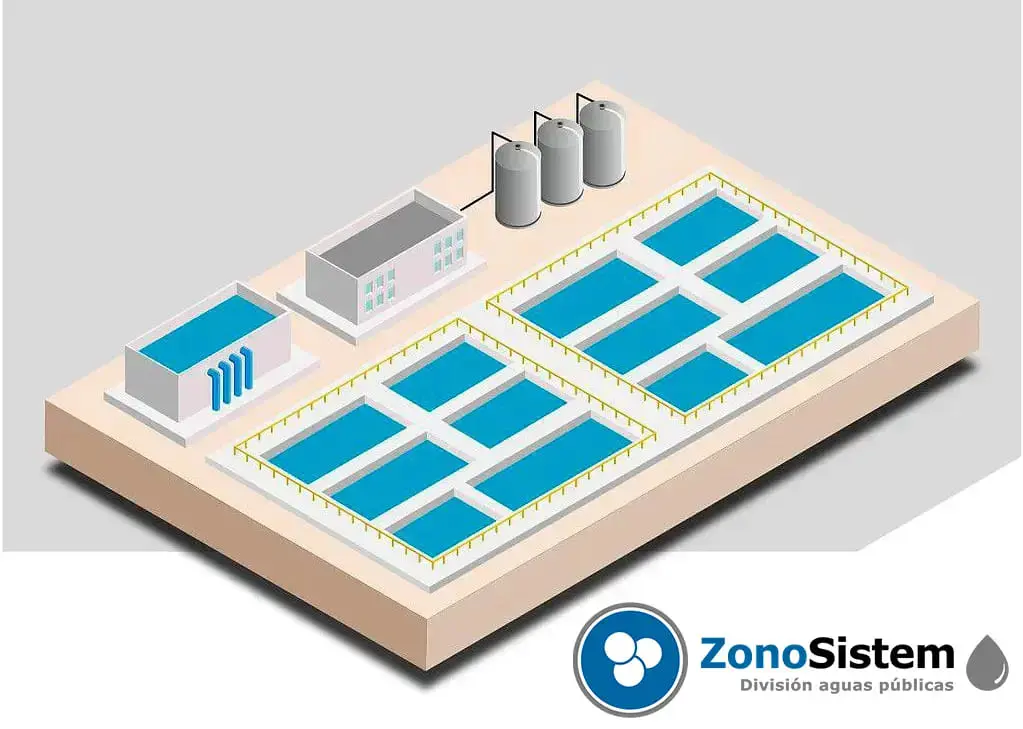
Use of ozone in DWTPs
Ozone is an excellent ally in public DWTPs. When diluted in water, it oxidises heavy metals, toxins, pesticides and plant protection products; it reduces the organic load, COD, BOD, TOC, turbidity, suspended solids (SS), settled solids (SD), odour and taste; and it enhances coagulation and flocculation, thereby improving settling. It increases filtration efficiency, extends the service life of filters and reduces the number of backwashes required.
It is a highly effective disinfectant that leaves no residue, reduces chlorine consumption and prevents the formation of trihalomethanes and other organochlorine compounds. Furthermore, the ozone is generated on site; there is no need to store, transport or manage it, and the system operates fully automatically. Using ozone and activated carbon in your drinking water treatment plant is a guaranteed success.
Ozone generators for DWTPs.
Public Water Treatment Plant
Optimise your DWTP by using ozone and improving water quality
Ozone helps to reduce the use of chemicals
Ozone is generated on-site; there is no need to store or transport chemicals
Ozone contributes to sustainability and reduces the carbon footprint
The system is automated; it does not require any manual labour to operate it
Are there any issues with the quality of the water from the DWTP?
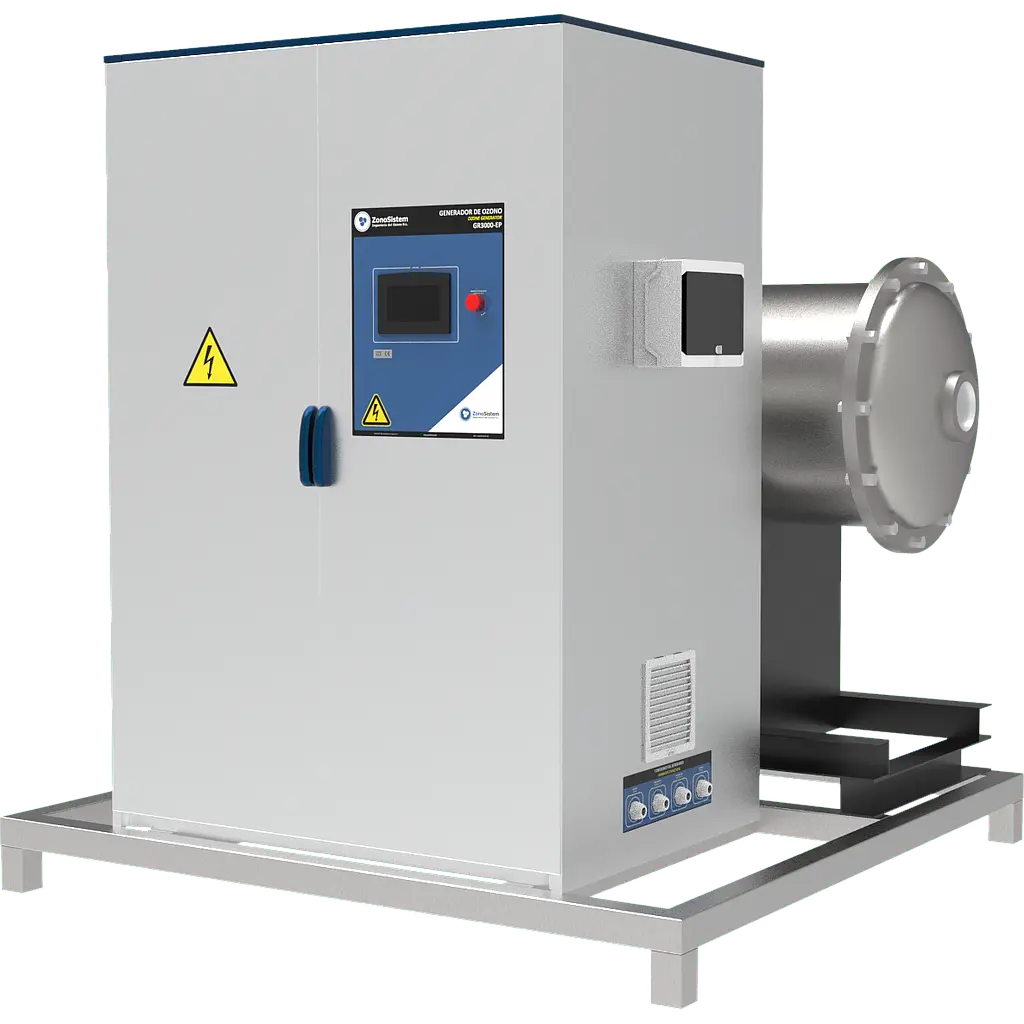
The deployment of ozone systems in DWTPs represents the definitive solution for removing heavy metals, unpleasant odours and tastes, resulting in water of the highest organoleptic purity. As a highly efficient oxidant, ozone neutralises critical contaminants and prevents the formation of trihalomethanes (THMs) and chloramines, harmful by-products derived from chlorine.
This not only ensures compliance with the most stringent health regulations, but also provides water that is much safer and healthier for human consumption.
As well as improving water quality, ozone acts as a catalyst to optimise the plant’s operational performance. By improving coagulation and filtration processes, it reduces reliance on traditional chemicals and extends the service life of the plant’s facilities.
Integrating ozone is therefore a strategic investment that transforms the DWTP into a more sustainable, cost-effective and efficient infrastructure capable of combating resistant pathogens, thereby raising the quality standard of the water supply.
Stages of ozone injection at DWTPs
PRE phase
Ozone improves the efficiency of coagulation and flocculation in public drinking water treatment works, facilitating sedimentation. It oxidises heavy metals and reduces COD, BOD, turbidity, suspended solids (SS), settleable solids (SD), colour, odour, etc. Disinfection processes begin at this stage.
INTER phase
Ozone improves filtration performance at the DWTP, extends the service life of the filters and reduces the frequency of backwashing, thereby minimising water loss. Ozone is applied during the activated carbon filtration stage, ensuring complete disinfection of the water and improving the subsequent absorption process.
POST phase
Ozone is a powerful disinfectant used in the DWTP; it is highly effective at eliminating all types of microorganisms in a very short time and without producing chloramines or organochlorine compounds. At this stage, ozone is applied to ensure disinfection during the distribution phase.
Advantages of using ozone in DWTP

It oxidises heavy metals
Ozone oxidises heavy metals, as well as metals such as iron and manganese, rendering them insoluble and thereby facilitating their settling or retention in filters. This is why it is frequently used in a PRE stage, with ozone being injected at the head of the DWTP.
Enhances flocculation and coagulation
Ozone itself has a flocculating and coagulating effect, due to the polarisation of water as the redox potential rises. However, it also enhances the effect of other flocculants and coagulants, maximising the aggregation of organic and inorganic material.
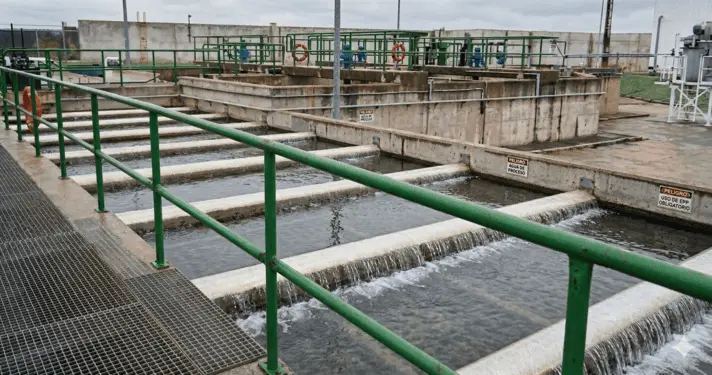
Improves filtering performance
As the settling stage is optimised, the filters are subjected to less load, resulting in fewer washes and a longer service life. Finally, ozonisation produces molecules with a higher average molecular weight, which enhances absorption by activated carbon filters.
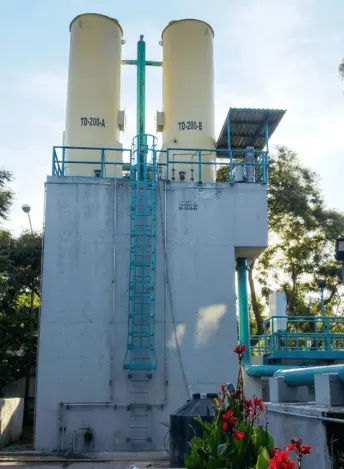
Powerful disinfection
At low concentrations and with short contact times, ozone eliminates all types of microorganisms, such as viruses, bacteria, fungi and moulds. It also has a low residual effect.
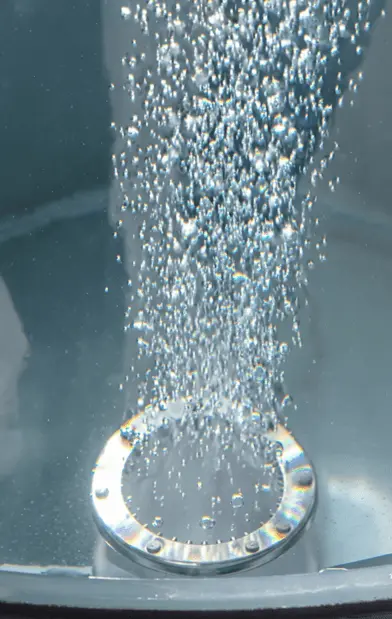
Reduces the use of chlorine and chloramines
Water that has been more thoroughly treated (pre-oxidised) and has a lower organic load will require fewer oxidising agents in the final stage. Therefore, if you use ozone in your DWTP, you will need less chlorine for transport to the distribution network. It will not generate chlorination by-products

Improves the smell and taste
Chlorination in the presence of organic matter produces organochlorine compounds which, as well as being harmful, impart an unpleasant taste and odour to the consumer. The most effective method is a combination of ozonation and activated carbon filtration (O₃+GAC).
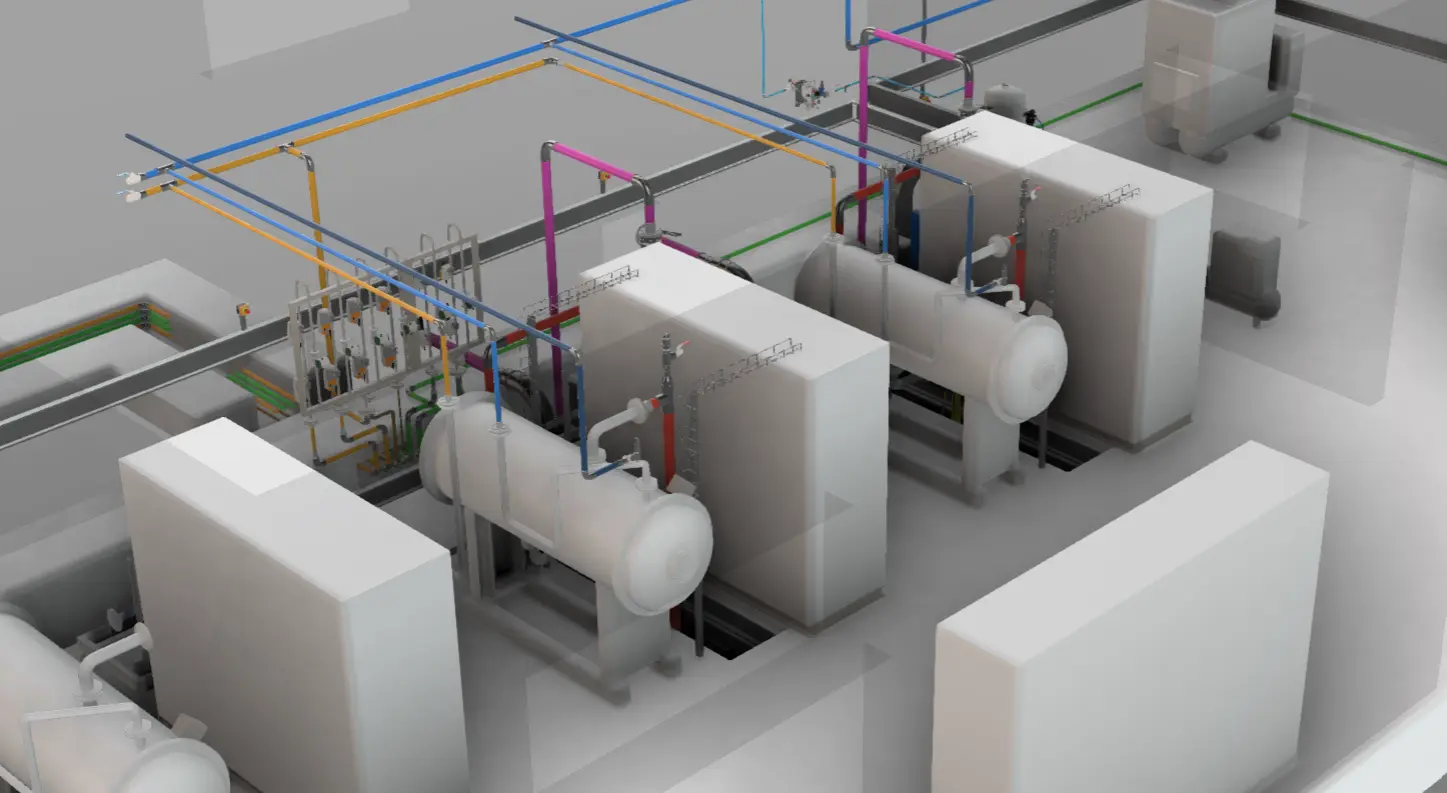
Customised projects for Ozono
We are designers, manufacturers, installers and maintenance providers of high-end ozone generation systems for public drinking water treatment works (DWTPs).
We work directly with detailed engineering firms to ensure correct sizing.
Customised projects for Ozono
We are designers, manufacturers, installers and maintenance providers of high-end ozone generation systems for public drinking water treatment works (DWTPs).
We work directly with detailed engineering firms to ensure correct sizing.
ZonoSistem case studies in DWTPs
ZonoSistem case studies in DWTPs
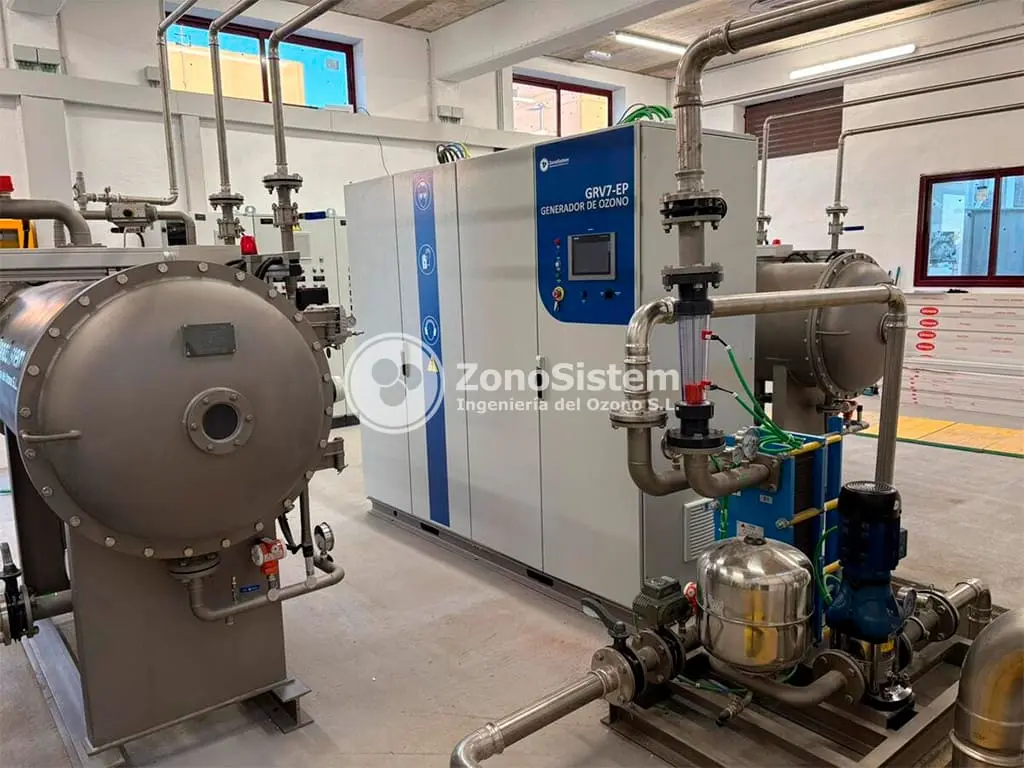
Ozone for DWTPs in Madrid. Griñon DWTP.
This ozone treatment project has been designed and implemented entirely by ZonoSistem on a turnkey basis. It comprises two 7.5 kg/h ozone generators, cooled by heat exchangers and powered by LOX. A stripping stage is included to remove dissolved ozone. The system features automatic flow control to each pre-treatment and intermediate treatment chamber, ozone destructors, remote control, a power distribution board and space for the future addition of a third unit.
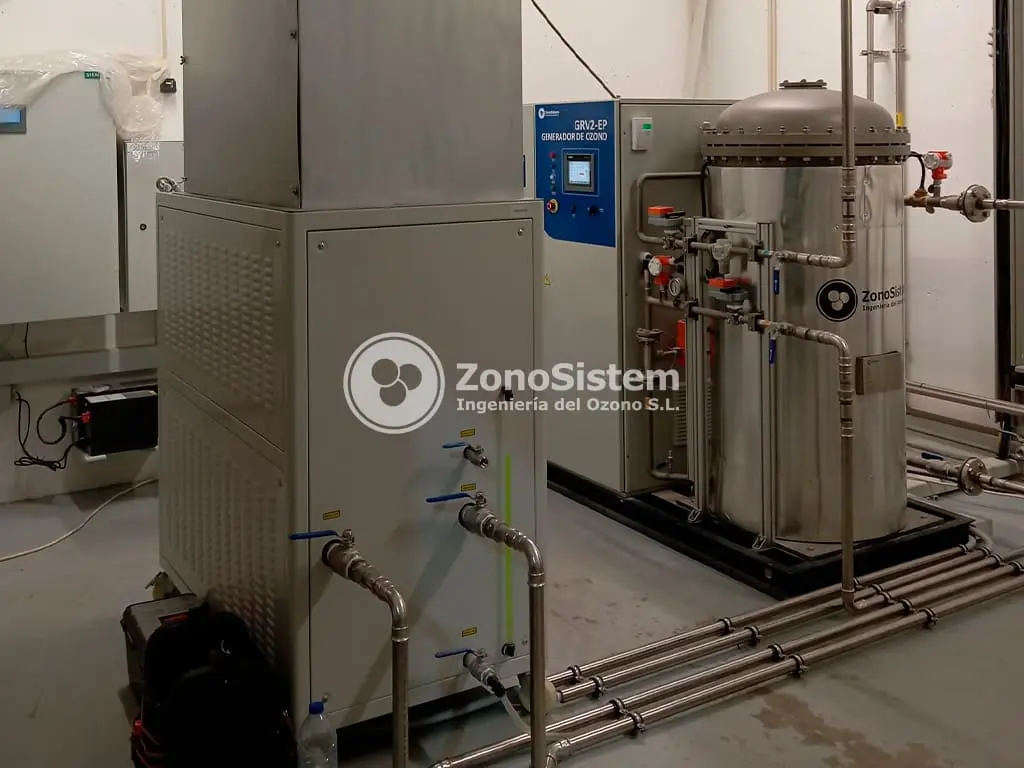
Ozone for DWTPs in Portugal. Apartadura DWTP
This project comprises two 2 kg/h ozone generators powered by LOX. A key distinguishing feature is that these two generators are manufactured using ceramic dielectrics, rather than borosilicate dielectrics, at the client’s request. The generators are cooled by a chiller and feed into the existing pre-ozonisation chamber.
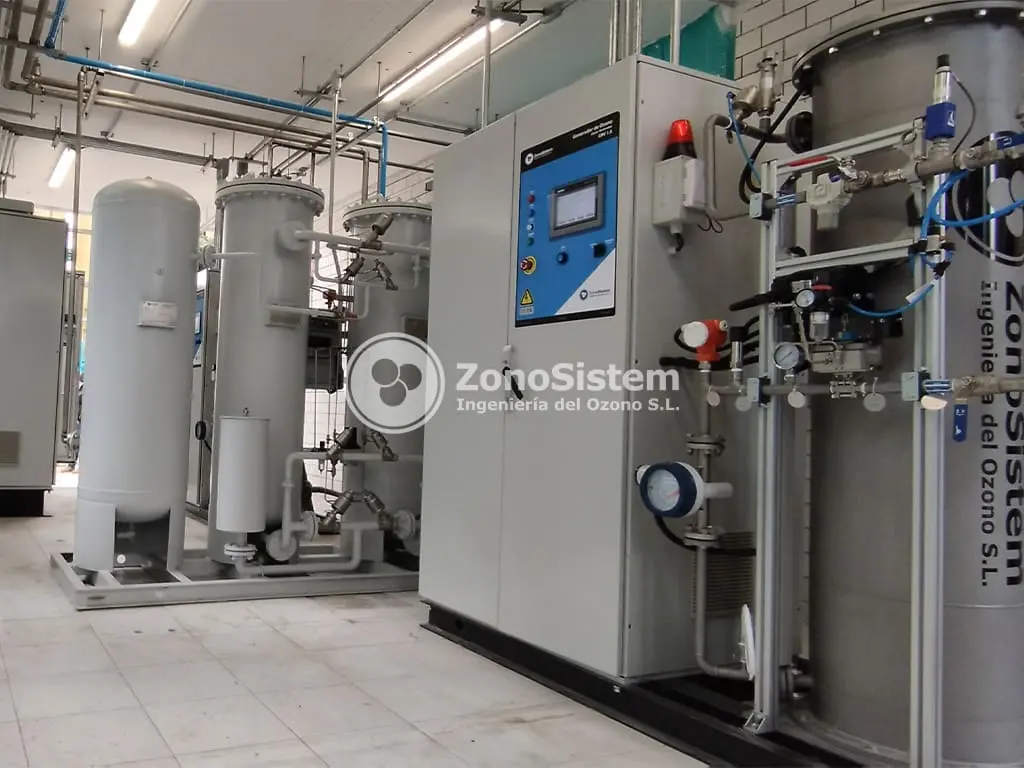
Ozone for DWTPs in Mexico. Santa Cruz DWTP
The project comprises two ozone generators with a capacity of 1.6 kg/h at a concentration of 10 per cent by weight, fed by 95 per cent concentrated O₂ from an on-site PSA system. The generators are cooled by their respective closed-circuit chillers.
The system includes a remote control and operates either based on the treatment flow rate of the DWTP or based on the desired dose.
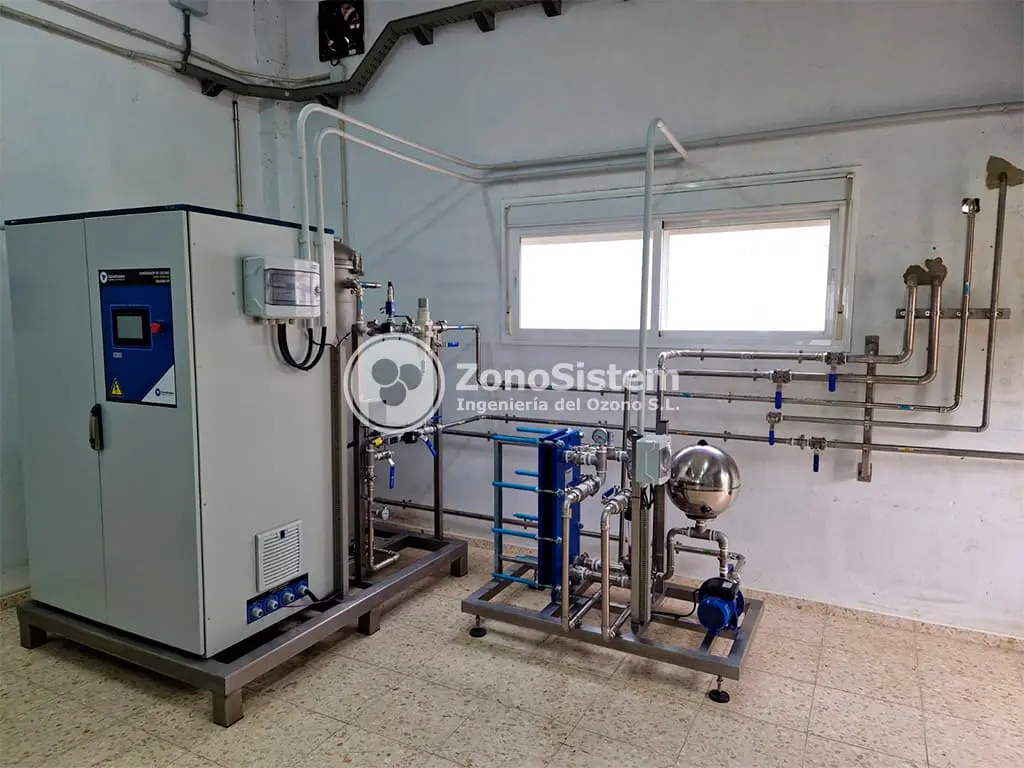
Ozone for the DWTP in Huelva. Conquero DWTP
Deployment of a 3 kg/h ozone generation system to complement two other 10 kg/h ozone generators. The system was automated using a master PLC to control the dose and quantity of ozone distributed to each contact chamber and each line.
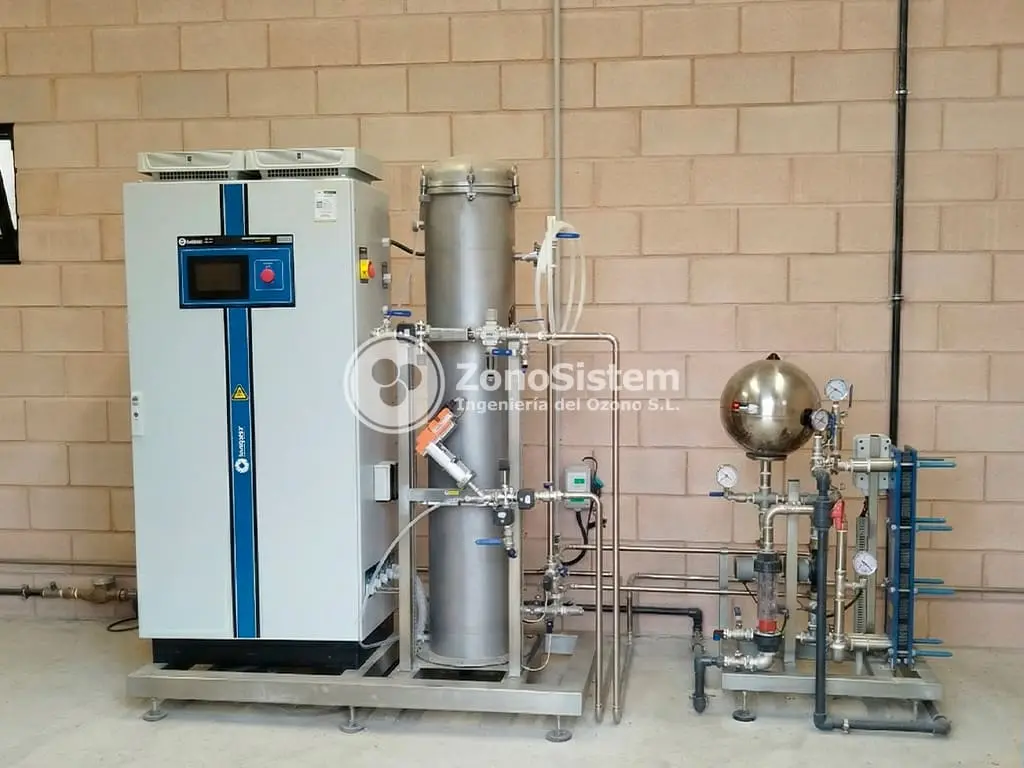
Ozone for DWTPs in Galicia. P.I. Sabón DWTP.
Instances of contamination in the reservoir that supplies the DWTP necessitated the use of ozone to remove microalgae, dissolved metals and organic matter. The system includes an ozone generator with a capacity of 1 kg/h at a concentration of 10 per cent by weight, which supplies ozone to the pre-treatment chamber and the intermediate treatment chamber. The latter chamber incorporates an innovative pressurised ozonation system.
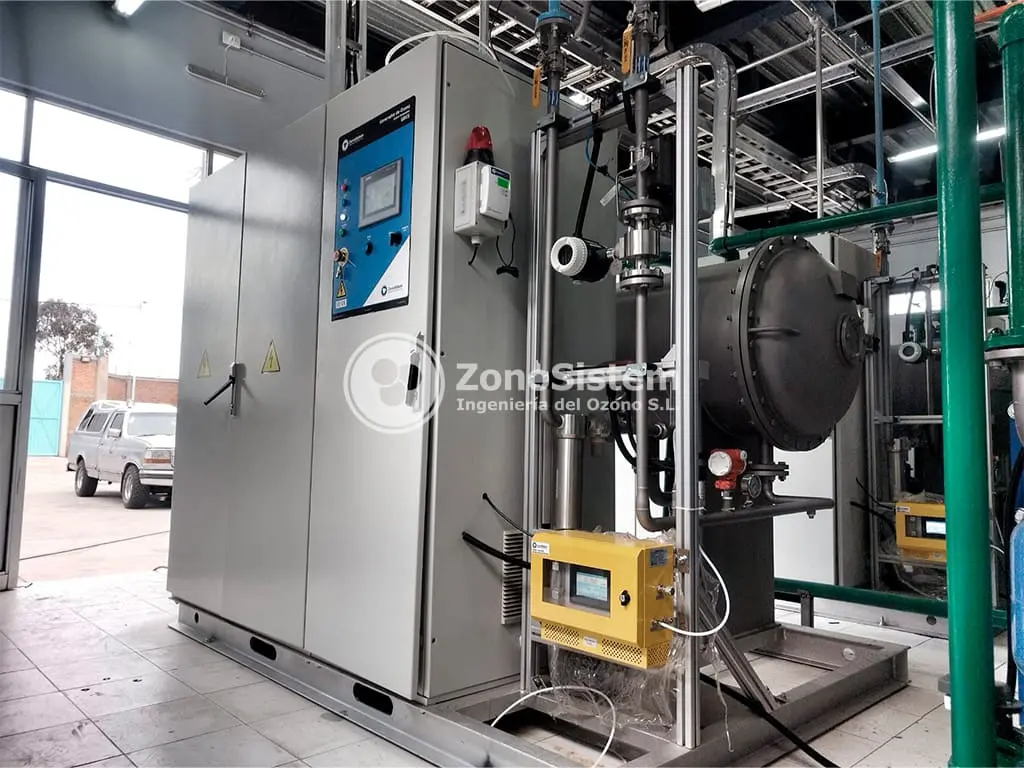
Ozone for DWTPs in Mexico. Boiler-based DWTPs
This project comprises three ozone generators with a production capacity of 5 kg/h. Each is fed by an oxygen concentration system using PSA technology. All three generators are cooled by a heat exchanger. The ozone is injected into the pretreatment chamber of the DWTP, where diffuser grids, degassing systems and ozone destruction systems have been installed.
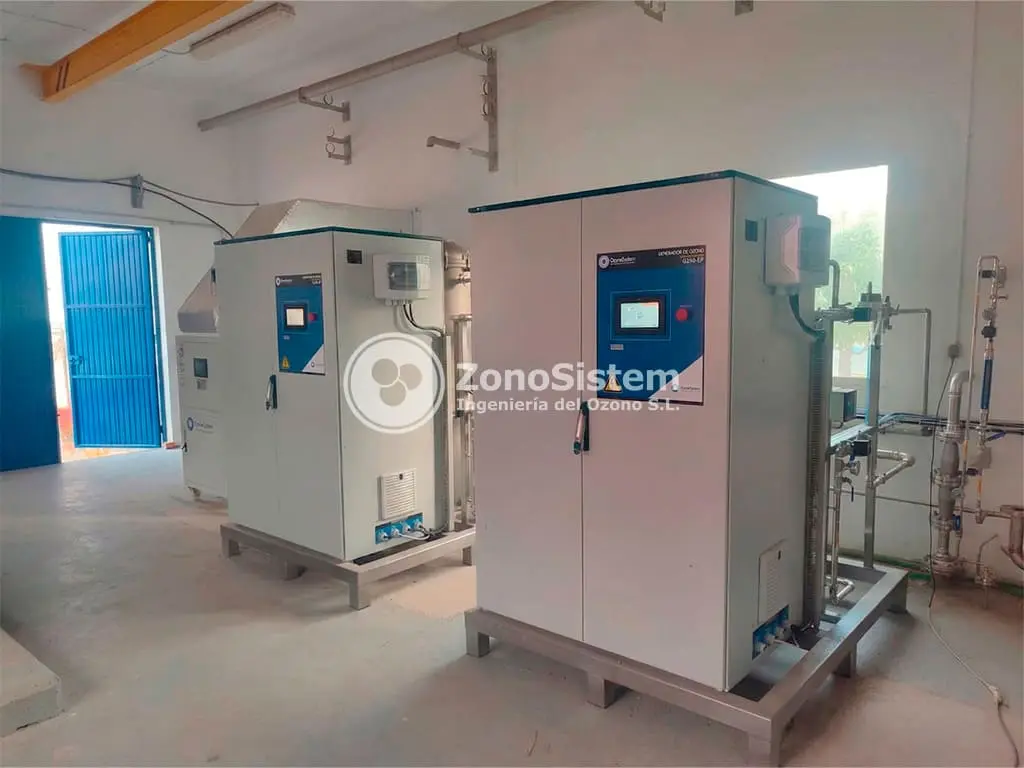
Ozone for the DWTP in Almería.Bajo Almanzora DWTP.
This project comprises two ozone generators, each with a capacity of 2 kg/h, cooled by a chiller. The oxygen supply comes from a LOX tank. Distribution to the various pre-treatment and intermediate treatment chambers is controlled by a master PLC and a set of proportional valves.
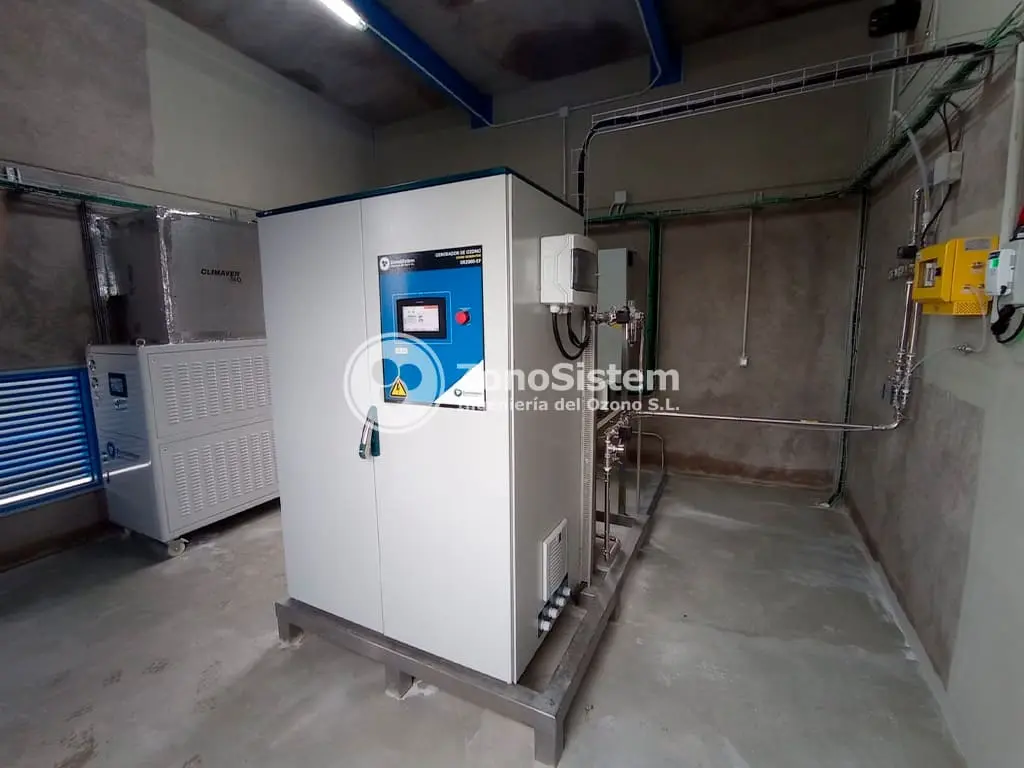
Ozone for Water Treatment Works in Extremadura. Llerena Water Treatment Works
Water from the Los Molinos reservoir is pre-treated at the inlet to the DWTP; the aim is to pre-oxidise the water and reduce organic matter prior to the next stage of treatment. To achieve this, a 2 kg/h ozone generator is used, which is cooled by a chiller and fed with LOX.
The ozone generator produces ozone in a contact chamber. The project includes an ozone gas analyser, an ozone scavenger, a leak detector, etc.
Ozone for DWTPs in Madrid.
Griñón DWTP
This ozone treatment project has been designed and implemented entirely by ZonoSistem on a turnkey basis. It comprises two 7.5 kg/h ozone generators, cooled by heat exchangers and fuelled by LOX. A stripping stage is included to remove dissolved ozone. The system features automatic flow control to each pre-treatment and intermediate treatment chamber, ozone destroyers, remote control, a power distribution board and space for the future addition of a third unit.
Ozone for DWTPs in Portugal. Apartadura DWTP
This project comprises two 2 kg/h ozone generators fuelled by LOX. A distinctive feature of these generators is that they are manufactured using ceramic dielectrics, rather than borosilicate dielectrics, at the client’s request. The generators are cooled by a chiller and feed into an existing pre-ozonisation chamber.
Ozone for DWTPs in Mexico. Santa Cruz DWTP
The project includes two ozone generators with a capacity of 1.6 kg/h at a concentration of 10% by weight, fed by 95 per cent concentrated O₂ from an on-site PSA system. The generators are cooled by their respective closed-circuit chillers.
The system includes a remote control and operates either on the basis of the treatment flow rate at the DWTP or on the basis of the desired dose.
Ozone for the DWTP in Huelva. Conquero DWTP
Deployment of a 3 kg/h ozone generation system to complement two other 10 kg/h ozone generators. The system was automated using a master PLC to control the dose and quantity of ozone distributed to each contact chamber and each line.
Ozone for DWTPs in Galicia. P.I. Sabón DWTP
Instances of contamination in the reservoir that supplies the DWTP necessitated the use of ozone to remove microalgae, dissolved metals and organic matter. A 1 kg/h ozone system with a concentration of 10 per cent by weight is included, distributing ozone to the pre-treatment chamber and the intermediate treatment chamber. The latter chamber incorporates an innovative pressurised ozonation system.
Ozone for DWTPs in Mexico. Boiler-based DWTPs
This project comprises three ozone generators with a production capacity of 5 kg/h. Each is fed by an oxygen concentration system using PSA technology. All three generators are cooled by a heat exchanger. The ozone is injected into the pretreatment chamber of the DWTP, where diffuser grids, degassing systems and ozone destruction systems have been installed.
Ozone for the DWTP in Almería. Bajo Almanzora DWTP
This project comprises two ozone generators, each with a capacity of 2 kg/h, cooled by a chiller. The oxygen supply comes from a LOX tank. Distribution to the various pre-treatment and inter-treatment chambers is controlled by a master PLC and a set of proportional valves.
Ozone for Water Treatment Works in Extremadura. Llerena Water Treatment Works
Water from the Los Molinos reservoir is pre-treated at the inlet to the DWTP; the aim is to pre-oxidise and reduce organic matter prior to the next stage of treatment. To achieve this, a 2 kg/h ozone generator is used, which is cooled by a chiller and fed with LOX.
The ozone generated is bubbled into the contact chamber. The project includes an ozone gas analyser, an ozone scavenger, a leak detector, etc.
Frequently asked questions about the use of ozone in DWTPs
Yes. When used correctly in a DWTP, ozone is completely safe. Once it has carried out its disinfecting function, ozone rapidly breaks down into oxygen, so it leaves no chemical residues in the treated water. Furthermore, its use is widely endorsed by international regulations and organisations within the water sector.
Yes. Ozone generators can be easily integrated into existing installations, adapting to different flow rates and process configurations. A well-designed system allows the performance of the DWTP to be optimised without the need for major structural modifications.
Ozone is one of the most powerful disinfectants available for the treatment of drinking water. It acts quickly and effectively to eliminate bacteria, viruses and protozoa, even those resistant to other treatments. Furthermore, it oxidises organic compounds, pesticides and substances responsible for unpleasant odours and tastes, significantly improving the final quality of the water.