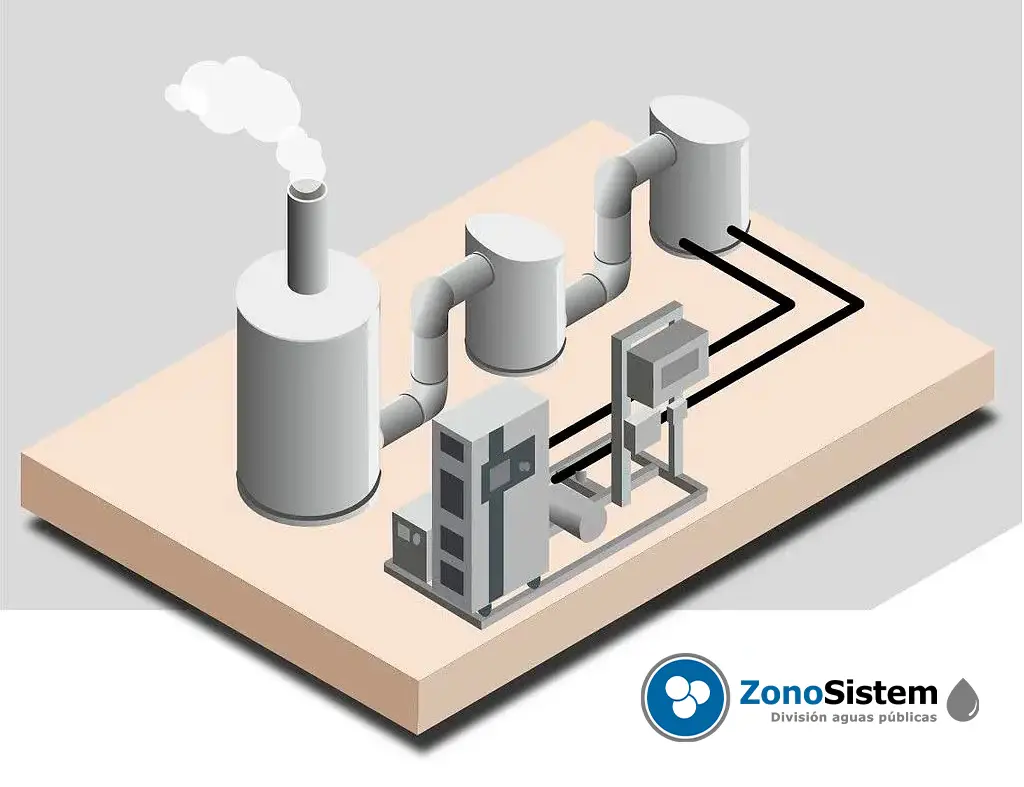
Use of ozone in deodorisation towers (scrubbers) WWTPs
Ozone is a gas used in gas scrubbers and deodorisation towers at WWTPs, primarily to eliminate odours and reduce volatile organic compounds. Ozone has a high oxidation potential, and when injected into the scrubbing tower, it mixes with the gases, reacting with all kinds of chemical compounds, reducing them, oxidising them and transforming them into degraded compounds, resulting in most cases in a significant reduction in odour and volatile organic compounds (VOCs).
It is very easy to install and, furthermore, ozone is neither stored nor transported; it is generated on site from the air we breathe and applied instantly. It operates automatically and requires no manual labour. All these advantages make ozone a superb ally for getting the most out of your gas scrubber or deodorisation tower.
Ozone Generators at a Wastewater Pumping Station
Improves environmental quality, eliminates odours and reduces the impact on sewerage networks
Ozone eliminates the need for other chemicals used in scrubbers.
Ozone is generated on-site; there is no need to store or transport chemicals
Ozone continuously improves the water in the scrubber without the need for flushing.
The system is automated; it does not require any manual labour to operate it
Odour problems in deodorisation towers
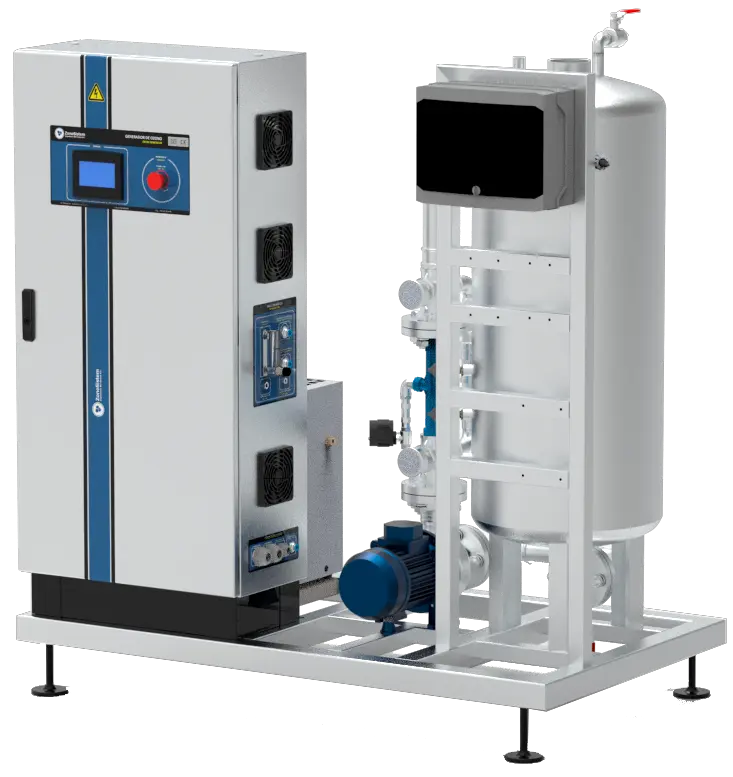
ZonoSistem optimises the performance of deodorisation towers by tackling the most common problems associated with conventional systems at their root.
Our ozone-generation technology guarantees the complete elimination of persistent odours in the chimney, thanks to its superior oxidising power, which responds precisely to any variations in the pollutant load.
By generating the reagent in situ, you drastically reduce the high operating costs and the logistics associated with traditional chemicals, achieving complete autonomy. Furthermore, ozone breaks down complex organic molecules, preventing the formation of foam in the scrubber tank and drastically minimising sludge build-up, as any excess ozone is simply converted into oxygen.
Achieve a cleaner, more cost-effective and efficient operation with a zero-waste solution.
Total reduction in chemicals
Ozone oxidises hydrogen sulphide and organic compounds originating from the extraction systems in WWTPs. Its high oxidising power eliminates the need for any traditional chemicals.
Effective odour elimination
Ozone removes compounds such as hydrogen sulphide, ammonia, mercaptans, volatile organic compounds, etc., which are the main causes of odour problems in deodorisation towers.
A powerful and fast-acting oxidising agent
Ozone’s high oxidising power helps to rapidly oxidise organic compounds. It is capable of eliminating these compounds in just a few seconds.
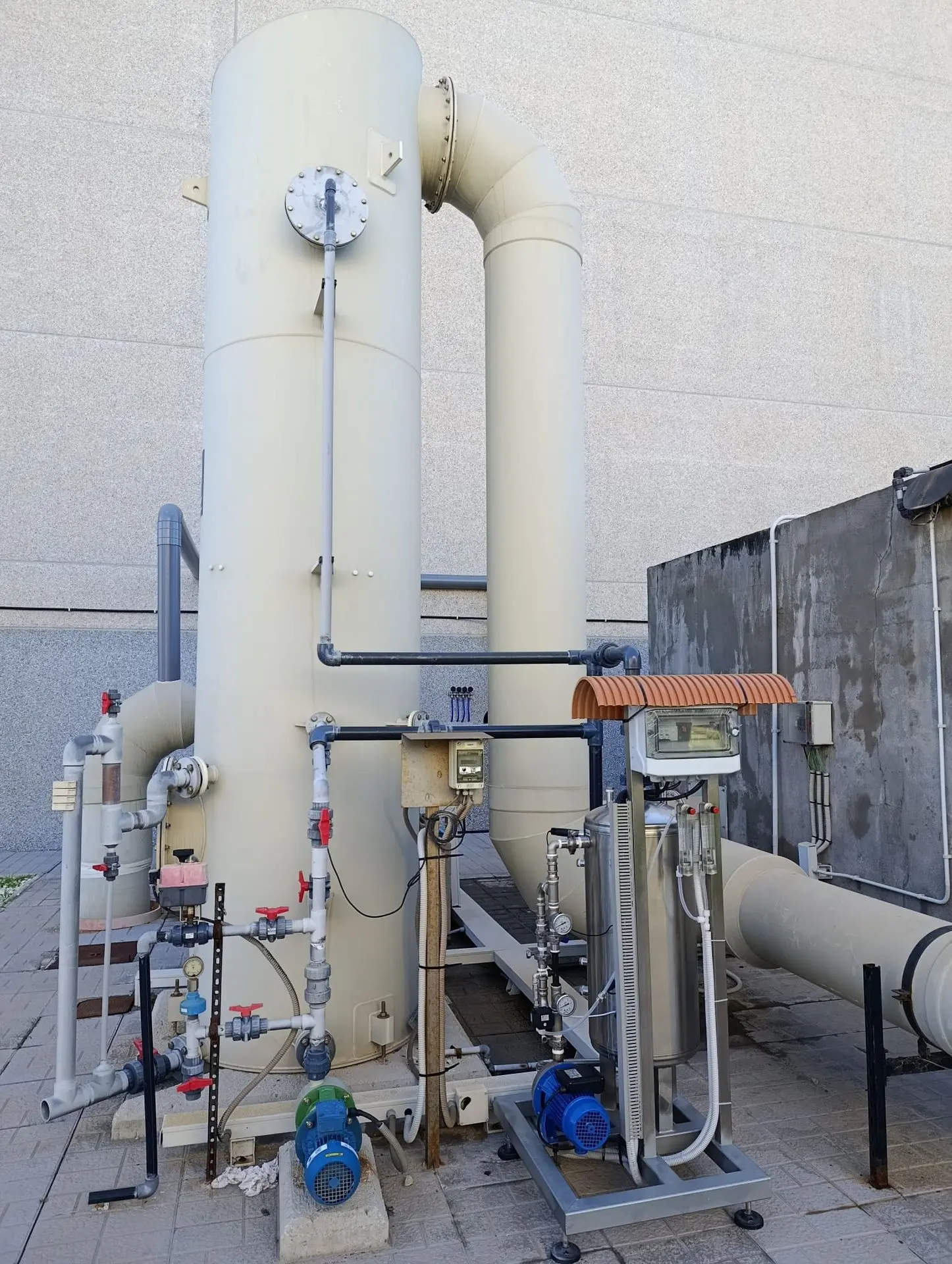
Improve the efficiency of the air purifier
The deodorisation system becomes more efficient, with a reduction in labour as there is no need to handle or replenish chemicals. Water flushes are also reduced.
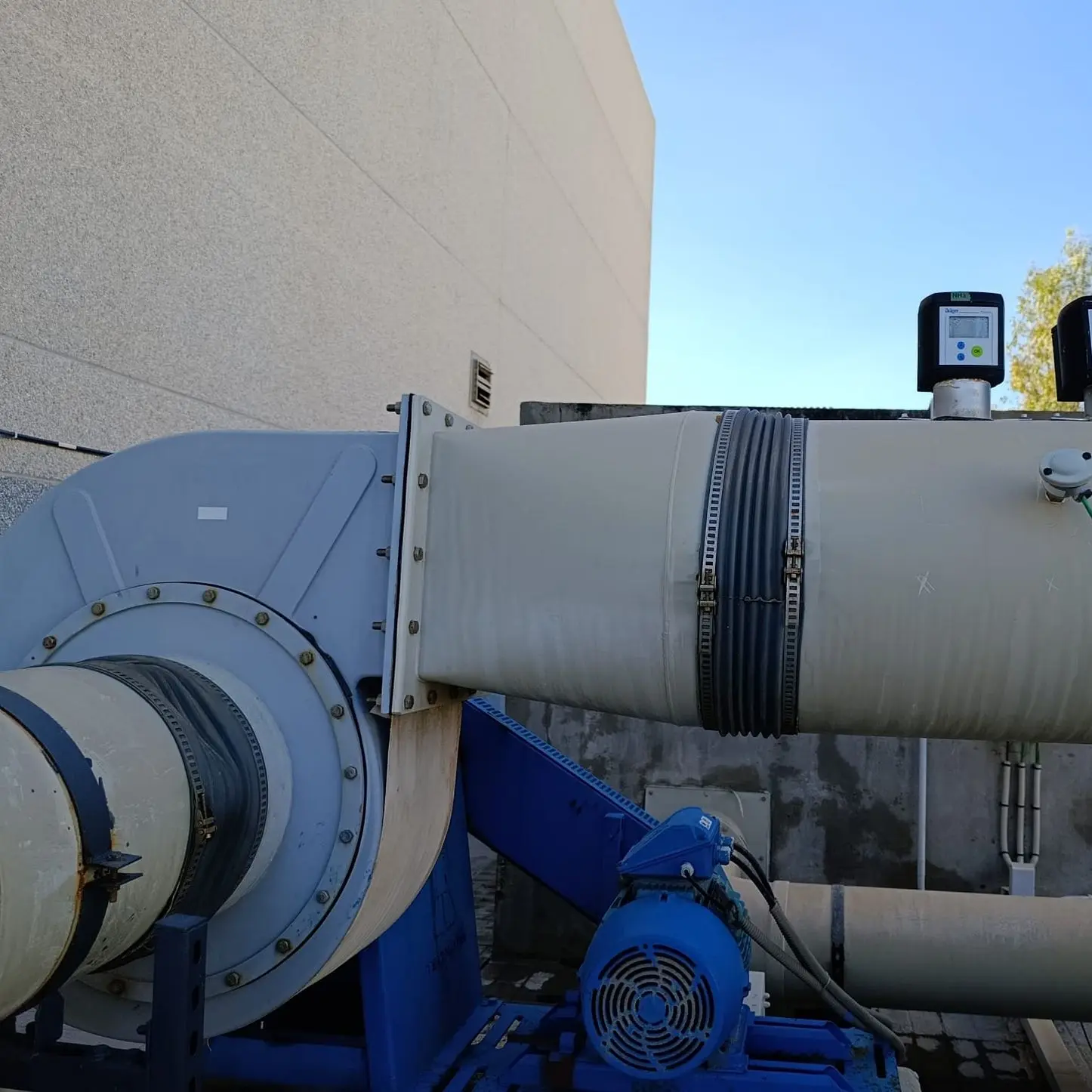
Reduction of gaseous emissions
By eliminating the chemicals required for deodorisation, a significant amount of gaseous emissions is reduced. This includes both the gases produced naturally and those caused by the chemicals themselves.
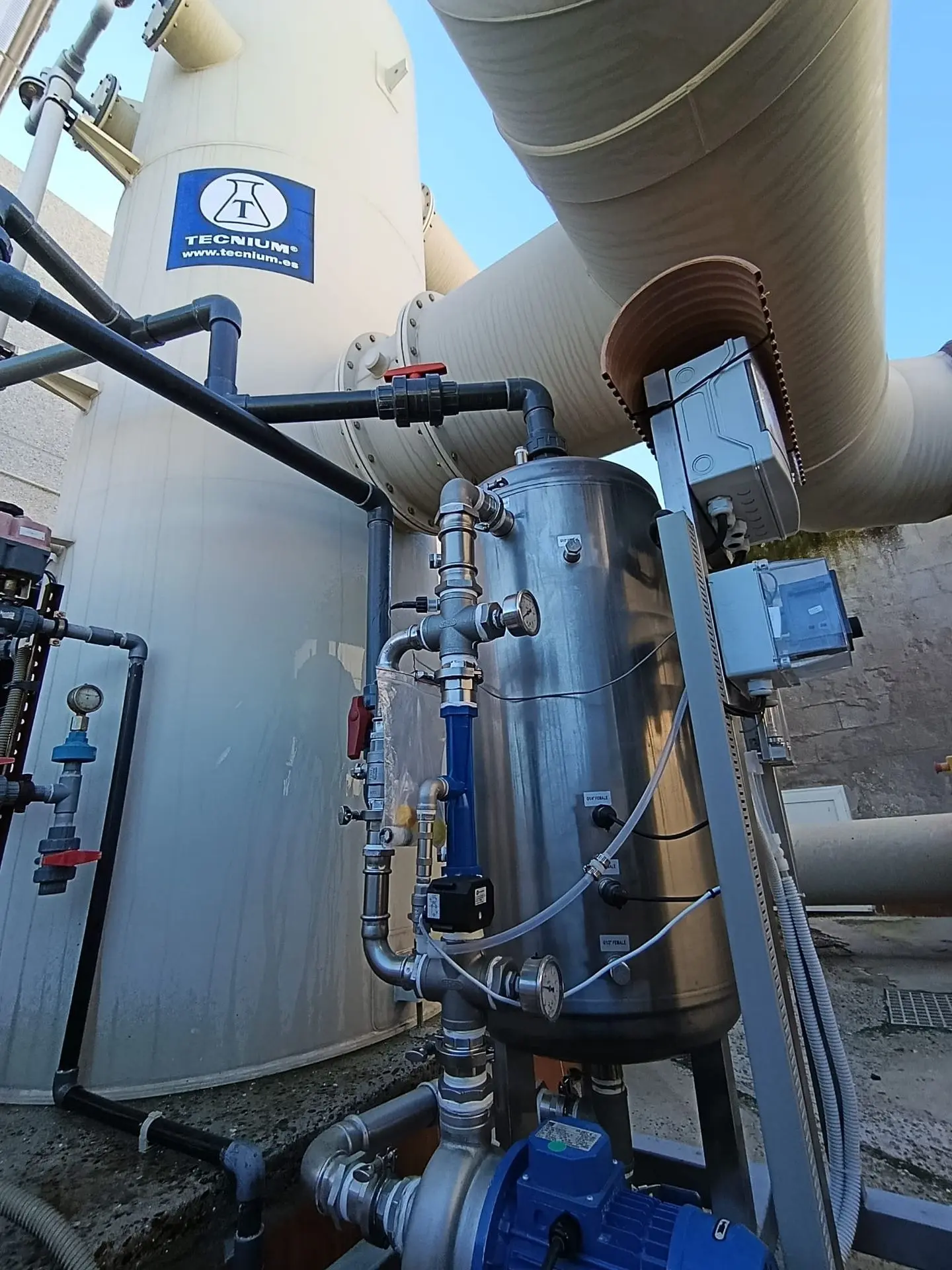
Simultaneous disinfection of air and water
The scrubber ozonisation technique allows ozone gas to be applied to both the exhaust air and the shower water. This means that the exhaust gas itself is completely disinfected.
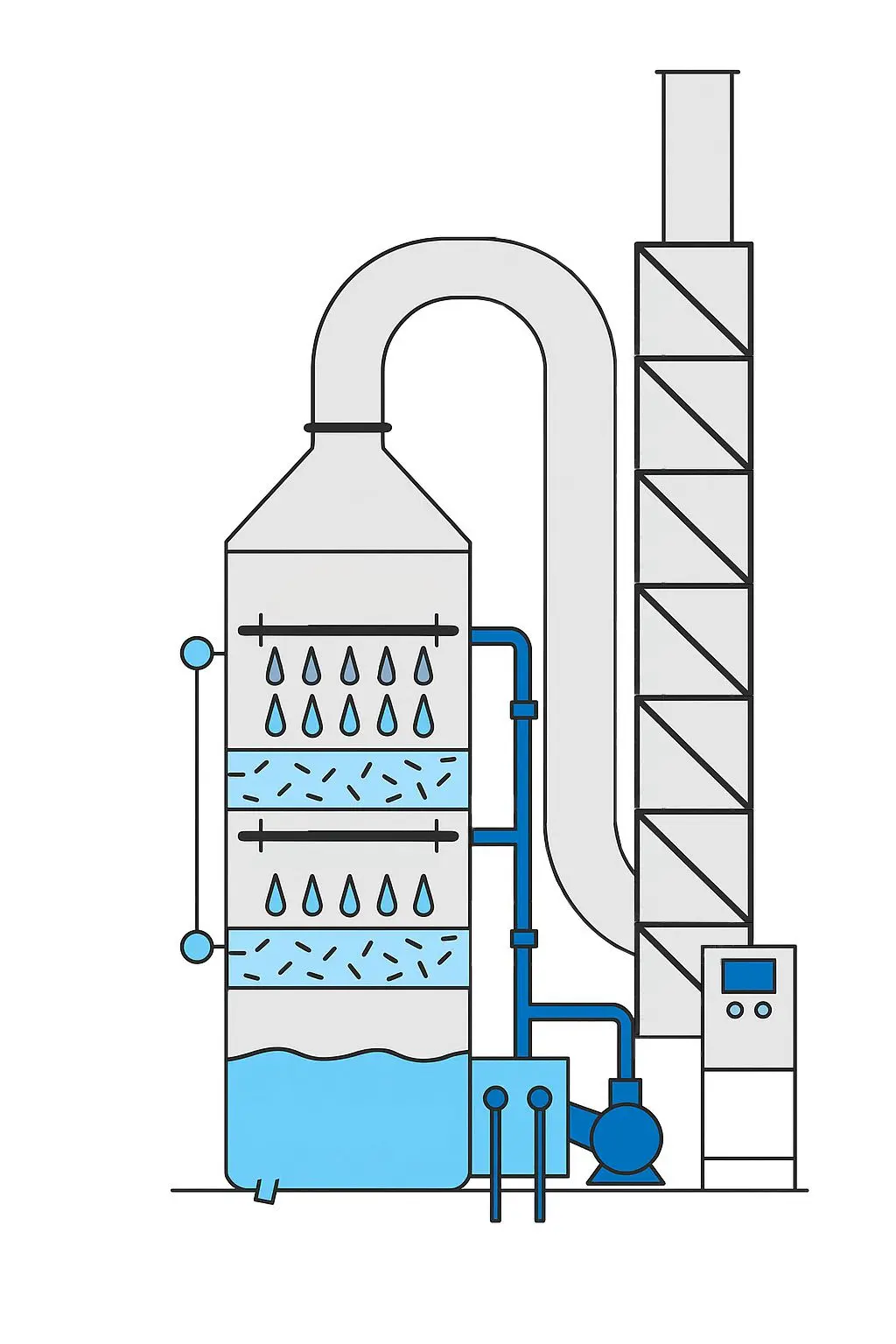
Turnkey ozone projects
We design, manufacture, install and maintain high-performance ozone systems for deodorisation towers.
Contact us
Turnkey ozone projects
We design, manufacture, install and maintain high-performance ozone systems for deodorisation towers.
Contact us
ZonoSistem case studies on deodorisation towers WWTPs
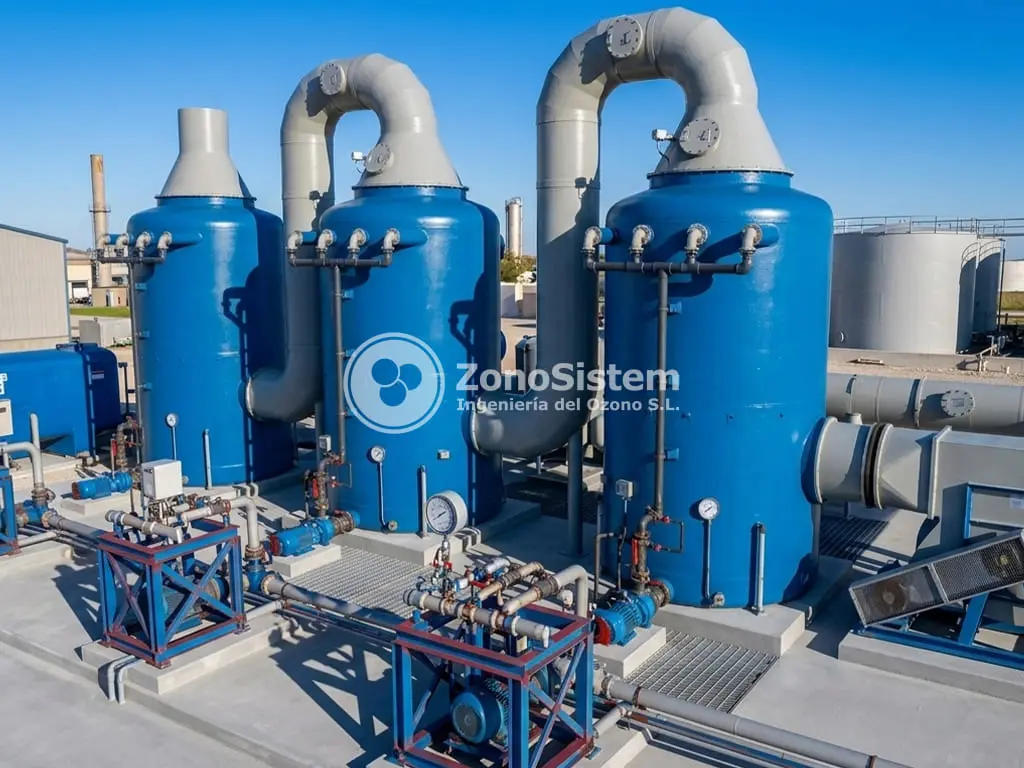
WWTP deodorisation tower (scrubber). Canary Islands
Projects carried out through authorised distributors enable professional installations in deodorisation towers at WWTPs. The application of ozone to the gas stream in the two-stage system ensures the removal of H₂S at the outlet.
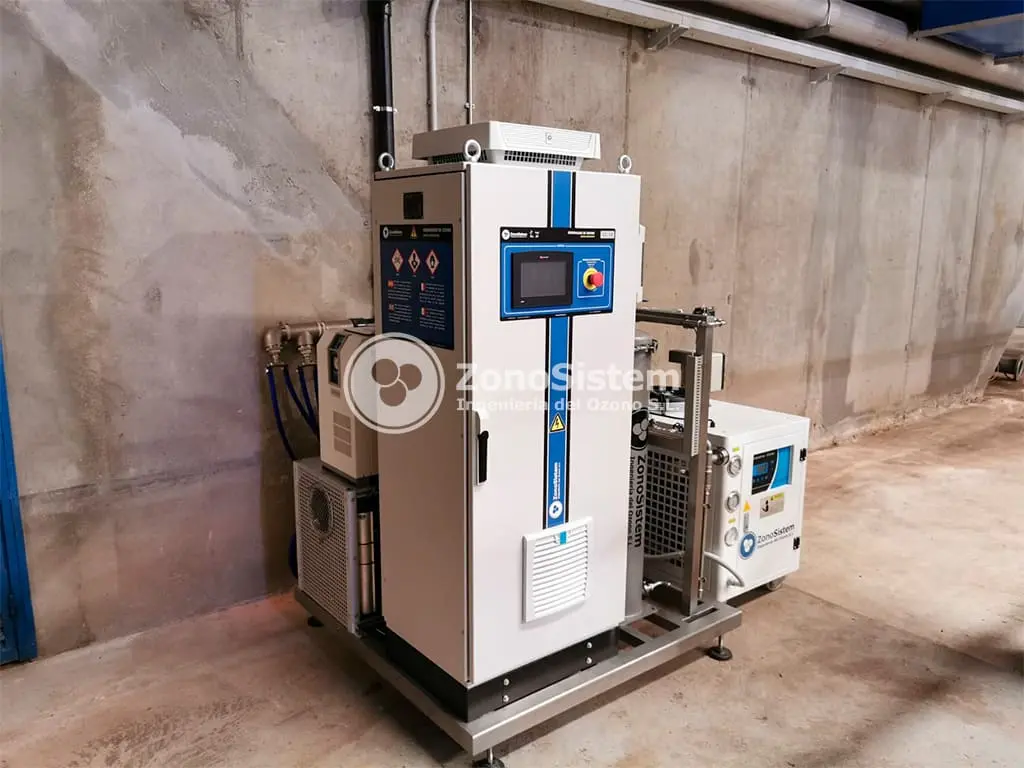
Ozone in the WWTP scrubber. Sand removal area
Some WWTPs have aeration channels in the grit removal stage, where large quantities of gases are produced that give rise to odours with a high organic load. ZonoSistem has designed a system for injecting concentrated ozone into the air supply line of the aeration blowers in the WWTP’s grit removal channels, thereby reducing any odour emissions.
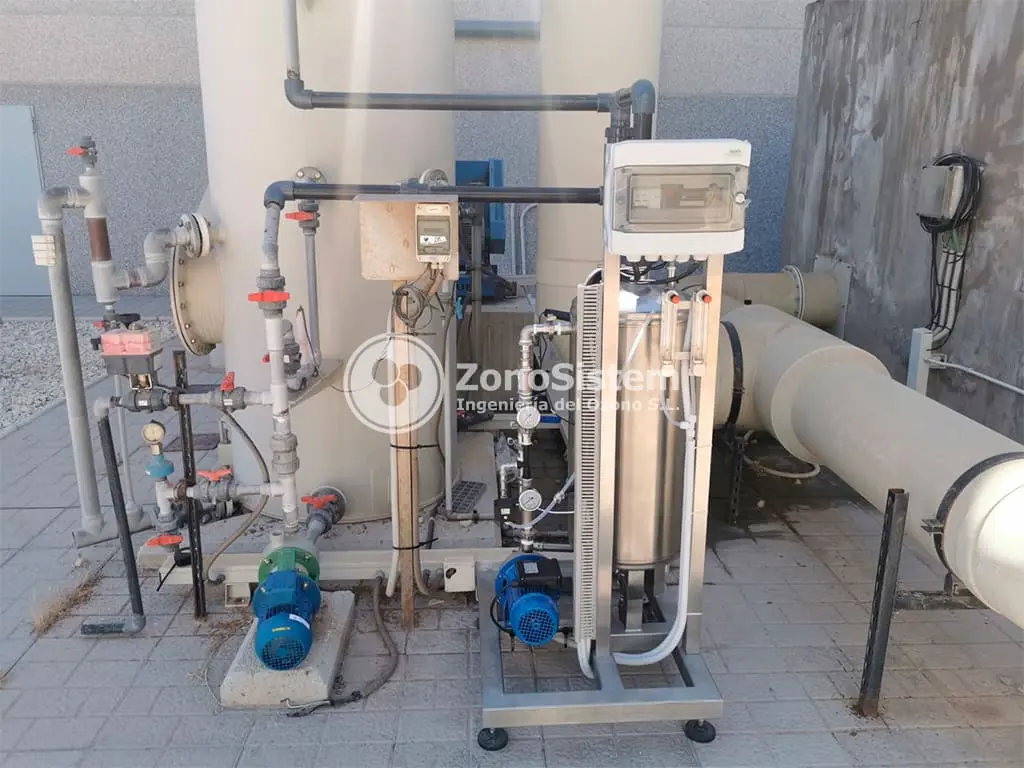
Scrubber for pre-treatment of building effluent at the WWTP
The modernisation of the WWTP includes a deodorisation stage. The extraction system collects the gases from the pre-treatment building and feeds them into a single-stage scrubber. The contaminated gas is treated in the scrubber with ozone, which breaks it down in two stages: in the gas phase and in the liquid phase. The result is the complete removal of H₂S at the scrubber outlet without the use of traditional chemicals.
ZonoSistem has revolutionised the deodorisation process by integrating ozone generators, thereby eliminating the reliance on expensive chemicals and the excessive production of sludge.
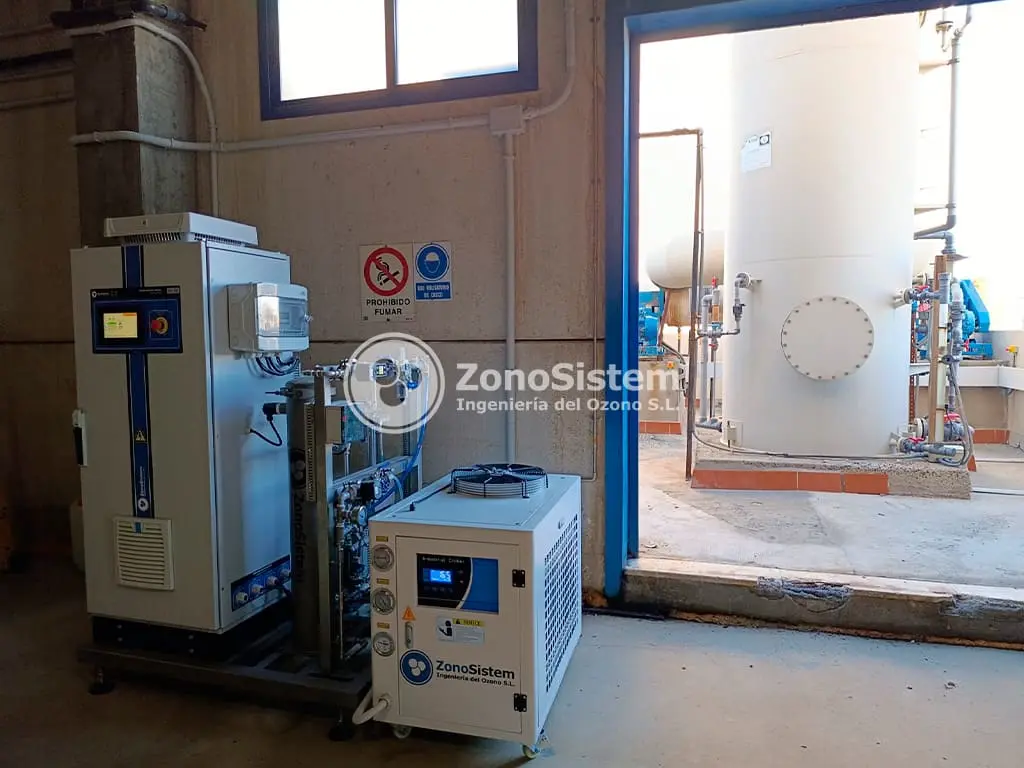
Scrubber for sludge dewatering at a wastewater treatment plant
This project includes a 200g/h ozone generator which injects ozone at two points: into the gas stream with an extraction flow rate of 14,000 m³/h, and into the water recirculation line leading to the upper shower. In this way, we oxidise certain organic compounds to increase their solubility, and then remove them completely in the shower.
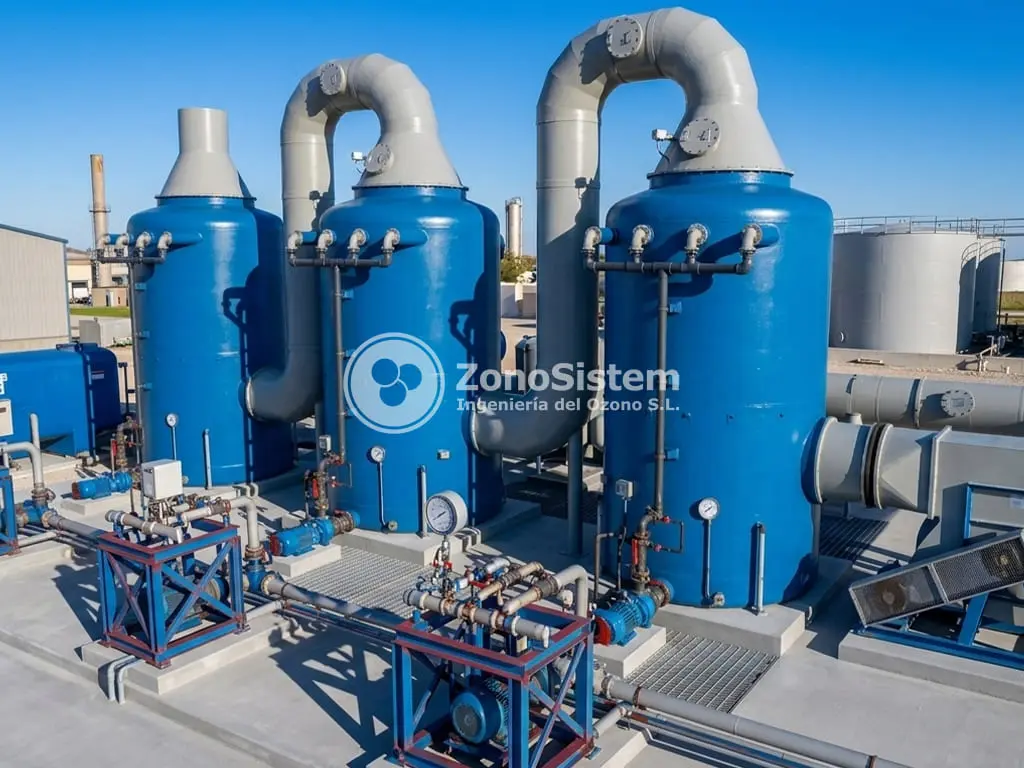
WWTP deodorisation tower (scrubber).
Projects carried out through authorised distributors enable professional installations in WWTP deodorisation towers. The use of ozone in multi-stage towers can eliminate the need for chemicals in a single stage and guarantees the removal of H₂S at the outlet.
Ozone in the WWTP scrubber. Sand removal area.
Some WWTPs have aeration channels in the grit removal stage, where large quantities of gases are produced that give rise to odours with a high organic load. ZonoSistem has designed a system for injecting concentrated ozone into the air supply line of the aeration blowers in the WWTP’s grit removal channels, thereby reducing any odour emissions.
Scrubber for pre-treatment in a WWTP
The modernisation of the WWTP includes a deodorisation stage. The extraction system collects the gases from the pre-treatment building and conveys them to a single-stage scrubber. The contaminated gas is treated in the scrubber with ozone, where it is broken down at two stages: in the gas phase and in the liquid phase. The result is the complete removal of H₂S at the scrubber outlet without the use of traditional chemicals.
ZonoSistem has revolutionised the deodorisation process by integrating ozone generators, thereby eliminating the reliance on expensive chemicals and the excessive production of sludge.
Scrubber for sludge dewatering at a wastewater treatment plant
This project includes a 200 g/h ozone generator that injects ozone at two points: into the gas stream, which has an extraction flow rate of 14,000 m³/h, and into the water recirculation line leading to the upper shower. In this way, we oxidise certain organic compounds to increase their solubility, and then remove them completely in the shower.
ZonoSistem case studies on deodorisation towers WWTPs
Ozone acts as an extremely powerful oxidising agent which, when injected into the air stream or the cooling tower wash water, instantly neutralises odour-causing molecules (such as H₂S) that other chemical systems are unable to remove completely.
Yes, in many cases it makes it possible to eliminate or drastically reduce the use of sodium hypochlorite or caustic soda. This reduces operating costs, eliminates the need to store hazardous chemicals and does not produce any polluting by-products.
Yes, Zonosistem’s technology is designed to be easily integrated into both new projects and existing installations (retrofitting), optimising air purification without the need to alter the tower’s main structure. Ozone injection can be applied to the gas phase, the liquid phase or both.