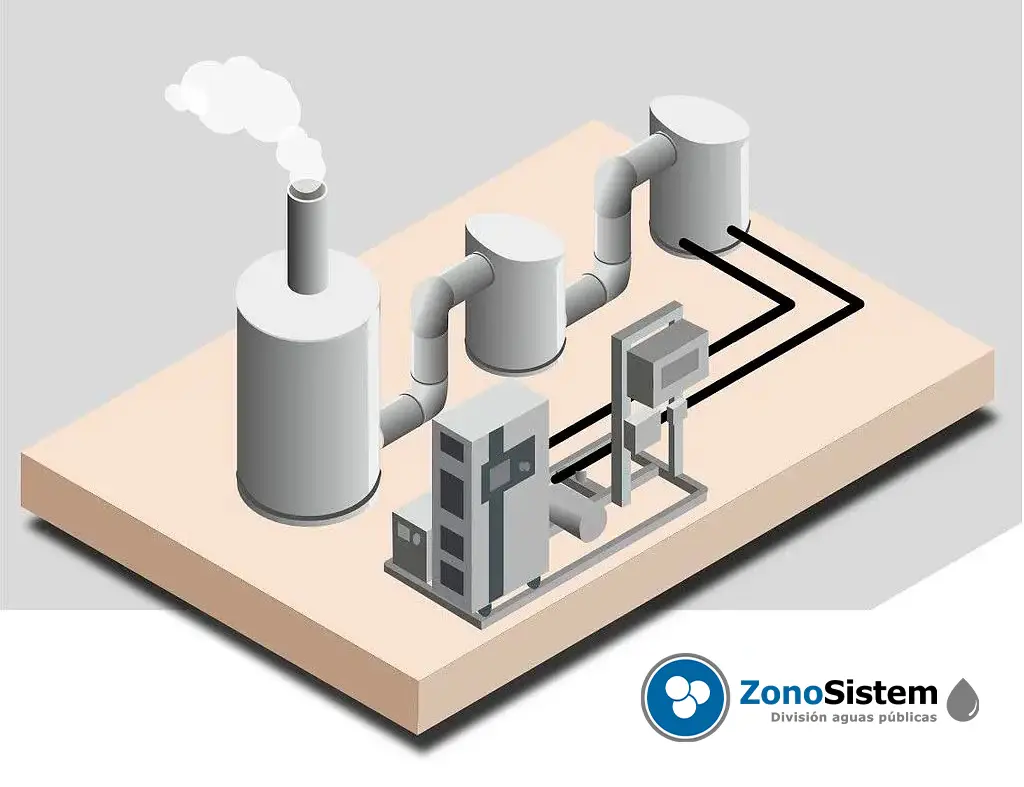
THE USE OF OZONE IN INDUSTRIAL DEODOURISING TOWERS. (Scrubbers and chimneys)
Ozone is a gas used in gas scrubbers and deodorisation towers, primarily to eliminate odours and reduce volatile organic compounds. Ozone has a high oxidation potential, and when injected into the scrubbing tower, it mixes with the gases, reacting with all kinds of chemical compounds, reducing them, oxidising them and transforming them into degraded compounds, resulting in most cases in a significant reduction in odour and volatile organic compounds (VOCs).
It is very easy to install and, furthermore, ozone is neither stored nor transported; it is generated on site from the air we breathe and applied instantly. It operates automatically and requires no manpower. All these advantages make ozone a superb ally for getting the most out of your gas scrubber or deodorisation tower.
Very useful in industries with problems relating to NOx, H₂S, VOCs, etc.. Can be applied to the gas phase in a flue or a scrubber tower.
Ozone generators for NOX removal. Industrial chimneys and scrubbers.
Deploy ozone systems in your scrubbing and deodorisation towers to eliminate odours, volatile organic compounds and hydrogen sulphide
Ozone is a powerful deodoriser; it doesn’t just mask odours, it literally destroys them
Ozone is generated on-site; there is no need to store or transport chemicals
Ozone leaves no residue and is environmentally friendly
The system is automated; it does not require any manual labour to operate it
Odour problems in deodorisation towers?
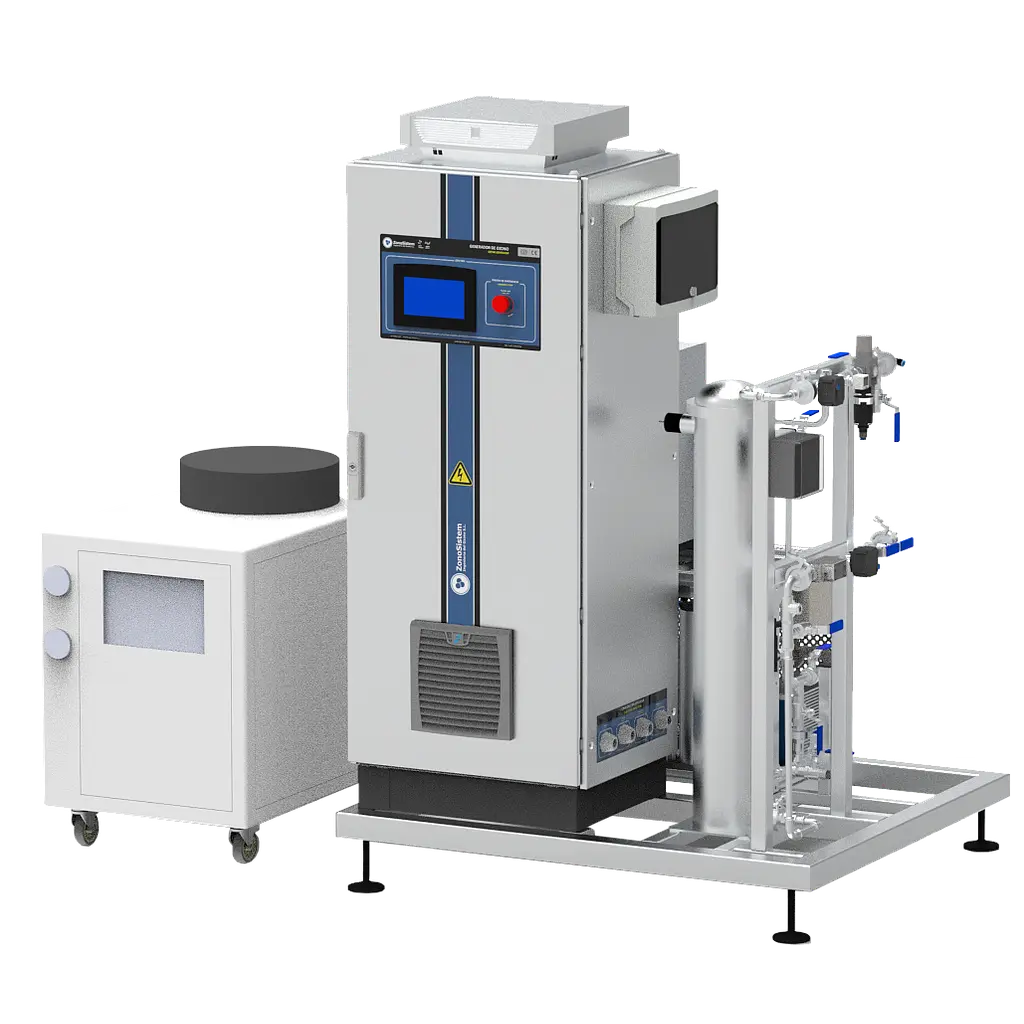
The deodorisation of gases in scrubbers using ozone is a highly effective solution for eliminating persistent odours from industrial chimneys, even under variable load conditions. Thanks to its high oxidising power, ozone neutralises odorous compounds and converts pollutants into species that are more easily removed by the scrubbing system, significantly improving the quality of the exhaust air.
The incorporation of ozone into scrubbers helps to reduce reliance on traditional chemicals, lowering operating costs and simplifying the management of reagents. Furthermore, it helps to minimise common problems such as foaming and sludge build-up, thereby improving the stability and overall performance of the system.
Overall, the use of ozone in scrubbing towers optimises process efficiency, reduces operating costs, minimises waste and contributes to a more sustainable and environmentally friendly operation.
Benefits of using ozone in scrubbers and industrial chimneys
Total reduction in chemicals
Depending on the type of compounds to be removed from the air stream entering the scrubber, ozone can eliminate the contribution of any chemical used in the removal of organic compounds.

Effective odour removal
Ozone removes compounds such as hydrogen sulphide, ammonia, mercaptans, volatile organic compounds, etc., which are the main causes of odour problems in deodorisation towers.
A powerful and fast-acting oxidant
Ozone’s high oxidising power helps to rapidly oxidise organic compounds. It is capable of eliminating these compounds in just a few seconds.
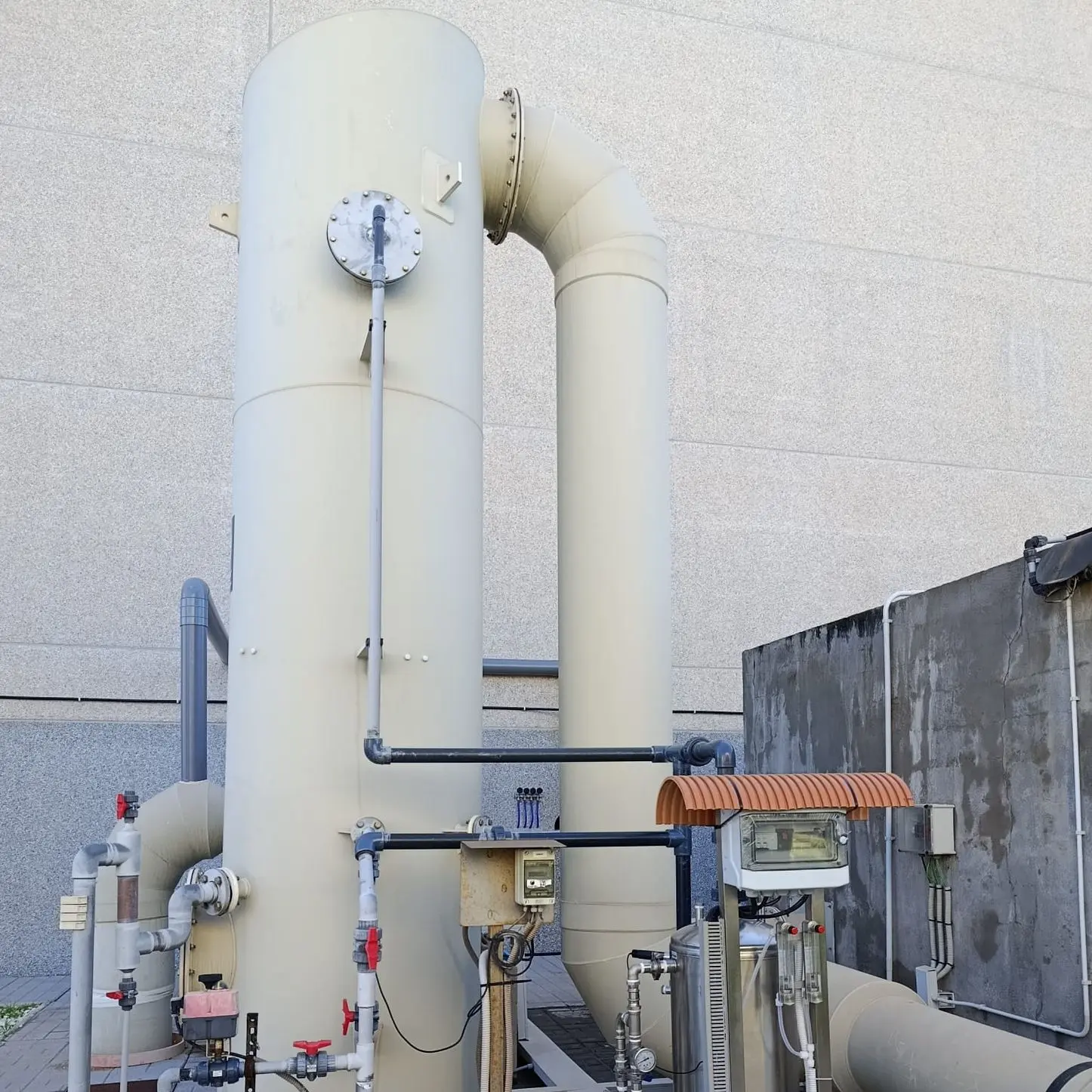
Improving scrubber efficiency
The deodorisation system becomes more efficient, with reduced labour requirements as there is no need to handle or replenish chemicals. It also reduces the need for water flushing.
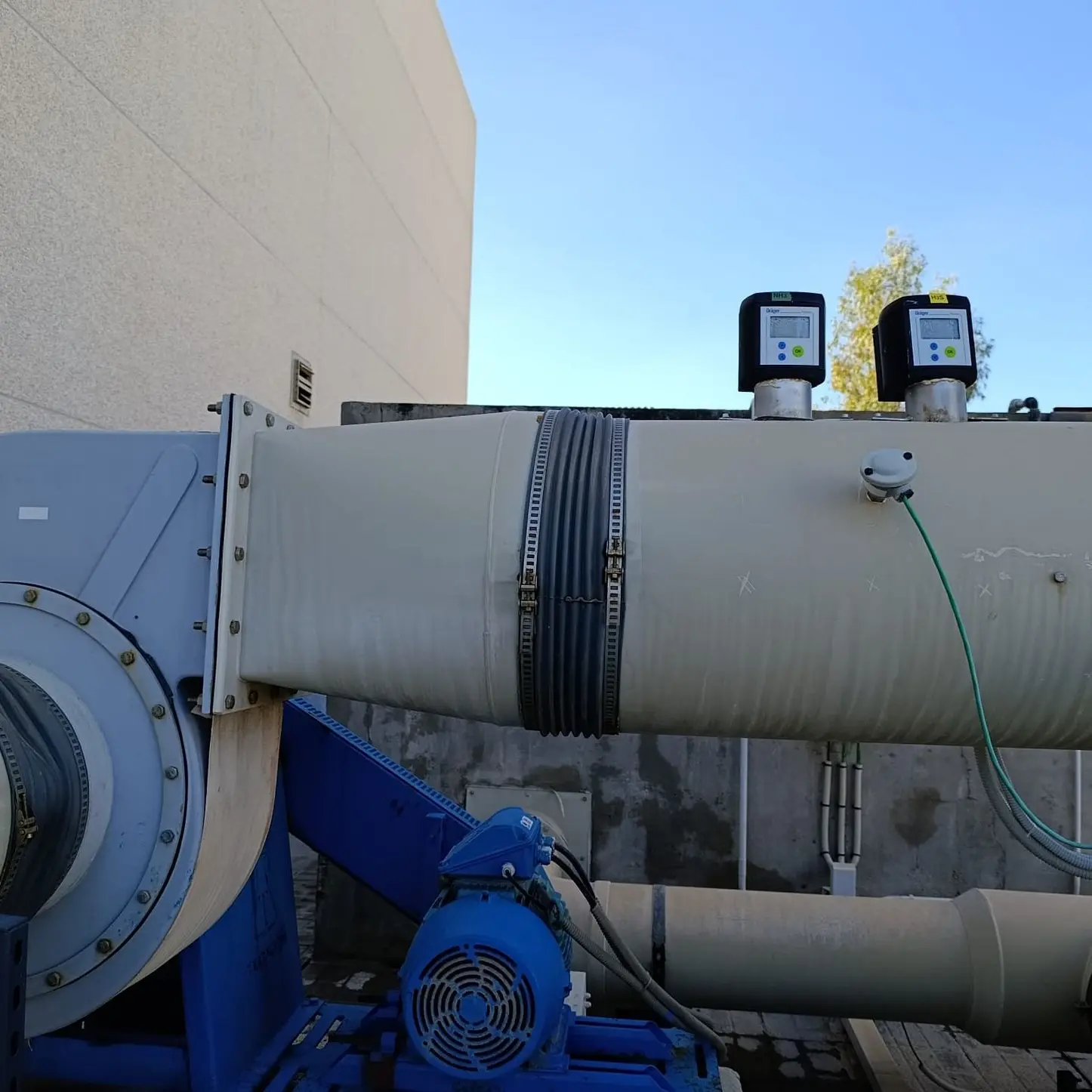
Reduction in gaseous emissions
By eliminating the chemicals required for deodorisation, a significant amount of gaseous emissions is reduced.
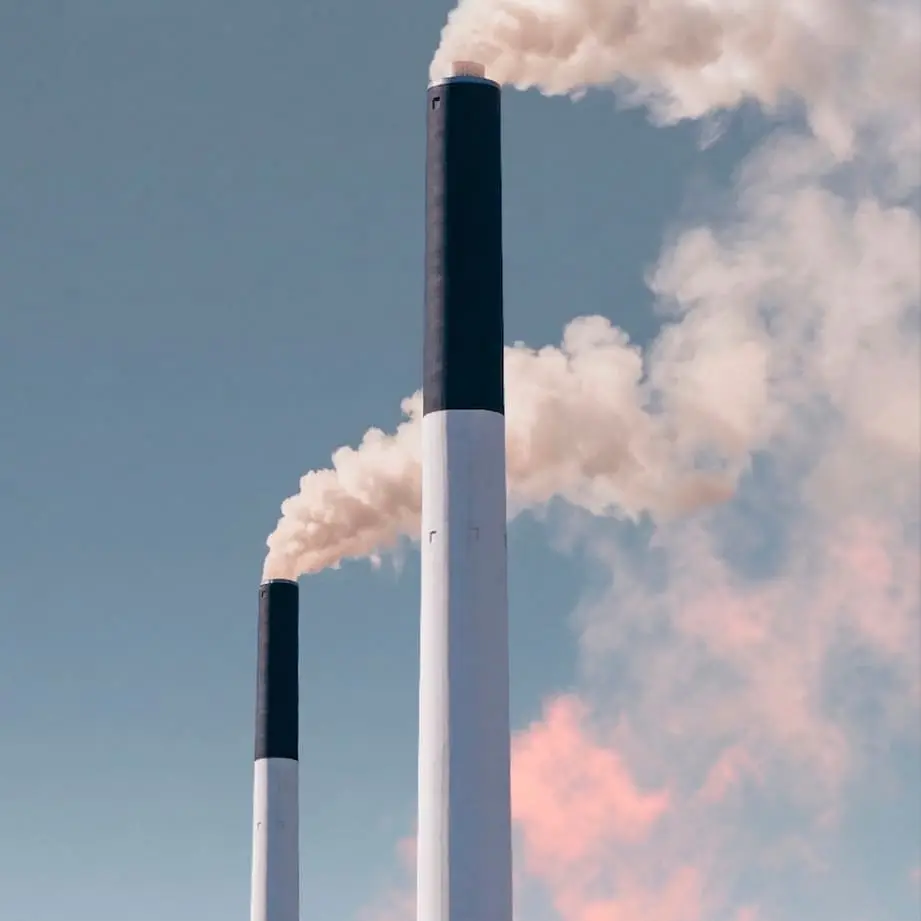
NOx removal
Ozone oxidises NOx and converts it into a soluble form so that it can be removed in the scrubber.
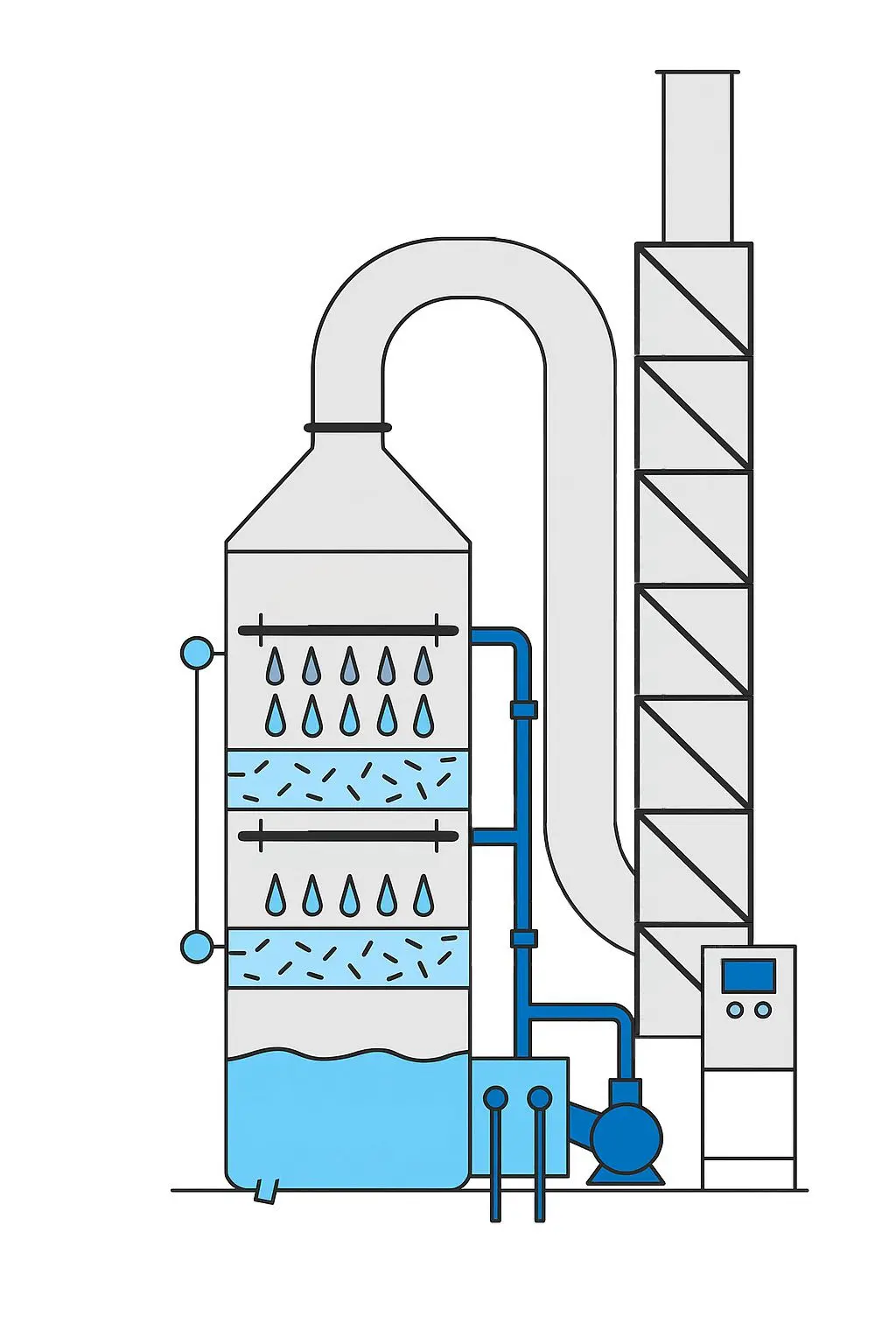
Turnkey Ozone Projects for Deodorisation Towers
We design, manufacture, install and maintain high-performance ozone systems for scrubbing and deodorisation towers.
Contact us
Turnkey Ozone Projects for Deodorisation Towers
We design, manufacture, install and maintain high-performance ozone systems for scrubbing and deodorisation towers.
Contact us
ZonoSistem case studies in scrubbers and industrial chimneys
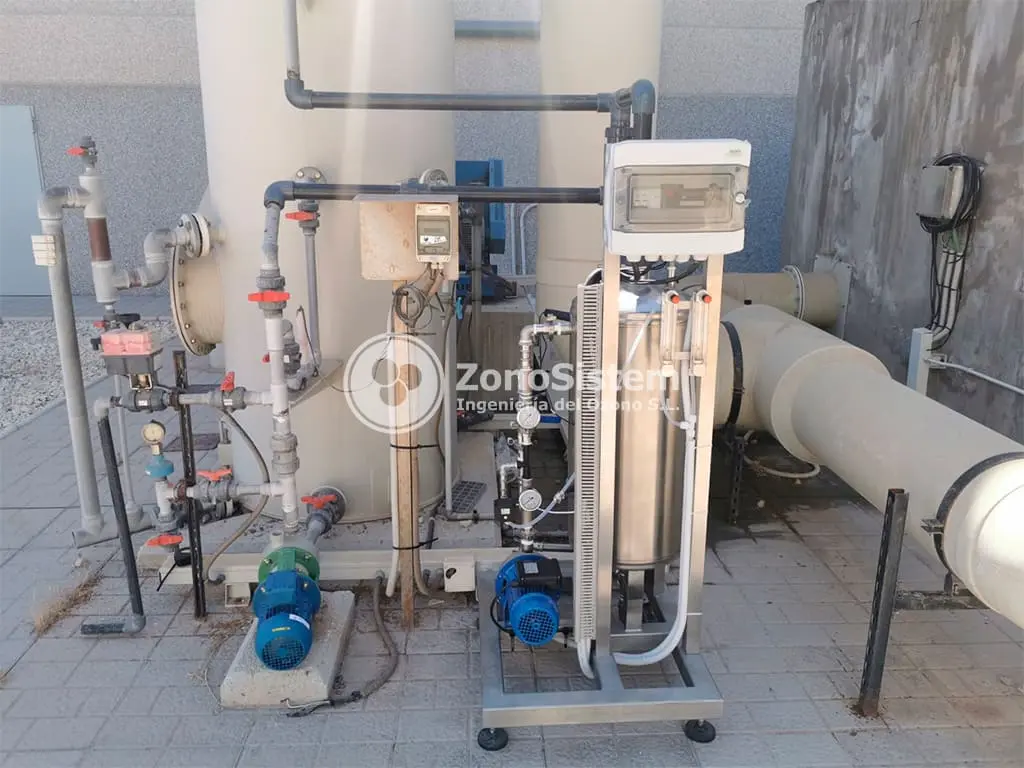
Ozone in deodorisation towers, food sector, Spain
An animal feed processing plant uses various raw materials that cause odour problems during handling, in addition to the odour produced during the drying process used to manufacture the pellets. These gas streams have a high organic load, which causes odour problems. Ozone applied in the scrubber prior to the spray stage oxidises the organic compounds, solubilises them, and removes them in the subsequent aqueous phase.
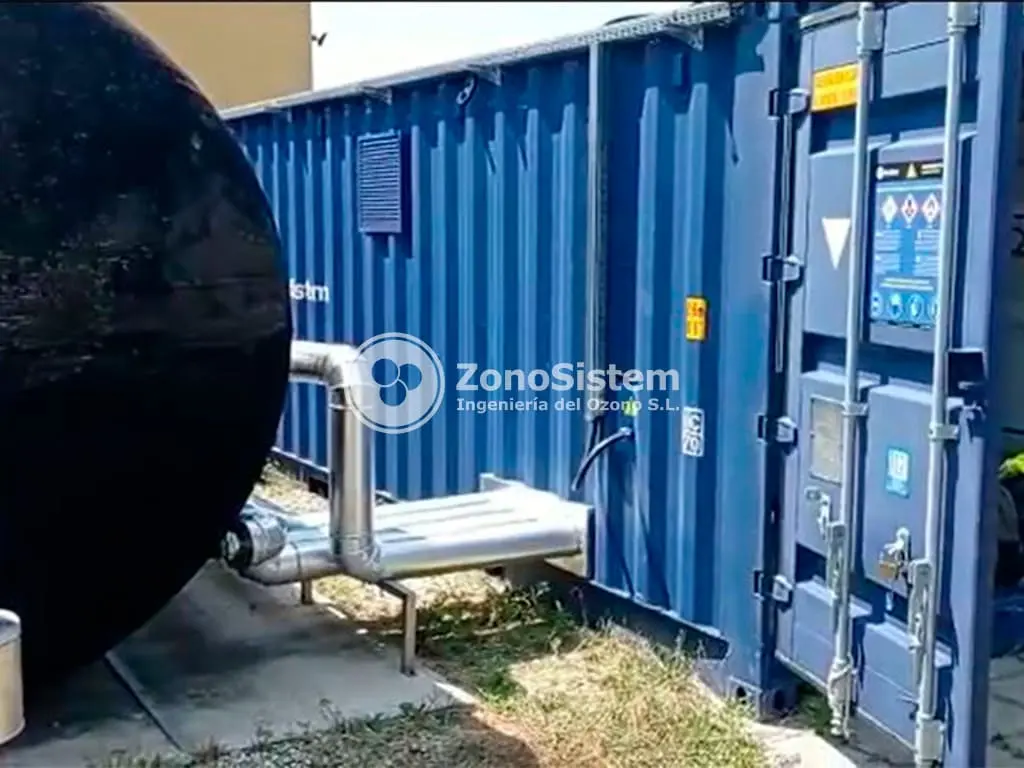
Ozone for ammonia oxidation, pig farming sector, France
The project includes an air scrubbing system to treat the ventilation airflows from a group of gestation and fattening pig pens, enabling ammonia levels to be reduced by more than 90 per cent and minimising odours from the farm. The reduction in ammonia contributes directly to animal welfare by reducing respiratory and production problems. Thanks to ozone, the project reduces emissions and productivity issues in a fully sustainable manner.
Ozone in deodorisation towers, food sector, Spain
An animal feed processing plant uses various raw materials that cause odour problems during handling, in addition to the odour produced during the drying process used to manufacture the pellets. These gas streams have a high organic load, which causes odour problems. Ozone applied in the scrubbing tower prior to the wash stage oxidises the organic compounds, solubilises them, and removes them in the subsequent aqueous phase.
Ozone for ammonia oxidation, pig farming sector, France
The project includes an air scrubbing system to treat the ventilation airflows from a group of gestation and fattening pig pens, enabling ammonia levels to be reduced by more than 90 per cent and minimising odours from the farm. The reduction in ammonia contributes directly to animal welfare by reducing respiratory and production problems. Thanks to ozone, the project reduces emissions and productivity issues in a fully sustainable manner.
Frequently Asked Questions about the use of ozone in deodorisation towers
Ozone is used for its high oxidising power, which enables the removal of compounds responsible for unpleasant odours, such as sulphides, amines and volatile organic compounds (VOCs). In scrubbers, it acts both in the gaseous phase and when dissolved in the recirculating water, improving the efficiency of the air purification process and ensuring a more thorough removal of pollutants.
Ozone is effective against a wide range of odorous compounds, including hydrogen sulphide (H₂S), ammonia (NH₃), mercaptans and other volatile organic compounds. Its oxidising action transforms these substances into more stable and less odorous compounds, significantly reducing the environmental impact and improving air quality in industrial settings.
Ozone enables rapid and effective deodorisation without the need to store or handle hazardous chemicals. It is generated on-site and leaves no persistent residues, which simplifies operations and reduces logistics costs. Furthermore, it can be easily integrated into existing scrubbers, improving their performance and reducing the system’s chemical load.