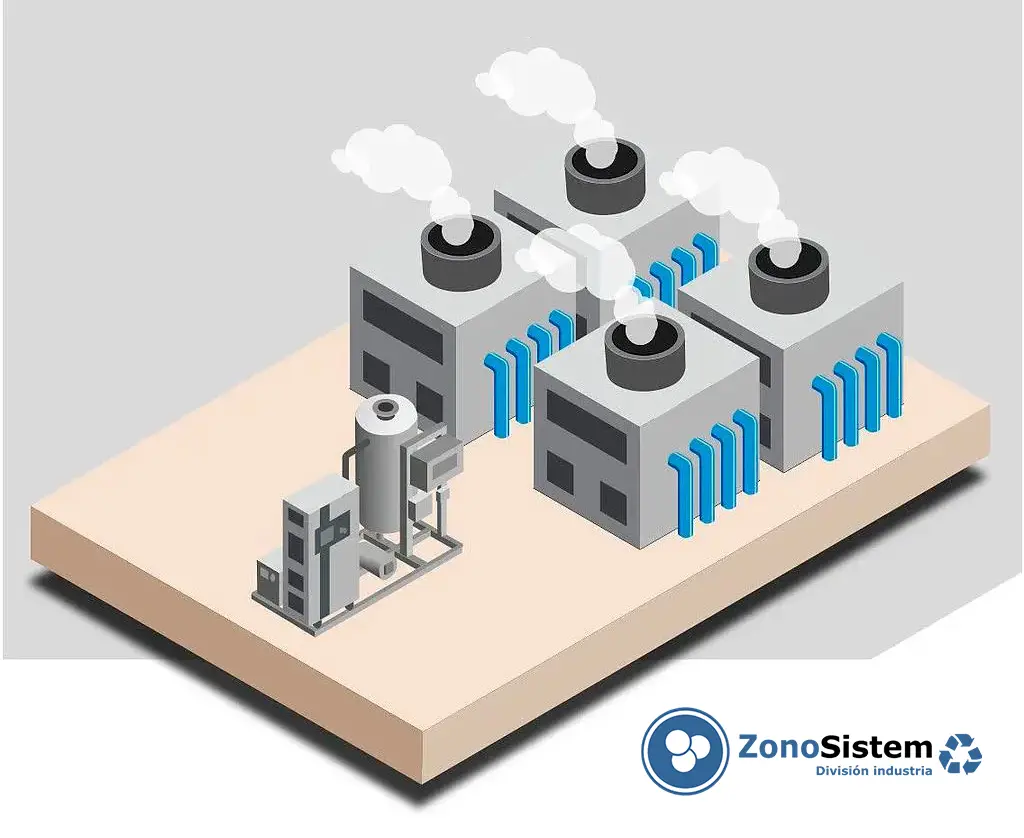
Use of Ozone in Cooling Towers
Ozone has become a truly useful tool for disinfecting water in cooling towers, especially in the fight against Legionella.
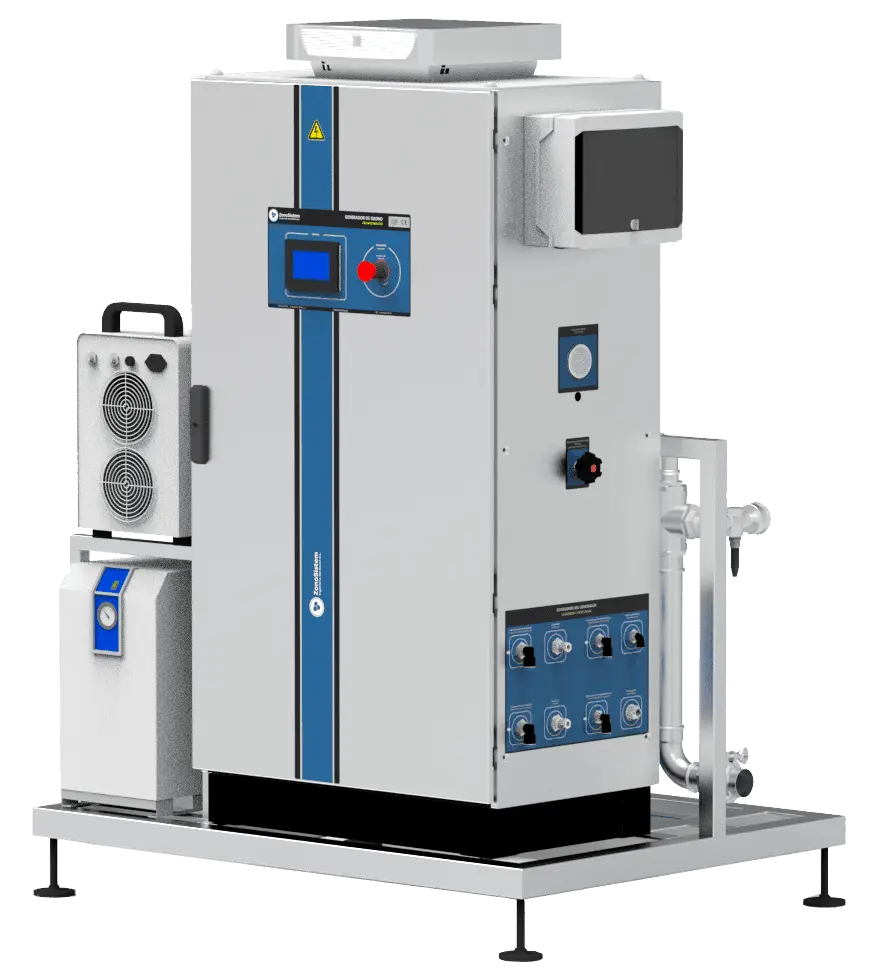
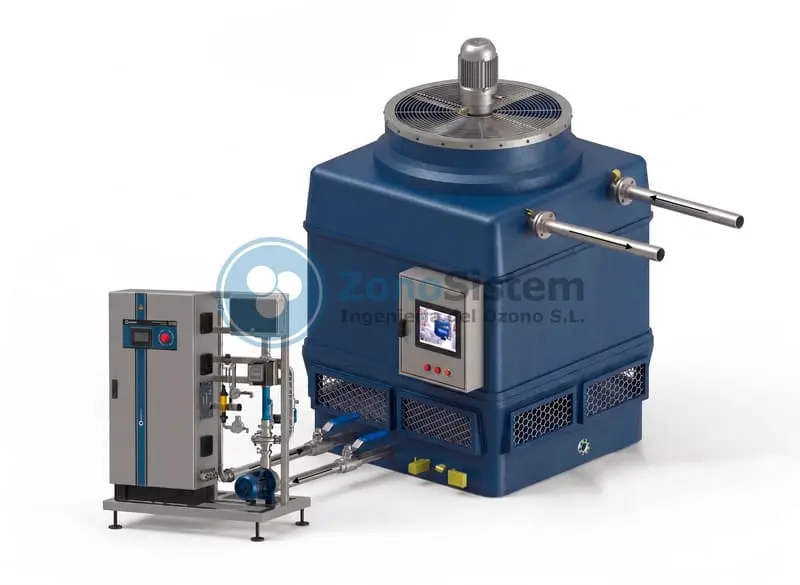
Ozone is neither stored nor transported. It is generated on site by the ozone generator and injected directly into the water in the cooling tower. As it passes through, the ozone rapidly and effectively eliminates all types of microorganisms, including Legionella.
The ozone generator operates automatically and requires no manual intervention; it simply draws in ambient air and electricity. It maintains hygiene in the water within the cooling tower, as well as in the ducts, pipes and basins. A disinfection technology that can be monitored in real time, with data logging, and also controlled remotely.
Ozone treatment for cooling towers
It eliminates Legionella, removes biofilm and improves water quality automatically and without the need for manual labour
Avoid using bleach, and reduce your handling costs
Ozone is generated on-site; there is no need to store or transport chemicals
Prevent spills and unnecessary risks, and protect the environment
The system is automated; no labour is required to operate it
Having trouble disinfecting the cooling tower?
Conventional treatments often fail because they act only on the surface, allowing bacteria to recolonise the system within a short time. Our ozone technology offers oxidising power far superior to that of chlorine, eliminating the biological risk at source and ensuring that your facility consistently meets the most stringent hygiene audit standards.
The real enemy of efficiency is often invisible: the buildup of biofilm on the tower packing. This viscous matrix not only protects pathogens from chemical biocides, but also acts as a thermal insulator that drives up energy consumption. When our systems are integrated, the ozone penetrates and oxidises this biofilm, dislodging it from the surfaces and keeping the packing clean. This results in optimal heat transfer and extends the service life of your equipment.
We know that many companies spend excessive resources and staff hours on manual disinfection tasks and rely on the extensive use of bleach or other chemicals. This approach is costly, hazardous to handle and not environmentally friendly. Zonosistem’s solution automates the treatment process, drastically reducing the purchase of consumables and simplifying logistics. Furthermore, we address the challenges of monitoring hygiene levels through real-time control systems that provide accurate data on water quality at all times.
If your aim is to move towards a more sustainable process, ozone is the key. Unlike traditional biocides, ozone is generated on-site and breaks down naturally into oxygen, eliminating toxic by-products in the blow-down water and reducing the water footprint of your operations. With Zonosistem, your cooling tower ceases to be a source of risk and becomes a model of efficiency, safety and environmental responsibility.
Benefits of using ozone to disinfect cooling towers
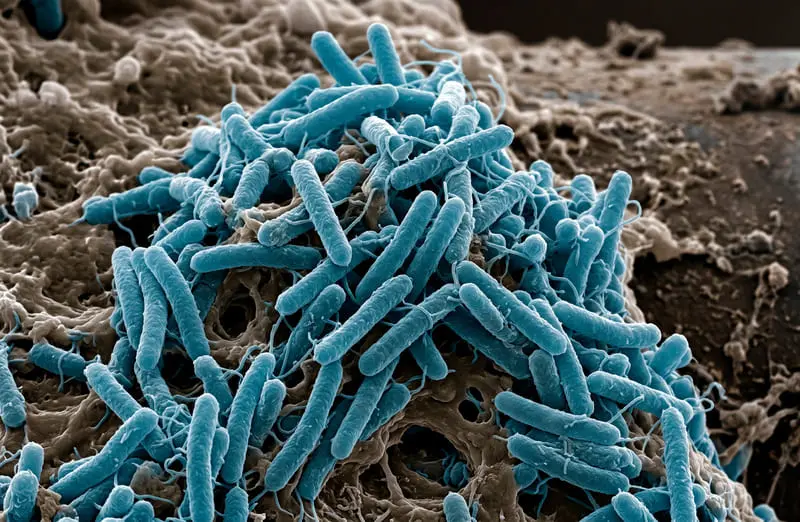
Eliminates Legionella
The water in cooling towers is easily contaminated by temperature changes and the presence of organic matter, which is why it needs to be continuously disinfected. Ozone is a powerful disinfectant that easily eliminates all types of microorganisms, including Legionella.
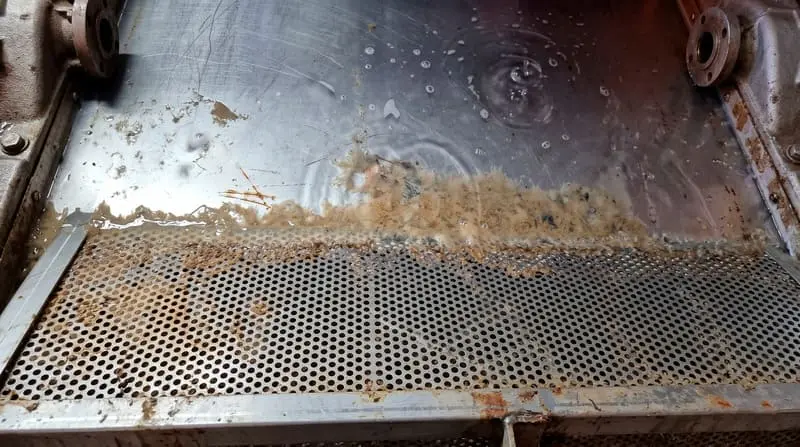
Removes biofilm and improves water quality
As it passes through, ozone removes biofilm from pipes very quickly and effectively. It prevents blockages. It also improves water quality, reduces COD, BOD, turbidity, colour and odour, reduces organic matter and extends the shelf life of the water.
Save money and reduce your carbon footprint
Traditional disinfection is costly and has a significant environmental impact, resulting from the production, packaging and transport of chemicals. By using ozone, you can reduce chemical consumption and the environmental impact caused by these chemicals. You will reduce the discharge of chemicals and encourage the reuse of water.
No manual labour, fully automatic
The system automatically generates and injects ozone into the tank, without the need for manual labour. It simply needs to be connected to the tank and a power socket.
No storage of chemicals
Ozone is generated on-site and applied instantly, so it does not require the storage or handling of chemicals, eliminates the need for transport and reduces the carbon footprint.
Biocide recognised by ECHA
Ozone is included on the European Chemicals Agency’s (ECHA) list of biocides, and ZonoSistem holds all the necessary documentation for its proper authorisation and use
Improvements achieved in a real-life case
Indicator | Improvement Achieved | Direct Impact |
The Use of Chlorides | -100% (Elimination) | No corrosion or structural damage |
Water Consumption | -50% per cycle | Optimisation of resources and savings on bills. |
Conductivity | 40% - 50% less | Greater efficiency in heat transfer. |
Organic Load (COD) | 30% - 40% less | It facilitates compliance with regulatory requirements regarding discharges. |
Chemicals | Sharp reduction | Reduced reliance on suppliers and stock. |
ZonoSistem Case Studies: Ozone Systems for Cooling Towers
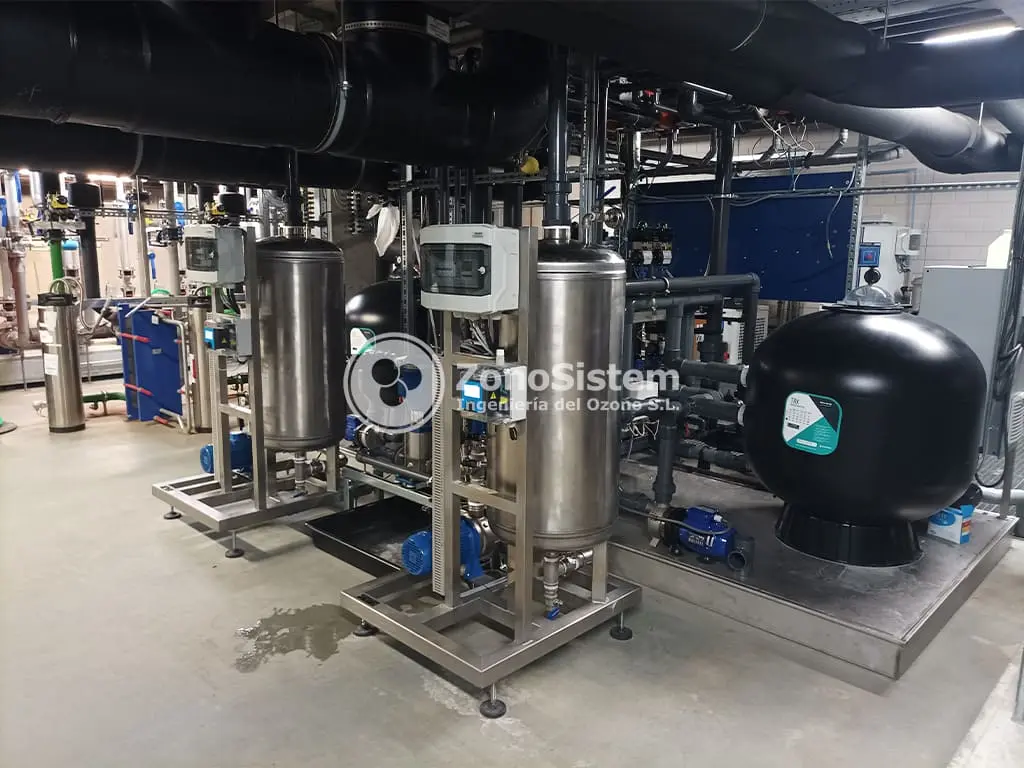
Cooling towers, Belgium
The project is being implemented at a water treatment plant that has completely eliminated the use of chlorine by installing an ozone system that maintains a constant, monitored dose throughout the entire water body. The ozone is injected via two HIDRO VT injection units at the outlet of the filtration system, which recirculates the water into the main tank.
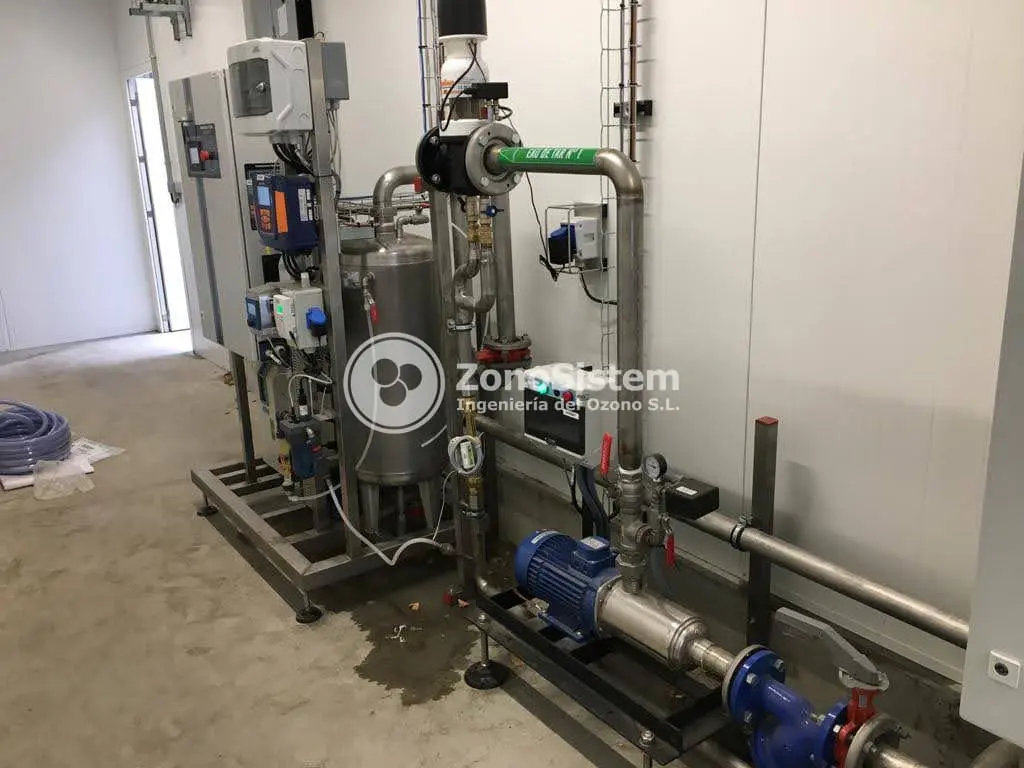
Cooling tower, France
One of the country’s leading food manufacturers decided years ago to eliminate biocidal chemicals from its cooling towers. The project involves a compact HIDRO VT GZO20 ozone system installed in the recirculation line of the main tank. A constant ozone level of 0.35 ppm is recorded in real time, ensuring water disinfection, the removal of biofilm and the elimination of halogenated compounds in the blowdown.
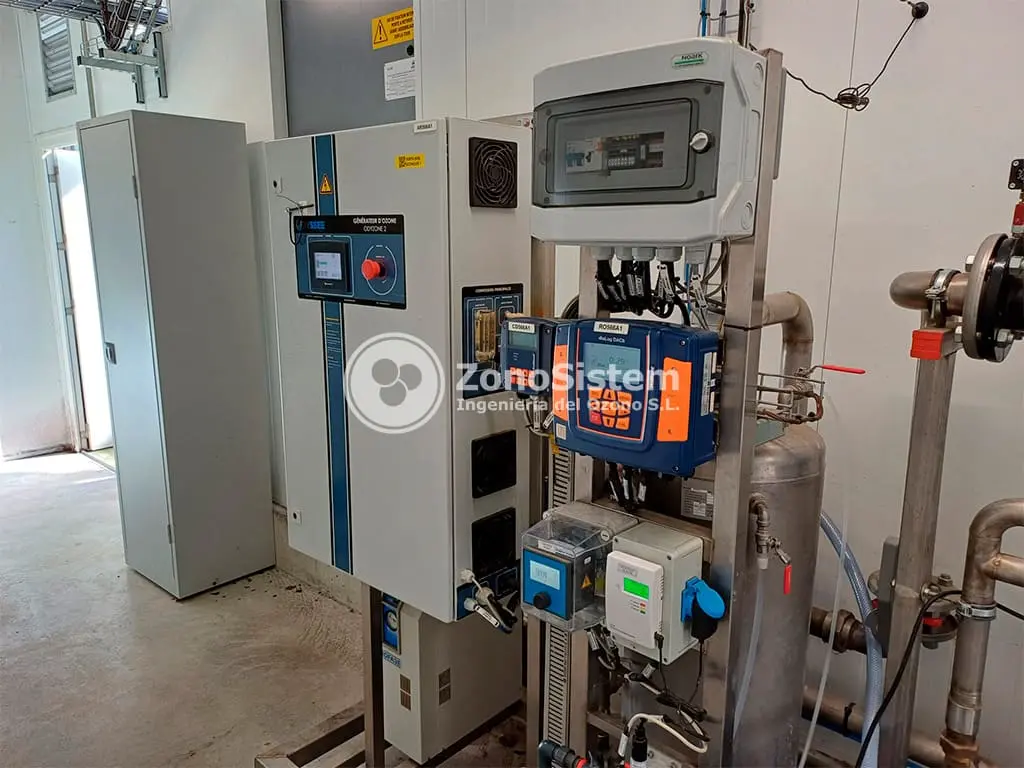
Cooling tower, France
This project addresses the client’s main concern: the removal of chlorides from the tower. The problem stems from the high level of corrosion caused by the chlorides generated in the previous biocidal process. Ozone disinfects the water and surfaces with ZERO chlorides. A HIDRO VT GZO20 system was used for this purpose.
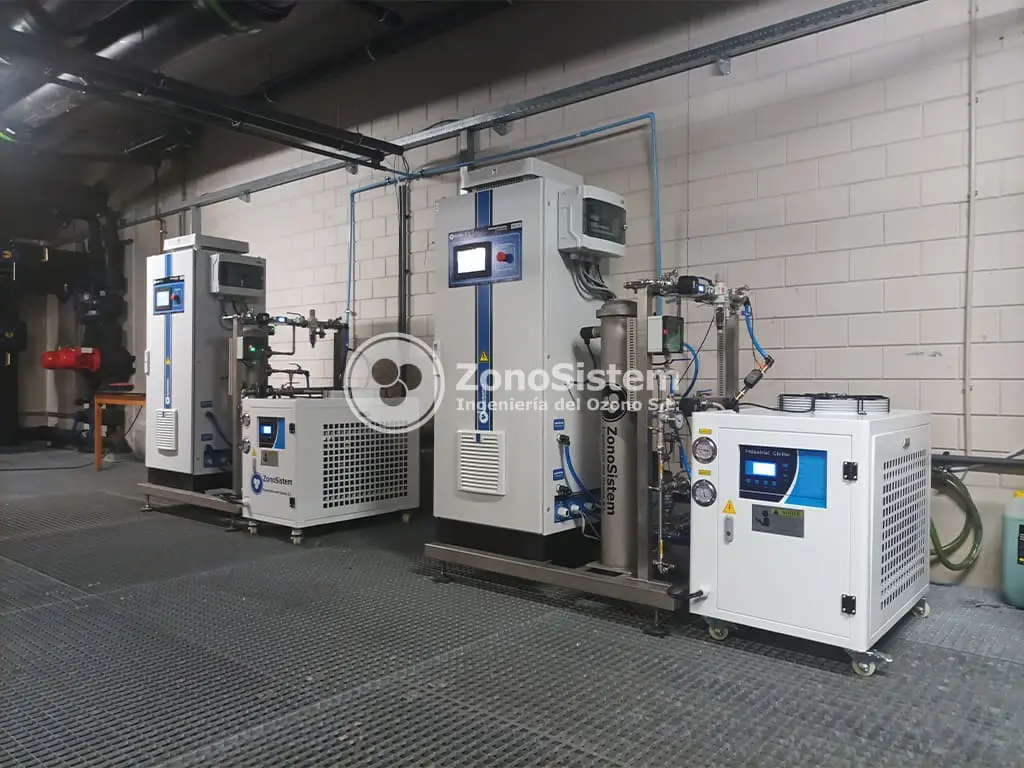
Cooling towers, Netherlands
A project involving the use of ozone in cooling towers, which, as well as ensuring water disinfection, reduces the organic matter in the feed water, thereby lowering the COD and enabling the water to be reused for this application.
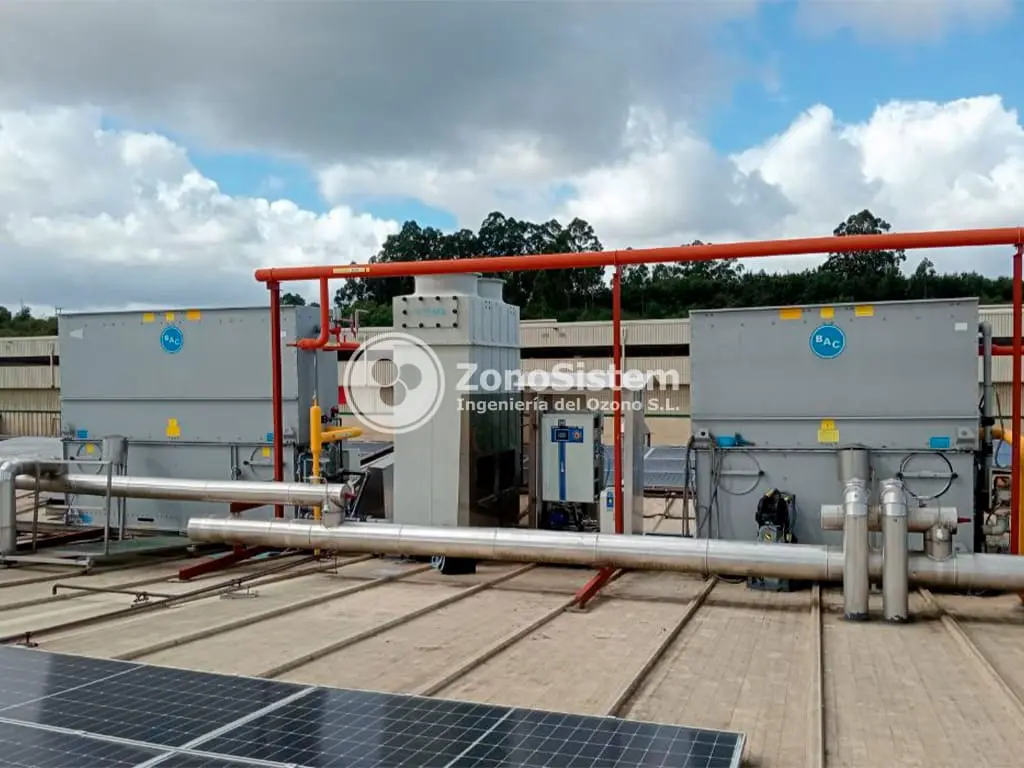
Cooling tower at a bakery, Spain
This project incorporates a HIDRO V ozone system that recirculates the water from the tank of two evaporative coolers. No chemicals are used – only ozone – resulting in excellent water quality in both physico-chemical and microbiological terms. The residual ozone level remains constant and is recorded on a graph that can be accessed remotely.
Cooling tower, France
This project addresses the client’s main concern: the removal of chlorides from the tower. The problem stems from the high level of corrosion caused by the chlorides generated in the previous biocidal process. Ozone disinfects the water and surfaces with ZERO chlorides. A HIDRO VT GZO20 system was used for this purpose.
Cooling tower, Netherlands
A project involving the use of ozone in cooling towers, which, as well as ensuring water disinfection, reduces the organic matter in the feed water, thereby lowering the COD and enabling the water to be reused for this application.
Cooling tower, Belgium
The project is being implemented at a water treatment plant that has eliminated the use of chlorine entirely, replacing it with an ozone system that maintains a constant, monitored dose throughout the entire water body. The ozone is injected via two HIDRO VT injection units at the outlet of the filtration system, which recirculates the water into the main tank.
Cooling tower, France
One of the country’s leading food industries decided years ago to eliminate biocidal chemicals from its cooling towers. The project includes a compact HIDRO VT GZO20 ozone system installed in the recirculation line of the main tank. A constant ozone level of 0.35 ppm is recorded in real time, ensuring water disinfection, the removal of biofilm and the elimination of problems caused by halogenated compounds in the blowdown.
Cooling tower at a bakery, Spain
This project incorporates a HIDRO V ozone system that recirculates the water from the tank of two evaporative coolers. No chemicals are used – only ozone – resulting in excellent water quality in both physico-chemical and microbiological terms. The residual ozone level remains constant and is recorded on a graph that can be accessed remotely.
Frequently Asked Questions about the use of ozone in cooling towers
Yes, ozone is between 600 and 3,000 times faster and more powerful than chlorine as a disinfectant. Unlike traditional chemicals, ozone acts through direct oxidation, instantly destroying the cell wall of Legionella pneumophila and other pathogens. Furthermore, it is capable of eliminating biofilm – the refuge where these bacteria multiply – something that chlorine struggles to achieve with the same effectiveness. Moreover, ozone eliminates biofilm very quickly, thereby preventing the formation of a ‘home’ for bacterial colonies.
- Reduction in consumables: The purchase, transport and storage of chemical biocides are eliminated or drastically reduced.
- Energy efficiency: By keeping the packing and heat exchangers free of biofilm, the system operates with optimum heat transfer, thereby reducing electricity consumption.
- Lower water consumption: Improves the quality of the recirculating water, allowing operation at higher concentration cycles and reducing the volume of blowdown.
- Permite el reúso de aguas recicladas ya que ataca a la materia orgánica disuelta.
On the contrary. Our systems are designed for full automation. Ozone is generated on-site from ambient air, so there is no need to manage stocks of hazardous products or carry out manual mixing. Furthermore, Zonosistem’s equipment includes automatic monitoring and control systems that ensure continuous disinfection 24 hours a day, minimising human intervention and the risk of operational error.